 Best Fencing Charlotte
Fences are supposed to make good neighbors, but sometimes they do the opposite. Maybe your neighbor built a fence two feet onto your property. Maybe a shared fence is falling apart and neither of you wants to pay for repairs. Maybe you want to put up a privacy fence and your neighbor is furious about it. These disputes happen constantly in Charlotte -- in tight Dilworth lots, sprawling Ballantyne subdivisions, and everywhere in between.
The good news is that most fence disputes can be resolved without lawyers, without lawsuits, and without permanent damage to the relationship. But you need to understand how North Carolina law actually works, what your rights are, and which steps to take in what order. Here is the practical breakdown.
North Carolina Is Not a "Fence Law" State
This is the most important thing to understand. Some states -- California, for example -- have specific statutes that require neighbors to share the cost of a boundary fence equally. North Carolina does not have this type of law. There is no state statute in NC that forces your neighbor to pay for any portion of a fence, even if it sits directly on the property line and benefits both of you.
What this means in practice: if you want a fence, you pay for it. You cannot send your neighbor a bill for half the cost. You cannot force them to maintain their side. And they cannot force you to pay for a fence they want to build, either. The only exceptions involve livestock fencing in agricultural areas, which does not apply to residential properties in Charlotte.
This is actually a simpler situation than states with mandatory cost-sharing laws, because it removes one of the biggest sources of conflict. You want a fence, you build it on your property, you pay for it, and your neighbor has no say in whether it goes up. But -- and this is a big but -- you have to build it on YOUR property, not on the property line or on their property. That is where things get complicated.
Finding Your Actual Property Line
Most fence disputes in Charlotte come down to one question: where exactly is the property line? You think you know, but unless you have confirmed it with documentation, you might be wrong. Here are the ways to find it:
Check your plat. When you bought your home, you received a plat (a scaled map of your property) as part of the closing documents. The plat shows the exact dimensions of your lot, the location of the property lines, and the distance from each boundary to the house and other structures. Your plat is recorded with the Mecklenburg County Register of Deeds and can be accessed online through their records portal. This is your first stop.
Look for survey pins. Most residential lots in Charlotte have iron survey pins (also called monuments) driven into the ground at each corner of the property. These pins are usually 1/2-inch to 5/8-inch iron rods, set flush with the ground or a few inches below the surface. Grab a metal detector or a strong magnet on a string and sweep the area where you think the corner should be. The pins are there on most lots -- they just get buried under mulch, grass, or dirt over the years.
Get a new survey. If you cannot find the pins and the plat is unclear, hire a licensed surveyor. In the Charlotte area, a boundary survey for a standard residential lot typically costs $300 to $600. The surveyor will locate and mark each property corner, set new pins if needed, and give you a certified survey document. This is money well spent if there is any dispute about the boundary -- it removes all guesswork.
A common mistake Charlotte homeowners make is assuming that an existing fence, hedge, or tree line marks the property boundary. It often does not. Fences get built in the wrong spot all the time, and landscaping grows wherever it wants. Never assume that a physical feature on the ground equals the legal property line without checking the survey.
Talk to Your Neighbor Before You Build
This seems obvious, but a surprising number of fence disputes happen because one homeowner started building without telling the neighbor. Even though North Carolina law does not require your neighbor's permission to build a fence on your own property, having a conversation before the fence company shows up is just good sense.
Here is what to cover in that conversation:
- Tell them you are planning to build a fence. Give them a heads-up about the timeline and which side of the property the fence will run along.
- Show them the property line. If you have a recent survey or know where the pins are, walk the line together. This prevents arguments later about whether the fence is on the right spot.
- Discuss the style and height. They cannot stop you from building a legal fence on your property, but knowing what it will look like reduces surprises. If you are building a 6-foot wood privacy fence where there was no fence before, your neighbor might appreciate some advance notice.
- Ask about their plans. Maybe they were also thinking about a fence. If so, you might coordinate -- building separate fences 6 inches apart looks odd, and you might agree on one fence that works for both of you.
- Mention the "good side." By custom (not law), the finished side of a fence faces outward toward the neighbor. If you are planning to do this, mention it -- it goes a long way toward keeping the relationship positive.
Put the key points of your conversation in writing -- even a simple email or text recap. If a dispute develops later, having documentation of what was discussed helps. For guidance on Charlotte-specific rules that might affect your build, read our article on Charlotte fence permit rules and HOA guidelines.
The "Good Side Out" Custom
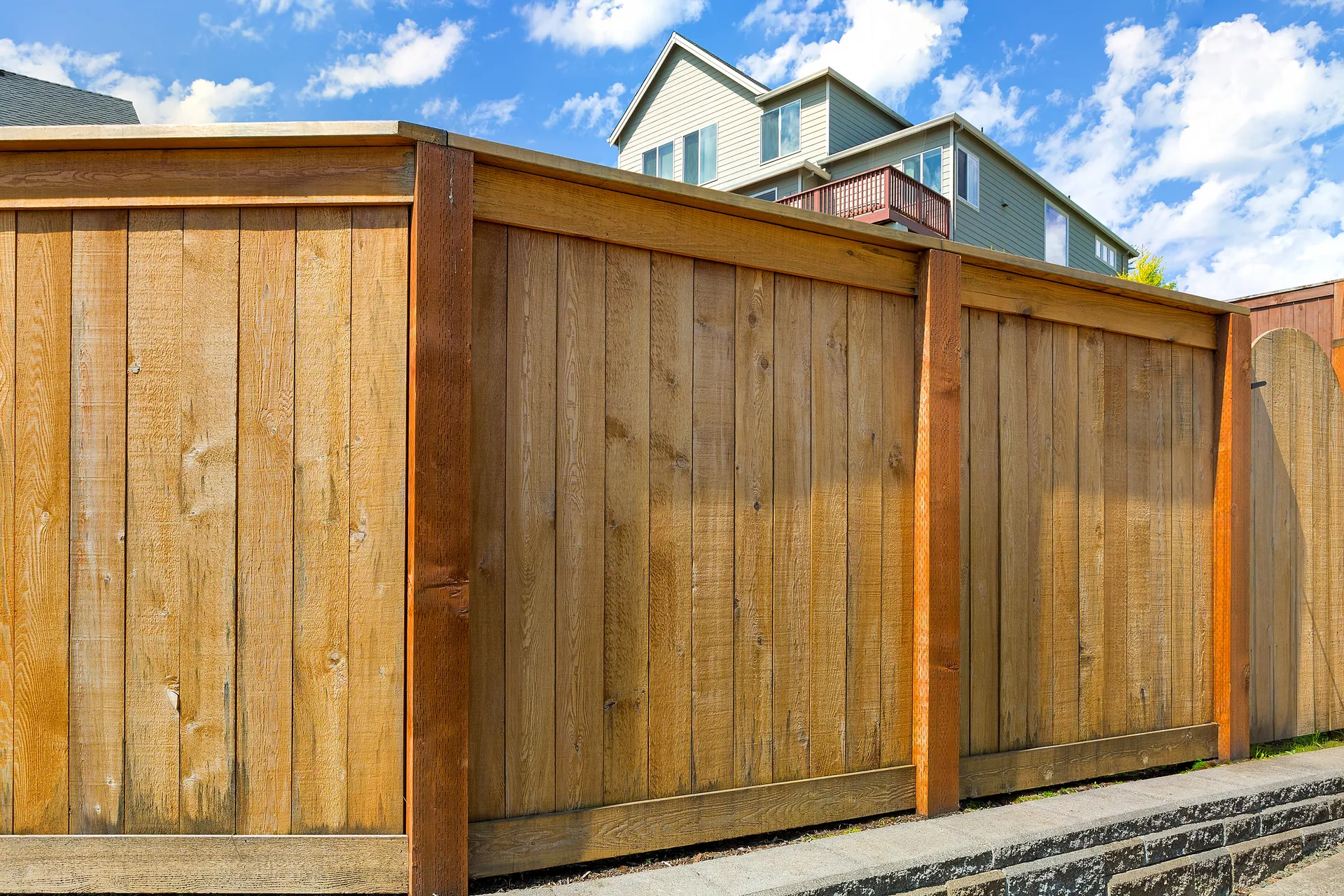
On most wood fences, one side looks finished (the pickets face outward) and the other side shows the rails and post backs. The long-standing custom in Charlotte and throughout North Carolina is to install the fence with the finished side facing your neighbor and the structural side facing your own yard.
This is a custom, not a law. North Carolina does not have a statute requiring the good side to face any particular direction. However, many Charlotte-area HOAs do require the finished side to face outward, so check your covenants before installation. If there is no HOA rule, the decision is yours -- but putting the good side out is a goodwill gesture that costs you nothing and prevents a common source of neighbor complaints.
If you want both sides to look finished, a shadow box fence or a board-on-board fence with back-side trim are both options. They cost more but eliminate the good-side-bad-side issue entirely.
Who Owns a Fence on the Property Line?
This question comes up constantly, especially with older fences in established Charlotte neighborhoods where nobody remembers who built the original fence. Here is how it works in North Carolina:
If the fence is entirely on one person's property, that person owns it. Period. Even if it has been there for 30 years and the neighbor has been "using" it as their boundary, the person whose property it sits on owns it and is responsible for maintaining or removing it.
If the fence sits exactly on the property line, it is technically a shared structure. Both property owners have an interest in it. Neither can unilaterally remove it without the other's agreement (though this is rarely enforced through the courts in residential situations). If a shared fence needs repairs, there is no automatic legal obligation for both parties to pay -- this is one of those situations where a conversation is the only practical solution.
If you do not know where the fence sits relative to the property line, get a survey. A $400 survey is much cheaper than the legal fees from a property line dispute. If the survey shows the fence is on your neighbor's property, you do not own it and cannot modify it. If it is on yours, it is your responsibility.
What to Do If a Neighbor's Fence Encroaches on Your Property
Encroachment happens more than you would think in Charlotte. A neighbor builds a fence, and it turns out the fence is 6 inches or 2 feet onto your side of the property line. Maybe they did it on purpose, maybe they just did not get a survey before building. Either way, you have a fence on your property that you did not build and did not want.
Here is the recommended order of steps:
Step 1: Confirm the encroachment. Get a survey. Do not rely on where you think the property line is. A licensed surveyor's certification is the only thing that matters if this ever goes to court.
Step 2: Talk to your neighbor. Show them the survey results. Most of the time, the neighbor did not intend to encroach. They used a wrong marker, their fence company measured incorrectly, or they just guessed at the boundary. A calm conversation with a survey in hand resolves most encroachment situations. The neighbor agrees to move the fence, or you agree to let it stay with a written acknowledgment.
Step 3: Put any agreement in writing. If your neighbor agrees to move the fence, put a timeline in writing. If you agree to let the fence stay, draft a simple letter that acknowledges the encroachment and states that you are allowing it temporarily but are not giving up your property rights. This matters because under North Carolina law, long-term unchallenged encroachment can eventually affect property boundaries through a legal concept called adverse possession (though this requires 20 years of continuous, open, and hostile possession in NC).
Step 4: Contact the HOA if applicable. If both properties are in the same HOA, the HOA may have a process for mediating property boundary disputes. This is especially common in larger Charlotte-area communities with active architectural review boards.
Step 5: Send a formal demand letter. If talking does not work, a letter from an attorney requesting the fence be moved by a specific date is the next step. Attorney letters cost $200 to $500 in the Charlotte area and they often resolve the situation because the neighbor realizes you are serious.
Step 6: Small claims court. In Mecklenburg County, you can file a claim in small claims court for disputes up to $10,000. For most residential fence encroachment cases, this is sufficient. Filing fees are under $100, and you do not need a lawyer (though having one helps). The court can order the neighbor to remove the encroaching fence and may award you damages for the cost of any property repairs needed.
Tree Roots and Fence Damage
Charlotte is a city of trees. Large oaks, maples, and pines are everywhere, and their root systems do not care about property lines. Tree roots from your neighbor's tree can push up or crack your fence posts, and roots from your trees can do the same to your neighbor's fence.
Under North Carolina law, you have the right to trim any branches or roots that cross onto your property, up to the property line. You cannot go onto your neighbor's property to do this, and you cannot kill the tree in the process. If a neighbor's tree roots are damaging your fence, you can cut the roots on your side of the line when doing fence repairs.
However, the neighbor is generally not legally responsible for damage caused by healthy tree roots that naturally grow across the property line. This is an area of NC law that frustrates a lot of homeowners, but the courts have consistently ruled that natural growth across property lines is not a trespass. Your practical options are to trim the roots on your side, install a root barrier, or adjust your fence placement to avoid the root zone.
If the tree is dead, diseased, or obviously hazardous and the neighbor has been notified but refuses to act, the situation changes. A homeowner who ignores a known hazardous tree can be held liable for damage it causes. Document the condition of the tree with photos and written notice to your neighbor if you believe it is a hazard.
When Your HOA Gets Involved
Many Charlotte neighborhoods have HOAs with specific rules about fencing -- approved materials, maximum height, required setbacks from property lines, and approved styles. In these communities, the HOA adds another layer to any fence dispute.
HOAs can mediate disputes between neighbors, especially when a fence violates the community's architectural guidelines. If your neighbor builds a fence that does not meet HOA standards, the HOA can require them to modify or remove it. This is often a more practical route than going to court, because the HOA has enforcement power built into the covenants that every homeowner agreed to when they bought their house.
On the flip side, if YOU build a fence that does not meet HOA rules, your neighbor can complain to the HOA and the board can force you to take it down. Always submit your fence plans for architectural review before building. The approval process takes 2 to 4 weeks in most Charlotte HOAs, and it protects you from having to tear out a fence you just paid for. If you are not sure what your HOA allows, our article on Charlotte fence permits and HOA guidelines covers the most common requirements.
Practical Tips for Avoiding Fence Disputes
Most fence disputes are preventable. Here are the steps that keep you out of trouble:
- Get a survey before building. A $400 survey saves you from a $5,000 dispute. Know exactly where your property line is before a single post goes in the ground.
- Build 2 to 4 inches inside your property line. This small setback gives you a buffer against any survey discrepancy and means you are clearly on your own property. It also means you can access both sides of the fence for maintenance without stepping on your neighbor's land.
- Talk to your neighbor first. Even a 5-minute conversation about your fence plans can prevent weeks of conflict later.
- Put the good side out. It costs nothing extra and it prevents one of the most common neighbor complaints about new fences.
- Follow HOA rules exactly. Submit plans for approval, wait for the written response, and build what was approved. No shortcuts.
- Hire a reputable contractor. A good Charlotte fence contractor will know the local rules, pull permits if needed, and set the fence in the right location. A cheap or inexperienced installer who puts the fence on the wrong property creates a problem you will be dealing with for years.
- Keep records. Save your survey, HOA approval, contractor agreement, and any correspondence with neighbors about the fence project. If a dispute arises 5 years from now, these documents are your protection.
When to Call a Lawyer
Most fence disputes do not need legal help. A conversation, a survey, and some common courtesy resolve 90% of them. But there are situations where calling a real estate attorney makes sense:
- Your neighbor refuses to remove a fence that a survey confirms is on your property
- A fence dispute is affecting your ability to sell your home (title companies flag unresolved boundary issues)
- Your neighbor has intentionally damaged or removed your fence
- An adverse possession claim is a possibility (a neighbor has been using part of your property for many years)
- The dispute involves significant property damage or financial loss
Real estate attorneys in Charlotte typically charge $200 to $400 per hour. For a simple fence dispute, expect to spend $500 to $1,500 for legal assistance. For a case that goes to small claims court, costs can reach $2,000 to $3,000 including filing fees and attorney time. It is expensive, but it is sometimes the only way to resolve a situation where one party refuses to cooperate.
The bottom line on fence disputes: know your property line, talk to your neighbor, build on your own land, and follow the rules. Do those four things and you will avoid 95% of the conflicts that Charlotte homeowners deal with around fencing projects.