 Best Fencing Charlotte
Before you start picking out fence materials or calling contractors, there is one step that many Charlotte homeowners skip or rush through: understanding the rules. Between city zoning ordinances, county regulations, HOA covenants, and property line technicalities, there are several layers of rules that determine what you can build, where you can build it, and how tall it can be.
Getting this wrong can mean tearing down a brand-new fence, paying fines, or getting into a dispute with your neighbor. You need to understand all of it before a single post goes into the ground.
Charlotte and Mecklenburg County Permit Requirements
The good news: most residential fences in Charlotte do not require a building permit. The City of Charlotte and Mecklenburg County generally do not require a permit for fences under 7 feet tall. Since the vast majority of residential privacy fences are 6 feet tall, most homeowners can proceed without a permit application.
However, there are exceptions:
- Fences over 7 feet tall require a zoning permit. This applies to any fence on residential property, including in the backyard.
- Retaining walls combined with fences that together exceed 7 feet may trigger a permit requirement. This is common on sloped lots in South Charlotte and the Huntersville area where homeowners add a fence on top of a retaining wall.
- Fences in floodplain areas may require additional review. Parts of Charlotte near creeks and tributaries (common in areas along Briar Creek, McAlpine Creek, and the Catawba River corridor) are in FEMA-designated flood zones where solid fences can affect water flow.
- Commercial fences typically require a zoning permit regardless of height. If you are fencing a commercial property, plan for a permit process.
Even when a permit is not required, you still must follow all zoning setback and height restrictions. Not needing a permit does not mean there are no rules.
Height Restrictions
Charlotte's zoning ordinance sets height limits based on where the fence sits on your property:
- Backyard (behind the front building line): Maximum 6 feet for solid/opaque fences. Up to 8 feet with a zoning permit in some districts.
- Front yard (between the front building line and the street): Maximum 4 feet. This applies to the area between your house and the road. Solid fences over 3 feet in the front yard are often restricted further by HOAs.
- Side yard (between the house and the side property line): 6 feet is allowed behind the front building line. In the area between the front of the house and the street, the 4-foot limit applies.
The front building line is an important concept. It is not the front edge of your property -- it is the line where the front wall of your house sits. Everything between that line and the street is considered "front yard" for zoning purposes, even if it is technically on the side of your lot. This catches many homeowners off guard, especially on corner lots.
Corner Lot Visibility Rules
If you live on a corner lot, there are additional restrictions designed to maintain visibility for drivers at the intersection. Charlotte's sight triangle rules require that fences (and landscaping) within a triangular area near the intersection cannot exceed a certain height -- typically 3 feet. The exact dimensions of the sight triangle depend on the speed limit and classification of the road.
Corner lots are common throughout Charlotte, and this rule affects neighborhoods in every part of the city. If you are on a corner, your fence company should know exactly how to measure the sight triangle. If they do not bring it up, ask them about it. A fence that blocks driver visibility can result in a code enforcement notice and mandatory removal of the offending section.
Setback Requirements
Setback rules determine how close your fence can be to the property line and to the street.
Property line setbacks: In most Charlotte residential zones, fences can be built on or very near the property line. There is no required setback from side or rear property lines for standard residential fences. However, the fence must be entirely on your property. That's where things get tricky, because what you think is your property line and where it actually is can differ by several feet. More on that below.
Street setbacks: Fences cannot be built in the public right-of-way. The right-of-way extends beyond the edge of the road -- usually 5 to 15 feet from the curb or edge of pavement, depending on the road classification. On major roads like Providence Road, Rea Road, or Highway 51, the right-of-way can be 30 feet or more from the center of the road. Your fence must sit behind the right-of-way line, not just behind the curb.
Your property survey (from when you purchased the house) should show the right-of-way. If you do not have a survey, you can look up your property on the Mecklenburg County GIS (Polaris) website, which shows approximate property boundaries and rights-of-way.
Property Line Considerations
Property line disputes are one of the most common sources of neighbor conflict when it comes to fencing. A few important points:
- Know your exact property lines. Do not rely on assumptions, existing landscaping, or where the previous fence was. Property pins (small metal stakes) are usually at the corners of your lot, but they can shift over time or get buried. A professional survey costs $300 to $600 and can save you thousands in disputes.
- Build on your side. Even though Charlotte allows fences on the property line, most fence companies recommend setting the fence 2 to 6 inches inside your property to avoid any encroachment. This small buffer eliminates most disputes.
- Talk to your neighbors before building. You are not legally required to notify your neighbor before building a fence in Charlotte, but it is a smart move. A five-minute conversation can prevent months of conflict. If you and your neighbor agree to share the cost and place the fence on the property line, get that agreement in writing.
- The "good side" faces out. Charlotte does not have a specific ordinance requiring the finished side of the fence to face your neighbor, but many HOAs do. It is also standard practice and good etiquette. Most privacy fence styles can be built with the finished side facing out.
HOA Rules and Architectural Review
If you live in a neighborhood with an HOA -- and a large percentage of Charlotte-area neighborhoods have one -- your HOA covenants almost certainly have rules about fences. These rules can be more restrictive than city or county zoning, and they are legally enforceable.
Common HOA fence restrictions in the Charlotte area include:
- Material restrictions. Many HOAs only allow certain materials. Some permit wood and vinyl but prohibit chain link. Others require a specific material or color to maintain neighborhood uniformity.
- Height limits. Some HOAs set maximums lower than the city's 6-foot backyard limit. A 4-foot maximum is not uncommon, especially for front-yard and side-yard fencing.
- Style requirements. Your HOA may require a specific fence style -- for example, board-on-board but not stockade, or picket only in the front yard.
- Color restrictions. Natural wood tones, white vinyl, and black aluminum are typically safe. Bright or unusual colors are almost always prohibited.
- Location restrictions. Some HOAs do not allow fences in front yards at all. Others require that the fence not extend past the front plane of the house.
- Architectural review process. Most HOAs require you to submit a fence plan for approval before installation. This typically includes a site plan showing fence location, material specifications, and sometimes a photo of the proposed style. Review timelines vary from a few days to 30+ days.
Start the HOA approval process early. It is not unusual for an architectural review committee in a large Weddington or Ballantyne subdivision to take three to four weeks to respond. Get approval in writing before your contractor starts work.
Pool Fence Requirements
If you have a swimming pool or are building one, Mecklenburg County requires a barrier (fence) around the pool that meets specific safety standards. Key requirements include:
- Minimum 4 feet tall on all sides
- No openings large enough for a 4-inch sphere to pass through (this rules out most standard chain link without modification)
- Self-closing, self-latching gates that open outward (away from the pool)
- Gate latches at least 54 inches above the ground on the pool side
- No climbable features (horizontal rails, decorative elements that create footholds)
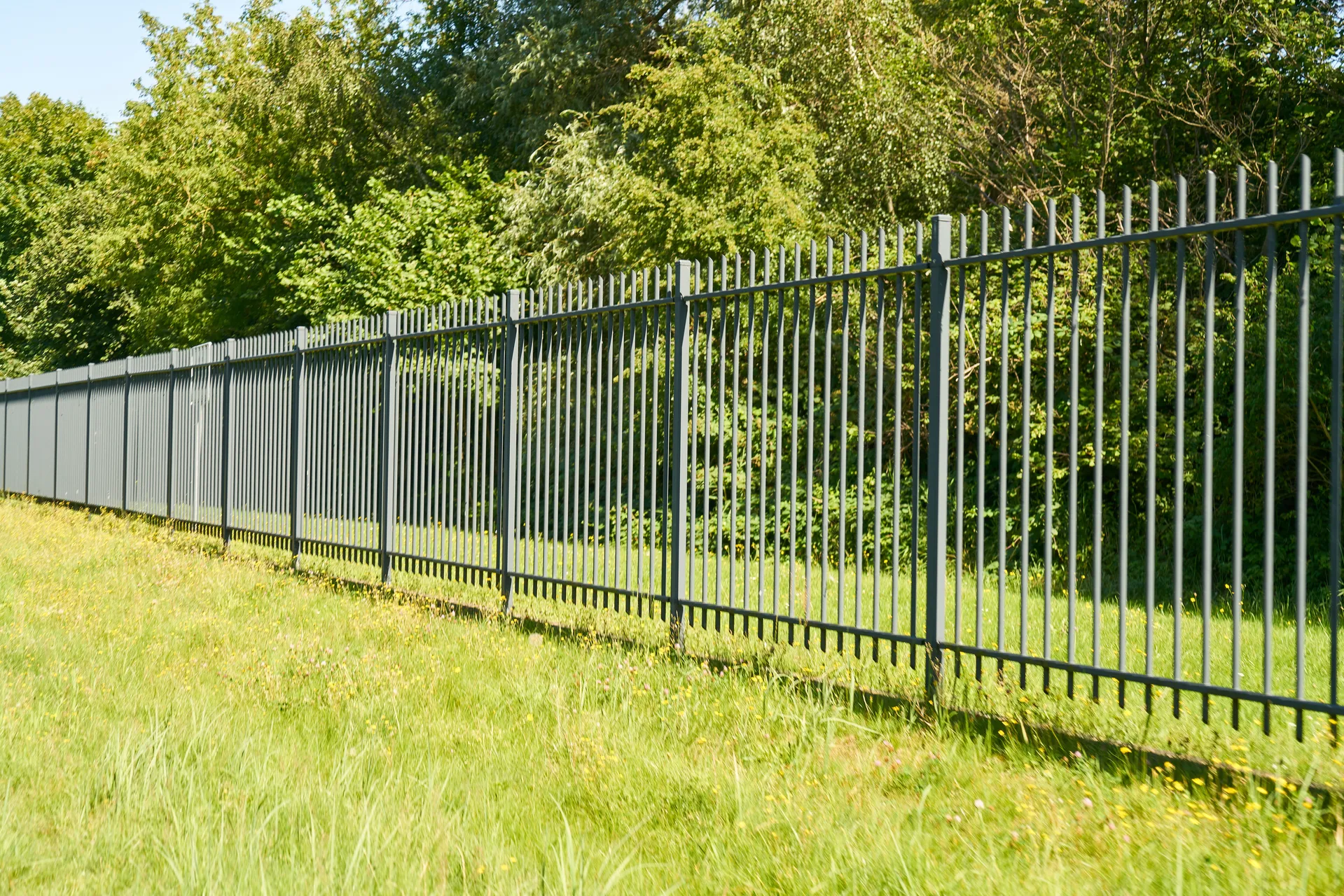
Aluminum fencing is the most popular pool fence material in the Charlotte area because it meets code requirements, does not rust from pool chemicals, and allows visibility. For a deeper look, see our guide on pool fence requirements in Charlotte.
Rules in Neighboring Counties
The Charlotte metro sprawls across multiple counties and two states, and fence rules are not identical everywhere.
Union County (Waxhaw, Weddington, Indian Trail, Monroe): Union County's zoning rules are similar to Charlotte's, but some towns have their own additional regulations. Weddington, for instance, has strict appearance standards for residential properties that extend to fencing. Indian Trail incorporated relatively recently and has been developing its own zoning code. Always check with your specific town's planning department.
Cabarrus County (Concord, Harrisburg): Concord requires a zoning permit for fences over 6 feet (not 7 feet like Charlotte). Setback requirements are similar. Harrisburg follows Cabarrus County's zoning, which generally aligns with Charlotte's rules but check the specifics before building.
Iredell County (Mooresville, Troutman): Mooresville's fence ordinance limits residential fences to 6 feet in the rear yard and 4 feet in the front yard. Permits are generally not required for standard fences, but the town's planning department should be your first call if you are unsure.
York County, SC (Fort Mill, Rock Hill, Tega Cay): South Carolina has different rules. Fort Mill requires that fences in the front yard not exceed 4 feet and that rear-yard fences not exceed 6 feet in residential zones. Rock Hill has similar restrictions. Both cities may require a zoning permit depending on the fence location and size. If you live on the SC side of the border, do not assume that Charlotte's rules apply.
What Happens If You Build Without Checking the Rules
If you build a fence that violates zoning ordinances, the consequences can include:
- Code enforcement notice. A neighbor complaint or routine inspection can trigger a notice from the city or county requiring you to modify or remove the fence.
- Daily fines. Charlotte can assess daily fines for ongoing zoning violations. These add up quickly.
- Forced removal. In the worst case, you may have to tear down part or all of the fence at your own expense.
- HOA fines. HOA fines for unapproved structures typically start at $25 to $100 per day and can escalate. Some HOAs have the power to place liens on your property for unpaid fines.
- Neighbor lawsuits. If your fence encroaches on a neighbor's property or blocks their access, you could face a civil suit.
None of this is worth the risk. A few phone calls and a little patience upfront can prevent expensive problems down the road.
How Your Fence Company Should Help
A good Charlotte fence contractor should be familiar with local zoning rules and HOA processes. A reputable company should:
- They ask about your HOA during the initial consultation and factor approval timelines into the project schedule
- They know the height restrictions for your specific area without having to look them up
- They recommend a property survey if there is any question about the property line
- They set the fence at least a few inches inside your property line to avoid encroachment
- They advise on sight-triangle rules if you are on a corner lot
- They call 811 (NC One-Call) before digging to locate underground utilities
If a contractor tells you not to worry about permits, property lines, or HOA rules, that is a red flag. Find a different contractor. Our guide on how to choose a fence contractor in Charlotte covers more things to look for and watch out for.
For questions about your specific property's fence rules, start with the Charlotte-Mecklenburg Planning Department or your HOA management company. And when you are ready to move forward, call us at to get connected with a local fence company that knows the rules in your area.