 Best Fencing Charlotte
Getting a new fence installed is not as simple as calling a company on Monday and having a fence by Friday. There are steps that need to happen in order -- utility locates, potential permits, material ordering, scheduling -- and skipping or rushing any of them leads to problems. This is a realistic look at each step of the process so you know exactly what to expect when you decide to get a fence installed in the Charlotte area.
Step 1: Getting Estimates (Week 1-2)
The process starts with calling a few fence companies and scheduling on-site estimates. Most Charlotte fence contractors offer free estimates and can get out to your property within a few days to a week, depending on the season. Spring and early summer are the busiest times, so expect longer wait times from March through June.
Plan to get at least three estimates. Each visit takes about 20-45 minutes. The estimator will walk your property line, measure the footage, discuss material options, talk about gate placement, and note any terrain challenges like slopes, trees, or rocky soil. They should give you a written quote within a day or two of the visit.
If you want to speed this up, request a quote online from multiple companies at once rather than calling them one at a time. For tips on evaluating contractors, read our guide on how to choose a fence contractor in Charlotte.
Step 2: Choosing a Contractor and Signing the Contract (Week 2)
Once you have your quotes, compare them side by side. Make sure each quote covers the same scope -- same footage, same material, same gate count, same post spacing. Ask about warranty, payment terms, and estimated start date.
When you choose a contractor, you will sign a contract that specifies the material, dimensions, gate locations, total price, payment schedule, and projected timeline. Most Charlotte fence companies require a deposit at signing, typically 25-50% of the total price. The balance is due upon completion.
Read the contract carefully. Look for language about what happens if they hit rock while digging (who pays for the extra labor), who is responsible for the utility locate, and what the policy is on weather delays. A good contract addresses all of this upfront.
Step 3: Utility Locate / 811 Call (3-5 Business Days)
This step is non-negotiable. Before anyone puts a post hole digger in your yard, underground utilities must be marked. In North Carolina, you are required by law to call 811 at least three business days before any digging project. This is a free service. A request goes out to Duke Energy, Piedmont Natural Gas, Charlotte Water, AT&T, Spectrum, and any other utilities with underground lines in your area. Each utility sends a locator to mark their lines with color-coded paint or flags.
Most fence contractors handle the 811 call for you as part of their process, but confirm this. If they expect you to do it, call 811 or submit the request online at nc811.org. The locators typically complete their work within 3-5 business days.
Why this matters: hitting a gas line is dangerous. Hitting a water main floods your yard. Hitting a fiber optic cable takes out internet for your neighbors and costs thousands to repair. The locate takes a few days, but it prevents very expensive and very dangerous mistakes.
Step 4: Permits (If Needed)
Charlotte does not require permits for most residential fences under 7 feet tall on standard residential lots. However, there are exceptions. If your fence is in the public right-of-way, near a street intersection, on a corner lot with sight-triangle restrictions, or in a designated historic district, you may need a zoning permit or variance.
If your property is in an HOA, you almost certainly need HOA approval before building. This can take anywhere from one week to several weeks depending on how often the architectural review committee meets. Start this process early -- do not wait until the contractor is ready to start. For a deeper dive on local rules, check our article on Charlotte fence permits and regulations.
Properties across the state line in Fort Mill, Tega Cay, and Rock Hill, SC have their own permit requirements that differ from Mecklenburg County. Your contractor should know the rules for your specific municipality.
Step 5: Material Ordering and Lead Times (1-6 Weeks)
Material lead times are where timelines vary the most. Standard materials -- pressure-treated pine, basic cedar, galvanized chain link, common vinyl profiles in white -- are usually in stock at local suppliers and can be picked up within a few days to a week.
Custom or specialty materials take longer:
- Vinyl in non-standard colors (tan, gray, woodgrain): 2-4 weeks
- Ornamental aluminum in custom heights or colors: 2-4 weeks
- Composite fencing: 3-6 weeks
- Custom wood gates or specialty hardware: 2-4 weeks
- Commercial-grade materials: 3-6 weeks
Your contractor should give you a realistic lead time when you sign the contract. If they tell you a specific material is in stock, ask them to confirm before you pay the deposit. Supply chain issues have improved since the worst of the pandemic-era shortages, but certain products still have unpredictable lead times.
Step 6: Installation Day Prep (The Day Before)
Your contractor should contact you a day or two before installation to confirm the start date and go over any prep work you need to do. A few things you should handle before the crew arrives:
- Clear the fence line. Move patio furniture, grills, potted plants, firewood stacks, dog houses, and anything else within 3-4 feet of where the fence will go. The crew needs space to work and will be running an auger along the entire line.
- Mark sprinkler heads and irrigation lines. The utility locate covers gas, water, electric, and cable, but it does not cover your private irrigation system. If you have sprinkler lines along the fence route, mark the heads with flags and let the crew know. A punctured irrigation line is a hassle for everyone.
- Talk to your neighbors. This is not legally required in most cases, but it is good practice. Let them know a fence is going in, roughly when work will start, and that there will be some noise. If the fence runs along a shared property line, confirming the exact boundary avoids disputes later. Some Charlotte neighborhoods, especially in Weddington and Matthews, have specific setback rules about how close a fence can be to the property line.
- Secure pets. Dogs and cats need to be inside or in a separate area during installation. An open fence line and power tools are not a good combination with loose pets.
- Confirm gate access. If the crew needs to bring equipment through a gate or side yard, make sure it is accessible. If there is an existing fence being removed, confirm who is handling the teardown and disposal.
Step 7: The Installation Process (1-3 Days)
This is what actually happens on installation day, broken down by phase:
Layout and marking. The crew starts by marking the exact post locations along the fence line, typically every 6 to 8 feet. They will verify the layout matches what was agreed to in the contract, including gate locations and any adjustments for terrain.
Post holes. Using a power auger (either a two-man handheld auger or a machine-mounted one for larger jobs), they dig holes for each post. Standard depth is 30-36 inches in the Charlotte area, though deeper holes may be needed in areas with particularly unstable clay soil. Each hole is typically 8-12 inches in diameter.
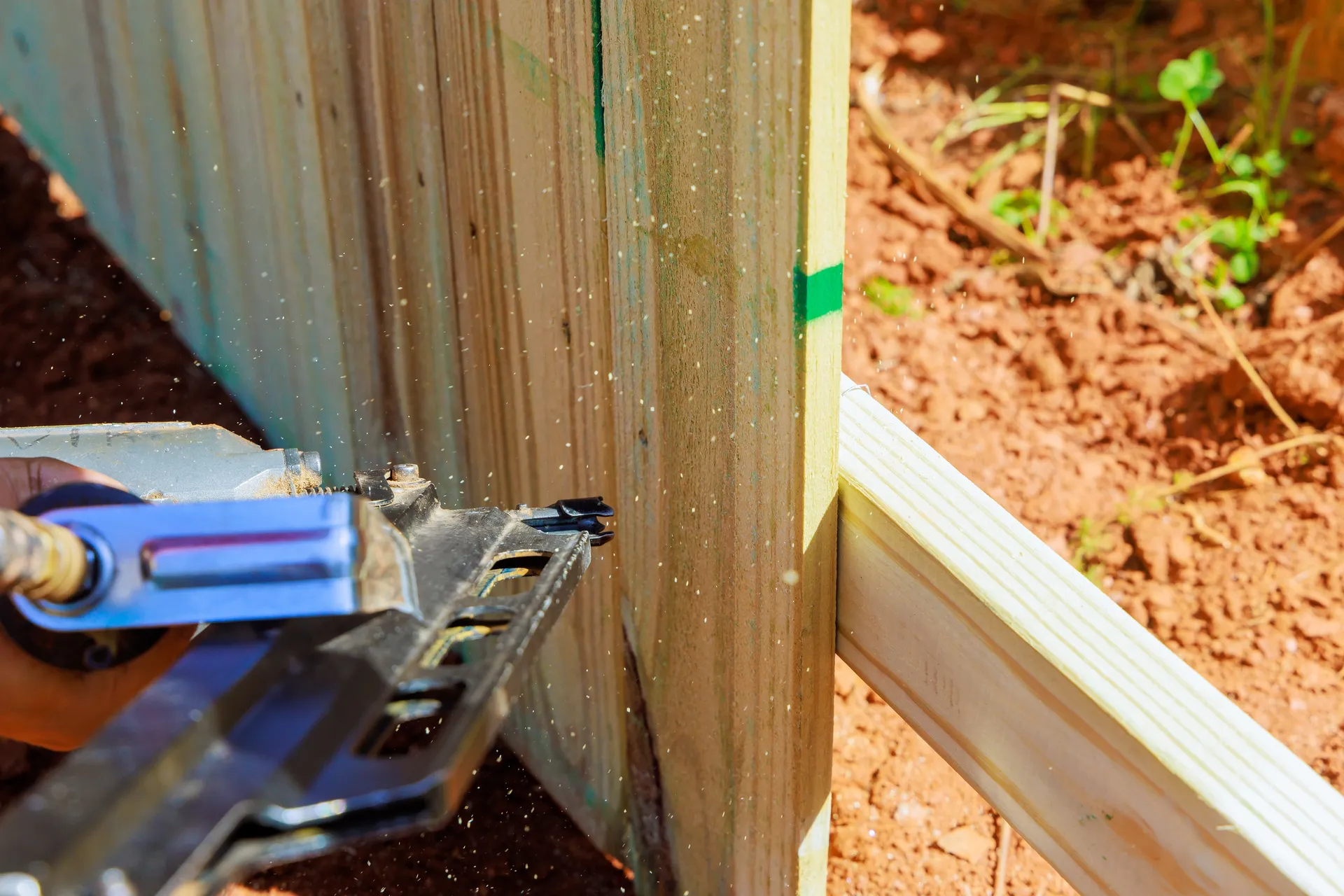
Setting posts in concrete. Posts go into the holes and are set in concrete (either pre-mixed bags or ready-mix). The crew levels each post plumb and braces it in place while the concrete sets. Some contractors set all the posts on day one and come back the next day to attach rails and panels after the concrete has had time to firm up. Others use fast-setting concrete and continue the same day.
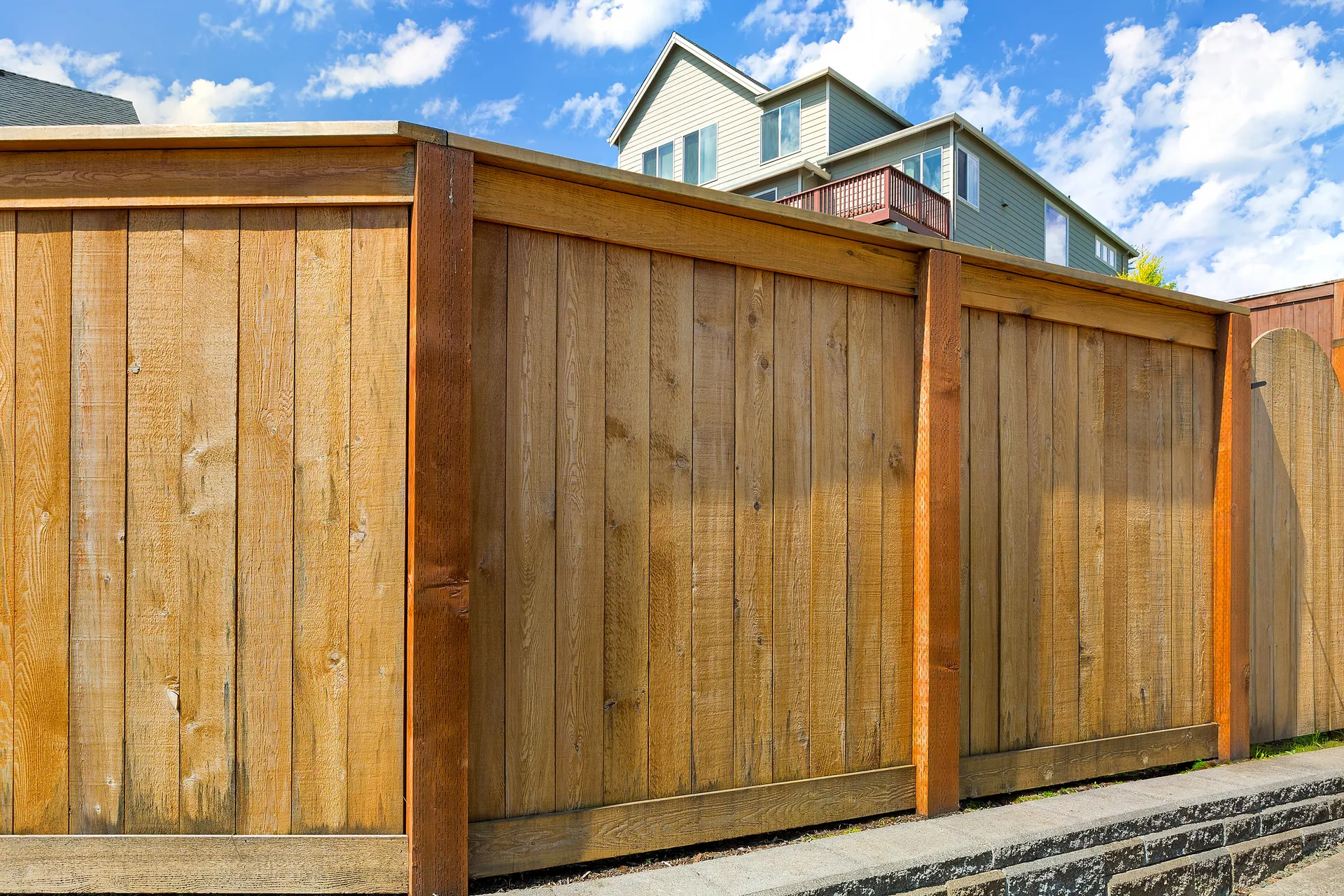
Rails and panels. Once the posts are set and stable, horizontal rails are attached between posts. For wood fences, the crew then attaches individual boards or pre-built panels to the rails. For vinyl and aluminum fences, pre-assembled panels slide or lock into the posts. Chain link gets stretched between terminal posts and attached with ties.
Gates. Gates are hung last. The crew installs gate posts (which are typically larger or reinforced), mounts the hinges, hangs the gate, and installs the latch hardware. Gate posts get extra concrete because they take more stress than line posts.
A typical 150-200 foot residential privacy fence takes 1-2 days with a crew of 2-4 workers. Larger properties, difficult terrain (slopes, rocks, tree roots), or complex layouts with multiple gates can extend this to 3 days or more.
Step 8: Post-Installation (Day of Completion and Beyond)
Concrete cure time. While fast-setting concrete firms up enough to hold posts within a few hours, it takes 24-48 hours to fully cure. Avoid putting heavy pressure on the fence (leaning on it, letting dogs push against it, hanging heavy items) for at least 48 hours after installation.
Gate adjustments. Gates sometimes need fine-tuning after installation, especially as the concrete fully cures and posts settle slightly. If your gate is not latching perfectly on day one, give it 48 hours and check again. If it is still off, call your contractor -- gate adjustment is typically covered under the installation warranty.
Final walkthrough. Walk the entire fence line with the crew foreman or project manager before making the final payment. Check that posts are plumb, panels are level, gates open and close properly, and the fence matches what was specified in the contract. Note anything that needs attention and get it in writing.
Cleanup. The crew should remove all construction debris, leftover materials, concrete bags, and old fencing (if they handled demolition). Your yard will have disturbed soil along the fence line -- most companies do basic grading but do not re-seed or re-sod.
Total Timeline: From First Call to Finished Fence
The typical overall timeline for a standard residential fence installation in Charlotte looks like this:
- Getting estimates and choosing a contractor: 1-2 weeks
- Utility locate and HOA approval: 1-2 weeks (can overlap with material ordering)
- Material ordering and scheduling: 1-2 weeks for stock materials, 3-6 weeks for custom
- Installation: 1-3 days
Total: 3-6 weeks for standard materials. 6-10 weeks for custom materials or complex projects.
Common Delays to Watch For
Even the best-planned fence projects can hit snags. These are the most common delays in the Charlotte market:
- Rain. Charlotte averages about 43 inches of rain per year, spread across every month. Crews cannot dig post holes in saturated ground -- the holes fill with water and the soil around the posts will not compact properly. A heavy rain day usually pushes installation back by 1-2 days.
- Utility conflicts. If the locate reveals a utility line running right through your planned fence route, the fence layout may need to be adjusted. This does not happen often, but when it does, it requires a conversation with the contractor about alternatives.
- HOA delays. Some Charlotte HOAs are fast (a week or two). Others meet monthly and have a multi-step review process that can drag out for 4-6 weeks. Submit your application as early as possible.
- Rock. Parts of the Charlotte area, particularly in the northern suburbs like Huntersville and Mooresville, have rock close to the surface. When the auger hits rock, the crew may need to switch to a jackhammer or core drill, which adds time and sometimes cost.
- Peak season backlogs. Spring and early summer are the busiest times for fence companies in Charlotte. If you call in April, you might wait 3-4 weeks just to get on the schedule. If timing matters, consider scheduling in late fall or winter when wait times are shorter and you may even get better pricing.
The fence installation process is straightforward when you know what to expect. Plan ahead, be realistic about timelines, and communicate clearly with your contractor. For help getting started, request a free quote from local Charlotte fence companies today.