 Best Fencing Charlotte
If you are building a pool in the Charlotte area -- or buying a home that already has one -- you need to understand the fence requirements before anyone fills it with water. North Carolina state law and Mecklenburg County building codes both mandate barriers around residential swimming pools, and the rules are specific. Getting them wrong can mean a failed inspection, a fine, or worse, a safety incident that could have been prevented.
Below is everything Charlotte homeowners need to know about pool fencing requirements, broken down in plain terms.
North Carolina Building Code Requirements for Pool Barriers
North Carolina follows the International Residential Code (IRC) for pool barrier requirements. The state adopted these standards to reduce drowning incidents, particularly among children under five. The code applies to all residential swimming pools, spas, and hot tubs that hold water deeper than 24 inches.
The core requirement is simple: every residential pool must be enclosed by a barrier that prevents unsupervised access by young children. That barrier can be a fence, a wall, the wall of a building, or a combination of all three. But it must completely surround the pool with no gaps or openings that a small child could squeeze through or climb over.
These are not suggestions. They are legal requirements enforced by Mecklenburg County Code Enforcement, and your pool will not pass final inspection without a compliant barrier in place.
Height Requirements: 48 Inches Minimum
The minimum height for a pool fence in Charlotte is 48 inches (4 feet), measured from the finished grade on the outside of the fence. This measurement is taken from the ground on the side away from the pool. If the ground slopes, the fence must meet the 48-inch minimum at every point along its length.
Many Charlotte homeowners choose to go taller than the minimum. A 54-inch or 60-inch fence provides additional safety and often meets HOA requirements that exceed the building code. In neighborhoods like Ballantyne, Weddington, and Huntersville, HOA covenants frequently require 5-foot or 6-foot fences around pools regardless of what the state code mandates.
One thing to watch out for: the 48-inch measurement must be continuous. You cannot have a fence that meets the height requirement in most places but dips below 48 inches where the grade changes. This trips up homeowners on sloped lots, which are common across the Charlotte metro, especially in areas like Mooresville and Lake Norman where properties often have significant grade changes toward the water.
Gate Requirements: Self-Closing, Self-Latching, Outward-Opening
Gates are the most common point of failure in pool fence inspections. The code is strict about gates because they are the most vulnerable access point. The code requires all of the following:
- Self-closing: Every gate must close and latch automatically from any open position. Spring hinges or hydraulic closers are the standard solutions. The gate should not be able to rest in an open position.
- Self-latching: The latch must engage automatically when the gate closes. It must be located on the pool side of the gate (the interior side), at least 54 inches above the ground, or be enclosed so that reaching through or over the gate cannot release it.
- Opens outward: Gates must swing away from the pool. This prevents a child from pushing a gate open toward the pool area. The outward-opening requirement applies to all access gates, not just the primary entry point.
The latch height is the detail that catches most people off guard. If your latch is at a standard 36-inch or 42-inch height, it will fail inspection unless it has a mechanism that prevents a child from releasing it by reaching over or through the fence. Most Charlotte fence installers solve this with a magnetic latch positioned at 54 inches or higher on the pool side.
If you are adding a gate to an existing pool fence, see our gate installation page for details on options and pricing.
Picket Spacing: No More Than 4 Inches
The maximum gap between vertical members (pickets, slats, or balusters) is 4 inches. This applies to all fence styles -- aluminum, wood, vinyl, and mesh. The 4-inch rule is based on preventing a small child from squeezing through the barrier.
This also applies to the gap between the bottom of the fence and the ground. The maximum clearance from the finished grade to the bottom of the fence is 4 inches on the outside, and 2 inches when measured on the pool side over a solid surface like a pool deck.
For chain link fences used as pool barriers, the mesh opening must not exceed 1.75 inches. Standard 2-inch chain link mesh does not meet this requirement, so you would need a smaller mesh size or add slats to reduce the openings.
Climbability Restrictions
Pool fence code includes anti-climb provisions that many homeowners do not know about. The fence must not have any features that would make it easy for a child to climb. Specifically:
- No horizontal rails or other climbable features between 2 inches and 45 inches above grade on the outside of the fence. This rules out certain fence styles, like ranch rail or horizontal slat designs, for pool barriers unless the horizontal members are on the pool side only.
- Chain link fences must not have openings larger than 1.75 inches, which is smaller than standard chain link mesh. The diamond pattern in chain link provides excellent footholds, which is why the mesh size requirement is stricter than for other fence types.
- No objects near the fence that could be used as a step. Trees, planters, chairs, storage boxes, and play equipment should not be placed within 3 feet of the outside of the pool fence.
The climbability issue is why aluminum fencing is one of the most popular choices for pool barriers in the Charlotte area. Vertical picket-style aluminum fences with no horizontal rails on the exterior meet the anti-climb requirement by design.
Materials That Meet Pool Fence Code
Several fencing materials can meet Charlotte's pool fence requirements. The material itself is not restricted -- what matters is that the finished fence meets the height, spacing, gate, and climbability standards. Here are the most common options:
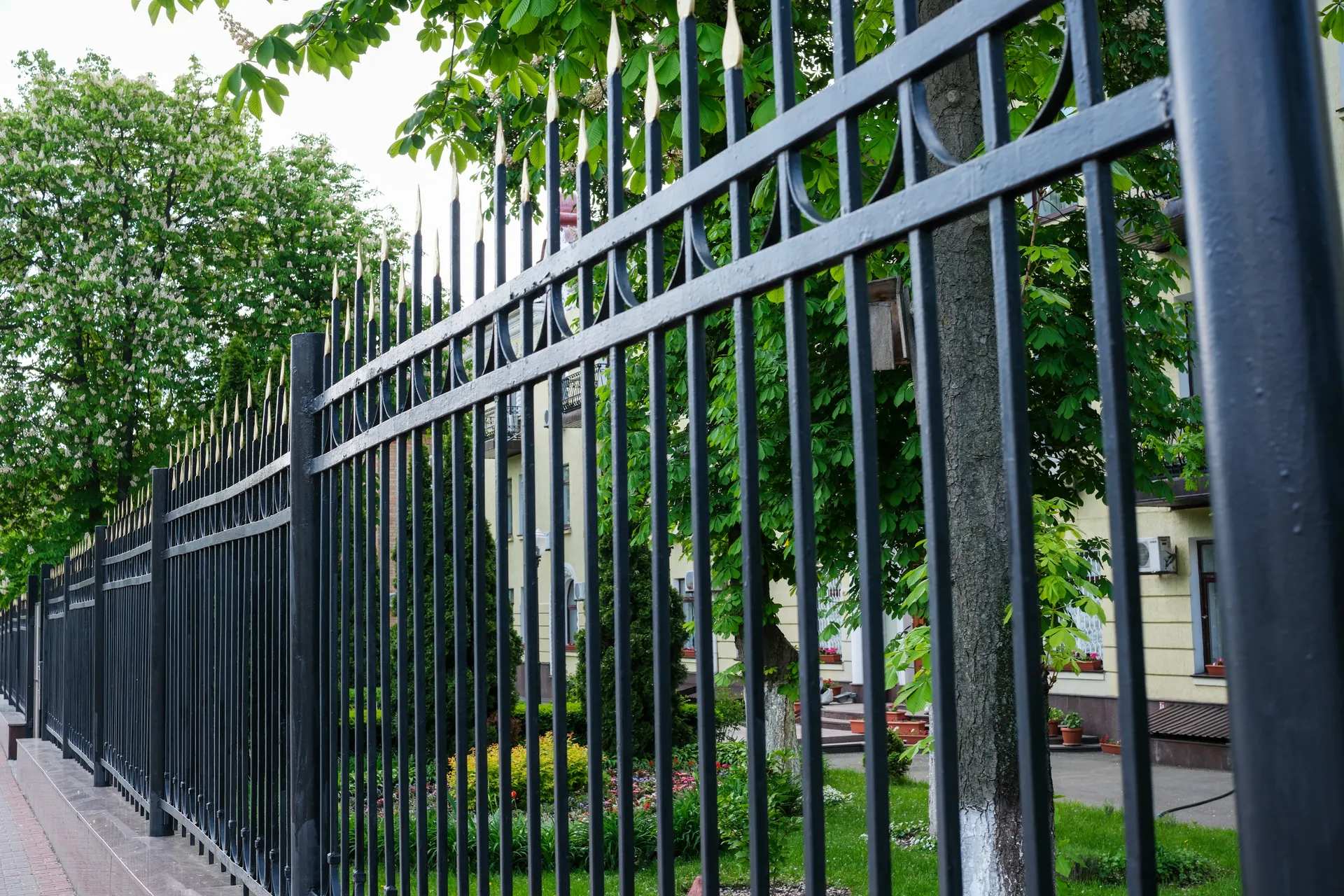
- Aluminum: The most popular pool fence material in the Charlotte metro. Ornamental aluminum with vertical pickets spaced 3.5 to 3.75 inches apart meets all code requirements. It does not rust, requires no maintenance, and comes in pool-code-compliant configurations from manufacturers like Jerith, Ameristar, and ActiveYards. Typical cost: $30 to $55 per linear foot installed.
- Vinyl: Vinyl picket fences can meet pool code if the picket spacing is 4 inches or less. Solid vinyl privacy panels also comply since there are no gaps. Cost: $25 to $45 per linear foot.
- Mesh pool fencing: Removable mesh pool fences are a popular option for families with young children. They meet code requirements when properly installed, and they can be removed once children are older. Cost: $15 to $25 per linear foot.
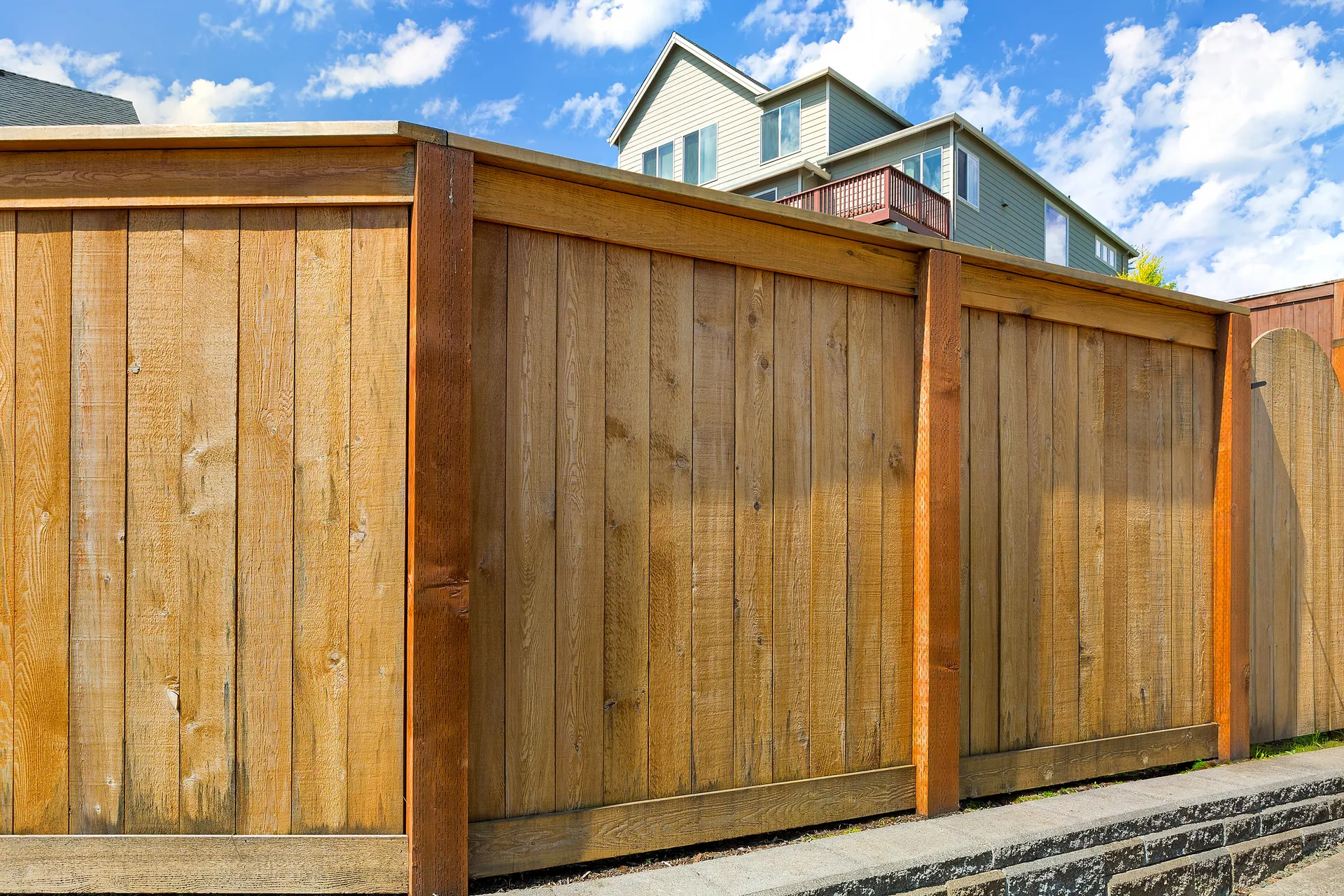
- Wood: Wood fences can meet pool code, but the picket spacing must be verified. A solid board-on-board privacy fence easily complies. A wood picket fence must have gaps of 4 inches or less. Cost: $20 to $35 per linear foot.
Mecklenburg County Inspection Process
When you build a pool in Mecklenburg County, the barrier fence is part of the overall pool permit and inspection process. The process works like this:
Your pool contractor will pull the building permit, which includes the pool structure, electrical, plumbing, and the barrier fence. The fence must be in place before the pool receives its final inspection and before the pool is filled with water. Some builders install the fence early in the process, while others wait until the pool deck is poured.
The inspection covers all the requirements listed above: fence height, gate function (self-closing, self-latching, outward-opening), picket spacing, ground clearance, and climbability. The inspector will physically test every gate to verify it self-closes and self-latches from multiple positions.
If the fence fails inspection, you will receive a correction notice with specific items to fix. Common failure reasons include latches mounted too low, gates that do not self-close from a fully open position, gaps exceeding 4 inches where the ground dips, and climbable features like horizontal rails on the outside.
Reinspection typically takes 1 to 2 weeks to schedule. During that time, the pool cannot be used. Getting it right the first time saves you time and frustration. For details on Charlotte permits and fence codes in general, see our Charlotte fence permit guide.
HOA Overlay Requirements
Many Charlotte neighborhoods have HOA covenants that add requirements on top of the building code. Common HOA restrictions include:
- Material restrictions: Some HOAs require aluminum or wrought iron pool fencing and prohibit chain link or mesh.
- Color restrictions: Black is the most commonly required color for pool fencing in Charlotte HOA communities. Some allow dark bronze or dark green.
- Height requirements: HOAs may require 54-inch or 60-inch fencing even though code only mandates 48 inches.
- Style requirements: Some communities mandate a specific fence profile or brand to maintain a uniform appearance.
Always check your HOA covenants before selecting a pool fence. Getting HOA approval in writing before installation prevents conflicts and potential removal orders later.
Above-Ground Pool Fencing Rules
Above-ground pools are subject to the same barrier requirements as in-ground pools when the water depth exceeds 24 inches. However, there is an exception: if the pool walls are at least 48 inches above grade and the access ladder or steps can be removed or locked, the pool wall itself can serve as part of the barrier.
In practice, this means that a standard above-ground pool with 48-inch walls does not necessarily need a separate fence -- but the ladder must be removable, lockable, or surrounded by a fence with a self-closing, self-latching gate. Many Charlotte homeowners with above-ground pools choose to install a fence anyway for added safety, especially if children live in the home or visit frequently.
If the above-ground pool has a permanent deck attached to it, the deck must have a compliant barrier with a self-closing gate.
Consequences of Non-Compliance
Failing to meet pool fence requirements in Charlotte is not just a code violation -- it carries real consequences:
- Failed inspections: Your pool cannot be finalized or legally used until the barrier passes inspection.
- Fines: Mecklenburg County can issue citations for non-compliant pool barriers, with fines that increase for repeat violations.
- Liability: If someone is injured in an unfenced or improperly fenced pool, the homeowner faces significant legal liability. North Carolina's attractive nuisance doctrine holds property owners responsible for hazards that attract children, and an unfenced pool is a textbook example.
- Insurance issues: Your homeowner's insurance may deny a claim related to a pool incident if the pool barrier did not meet code requirements at the time of the incident.
Cost of Pool Fencing in Charlotte
The cost of pool fencing depends on the material, the perimeter length, and the number of gates. A typical residential pool requires 100 to 200 linear feet of fencing. Here are approximate costs for the Charlotte area:
- Aluminum pool fence (most popular): $3,000 to $8,000 for a typical pool perimeter
- Removable mesh fence: $1,500 to $4,000
- Vinyl pool fence: $2,500 to $7,000
- Wood pool fence: $2,000 to $5,500
Each gate adds $300 to $800 depending on the material and hardware. Self-closing hinges and self-latching hardware are typically included when you specify a pool-code-compliant installation.
How to Verify Your Fence Meets Code
If you already have a pool fence and want to verify it meets current requirements, run through this checklist:
- Measure the fence height at the lowest point -- it must be at least 48 inches from the outside grade.
- Check picket spacing with a 4-inch ball. If the ball passes through any opening, the gap is too wide.
- Verify the ground clearance is 4 inches or less on the exterior and 2 inches or less over the pool deck.
- Test every gate. Open it and release it -- it should close and latch on its own from any position.
- Confirm gates open outward (away from the pool).
- Check that latches are at least 54 inches above grade or are enclosed so they cannot be reached by a child.
- Look for climbable features (horizontal rails, nearby objects) on the exterior side of the fence.
If anything does not pass, contact a Charlotte fence repair company to bring the fence up to code. Most repairs are straightforward -- replacing a latch, adding a self-closing hinge, or filling a gap under the fence are all quick fixes.
Pool safety is not something to cut corners on. The code exists for a reason, and a properly installed pool fence means you do not have to worry every time you walk out to the backyard. If you are building a pool or replacing an existing pool fence, get quotes from fence companies that specifically have experience with pool-code-compliant installations in the Charlotte area.