 Best Fencing Charlotte
From a distance, aluminum and wrought iron fences look nearly identical. Both feature vertical pickets, decorative finials, and that classic ornamental style that adds curb appeal to any Charlotte property. But up close and over time, these two materials could not be more different. The cost gap is significant, the maintenance demands are on opposite ends of the spectrum, and how they hold up in Charlotte's humid climate is a major deciding factor.
If you are considering an ornamental metal fence for your Charlotte home, this breakdown covers everything you need to know to make the right choice. For pricing details and installation specifics, visit our aluminum fence installation page.
Appearance: Nearly Identical From the Street
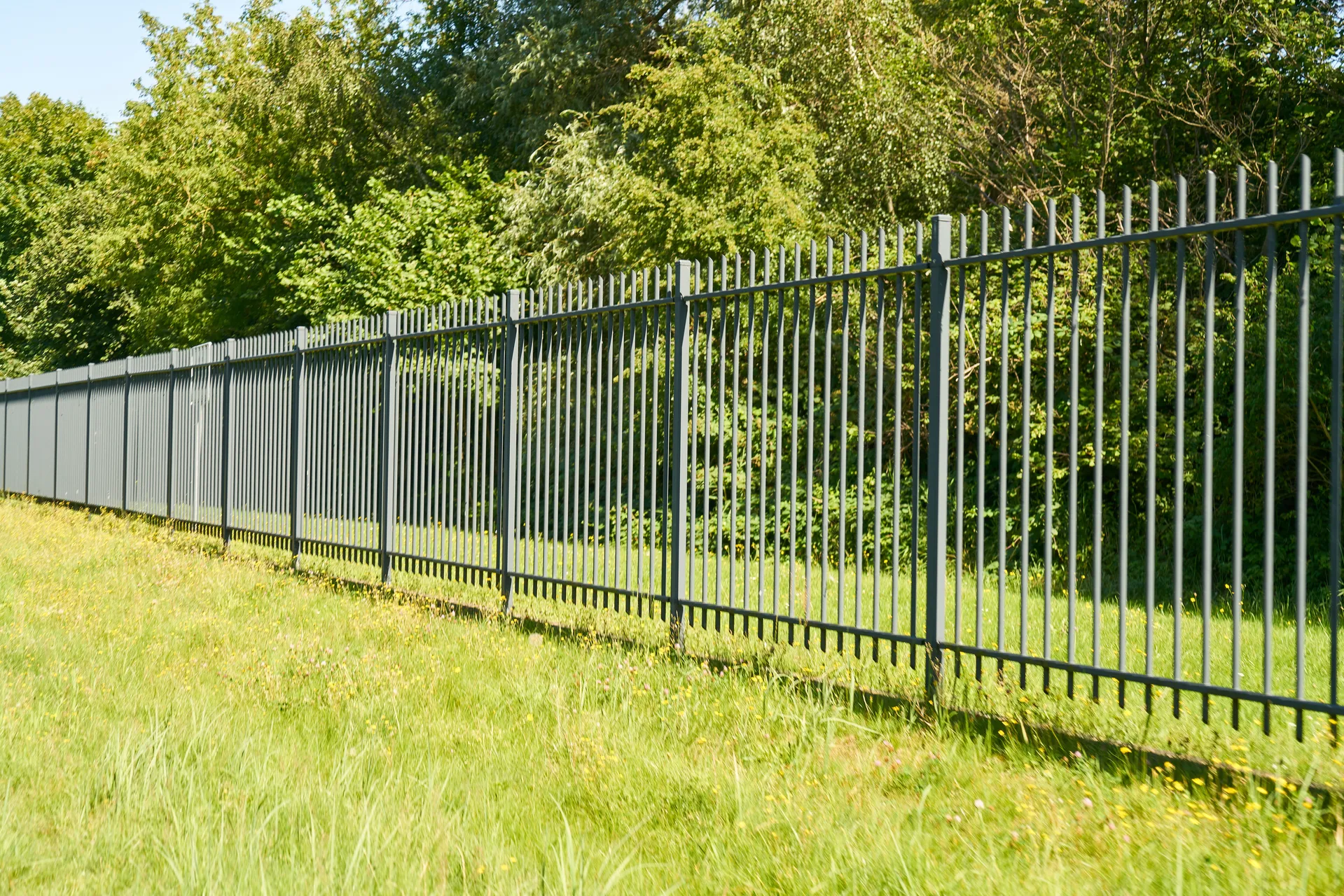
Modern aluminum fencing has come a long way. Manufacturers like Jerith, Ameristar, and ActiveYards produce aluminum fence panels that closely mimic the look of traditional wrought iron. The picket profiles, finial designs, and rail configurations are nearly the same. Both come in black (the most popular), bronze, and dark green finishes.
Where you can tell the difference is up close. Wrought iron has visible welds where pickets meet rails, and the joints often have a slightly hand-crafted appearance. Aluminum fencing uses internal mounting brackets or screwed connections that create cleaner, more uniform joints. Wrought iron also has a heavier, more substantial feel when you grip a picket -- the metal is thicker and denser.
From the street or even from a neighbor's yard, most people cannot tell the difference. This matters because curb appeal is one of the main reasons people choose ornamental fencing in the first place. If the visual result is the same, the question becomes: what are you paying extra for with wrought iron?
Cost Comparison: A Significant Gap
The price difference between aluminum and wrought iron is substantial, and it widens as the fence gets longer.
- Aluminum fencing: $30 to $55 per linear foot installed
- Wrought iron fencing: $50 to $100+ per linear foot installed
For a typical Charlotte front-yard fence of 100 to 150 linear feet, aluminum runs roughly $3,000 to $8,250, while wrought iron comes in at $5,000 to $15,000 or more. That is a difference of $2,000 to $7,000 on a single project. For more on fencing costs across all materials, see our Charlotte fence cost guide.
The cost difference comes from multiple factors. Wrought iron is heavier and more expensive as a raw material. It requires skilled welding for fabrication, which costs more in labor. Installation takes longer because the panels are heavier and often need to be custom-fit on site. And many wrought iron fences are custom fabricated by local metalworkers, adding a premium that factory-produced aluminum panels do not carry.
Aluminum panels come pre-assembled from the factory, fit standard post spacing, and can be installed by a two-person crew in a fraction of the time it takes to install wrought iron. That labor efficiency directly reduces the installed cost.
Maintenance: Night and Day
Maintenance is where the two materials diverge most dramatically, and it is the single biggest reason aluminum has overtaken wrought iron in the residential market.
Aluminum maintenance: Essentially none. Aluminum does not rust. The powder-coated finish resists fading, chipping, and peeling. An annual rinse with a garden hose is all it needs. Gate hinges and latches benefit from a shot of silicone lubricant once a year, but that is it. Over a 20-year span, your maintenance cost on an aluminum fence is close to zero.
Wrought iron maintenance: Significant and ongoing. Iron rusts. Period. Even with a quality paint job, the coating will chip over time from weather exposure, lawn equipment contact, or simple age. Once the bare metal is exposed, rust begins. In Charlotte's climate -- with 80%+ humidity in summer, 43 inches of annual rainfall, and morning dew nearly every day from April through October -- exposed iron starts rusting fast.
A wrought iron fence needs to be inspected annually for rust spots, and those spots need to be wire-brushed, primed, and repainted. Every 3 to 5 years, the entire fence should be scraped, primed, and repainted. That means either a full weekend of labor if you do it yourself, or $500 to $2,000 if you hire a painter (depending on the fence length and condition).
Over 20 years, wrought iron maintenance can add $3,000 to $8,000 in paint, primer, tools, and labor. That cost is on top of the higher purchase price, which makes the total cost of ownership dramatically higher than aluminum.
Rust and Corrosion: The Charlotte Climate Factor
Charlotte's humidity is the defining factor in this comparison. If you lived in a dry desert climate, wrought iron would last decades with minimal rust concerns. But Charlotte is not a desert. The Piedmont region's combination of heat, humidity, and rainfall creates an environment where iron corrodes aggressively.
Aluminum does not rust. It does not corrode in humidity. It does not react to rain, pool chemicals, or salt. Aluminum forms a natural oxide layer on its surface that protects it from further corrosion -- the opposite of iron, where the oxide layer (rust) is porous and accelerates further breakdown. For Charlotte homeowners, this means aluminum fencing looks the same on year 20 as it did on day one.
Wrought iron fights a constant battle against moisture. The welds are particularly vulnerable because the heat from welding changes the metal's structure and can compromise the protective coating. Anywhere the paint cracks or chips, rust begins within weeks in Charlotte's summer humidity. The base of fence posts, where they meet the ground, is the most vulnerable spot -- constant contact with moist soil and grass clippings creates a perfect environment for corrosion.
If you drive through Charlotte's historic neighborhoods -- Dilworth, Elizabeth, Fourth Ward -- you will see wrought iron fences in various states. The ones that look great have an owner who stays on top of maintenance. The ones with flaking paint and rust streaks running down the pickets show what happens when you skip a few years. Aluminum fences in those same neighborhoods look the same whether they were installed last month or 15 years ago.
Weight and Installation Differences
Wrought iron is heavy. A standard 6-foot section of wrought iron fencing weighs 60 to 100+ pounds depending on the gauge and design. The same section in aluminum weighs 15 to 25 pounds. This weight difference affects every aspect of installation.
Heavier panels need sturdier posts, deeper footings, and more labor to lift and position. On Charlotte's clay soil, which can be difficult to dig in during dry spells, heavier fences also put more stress on the footings over time. Posts can shift more easily when they are supporting significantly more weight.
Aluminum's lighter weight makes it easier to install on slopes and uneven terrain. Most aluminum fence systems are designed with panels that can be racked (angled) to follow a slope without stair-stepping. Wrought iron is typically stair-stepped on slopes because the heavy rigid panels cannot flex, which creates gaps underneath that may require fill panels or landscaping to close.
Installation time for aluminum is typically 1 to 2 days for a standard residential project. Wrought iron takes 2 to 5 days depending on the complexity and whether any custom fabrication is needed on site.
Strength Comparison
This is wrought iron's clear advantage. Iron is stronger than aluminum. A wrought iron picket can withstand significantly more force before bending or breaking. If someone tries to push through or climb over a wrought iron fence, they are going to have a much harder time than with aluminum.
For residential use in the Charlotte area, this strength difference rarely matters. Aluminum fencing is more than strong enough for property boundaries, pool enclosures, and decorative front-yard applications. The pickets on a quality residential-grade aluminum fence (like Jerith or Ameristar residential series) are sturdy enough to resist impact from kids, dogs, and normal wear.
Where strength matters more is in commercial and high-security applications. If you need a fence to withstand deliberate force -- for a commercial property, government facility, or high-security residential compound -- wrought iron or commercial-grade aluminum (which uses thicker-gauge material) is the better choice.
Pool Code Compliance
Both aluminum and wrought iron fences can meet North Carolina's pool barrier code, which requires a 48-inch minimum height, picket spacing of 4 inches or less, and self-closing/self-latching gates. However, aluminum has a significant advantage here: most manufacturers offer specific pool-code-compliant models with the correct picket spacing, gate hardware, and rail configuration built in.
Wrought iron pool fences typically need to be custom fabricated to meet the exact code specifications, which adds to the cost. Aluminum pool fences come off the shelf ready to pass inspection. In the Charlotte market, aluminum is by far the more common choice for pool fencing -- it meets the code, costs less, and does not rust from constant exposure to pool water and chemicals.
Rackability on Slopes
Charlotte is not flat. Many properties across the metro, from Huntersville to Fort Mill to Matthews, have significant grade changes. How a fence handles slopes matters.
Aluminum fence panels are designed to rack -- meaning the pickets pivot within the rails to follow a slope while keeping the rails parallel to the ground. Most residential aluminum systems can rack up to about 30 inches over a standard 6-foot panel width. This creates a clean look on sloped terrain without stair-stepping.
Wrought iron panels are rigid. The welded construction does not allow the pickets to pivot. On slopes, wrought iron must be stair-stepped, which creates triangular gaps at the bottom of each step. These gaps can be filled with custom panels, but that adds fabrication cost and installation time. On properties with significant elevation changes, the stair-stepped look can be less attractive than a smoothly racked aluminum fence.
When Wrought Iron Makes Sense
Despite the maintenance burden and higher cost, there are situations where wrought iron is the right call:
- Historic homes: If you own a property in Dilworth, Fourth Ward, or another Charlotte historic district, the original fence may have been wrought iron. Replacing it with aluminum might not fit the home's character, and some local historic preservation guidelines may require iron for authenticity.
- Ultra-high security: For commercial or high-value residential properties where physical strength and forced-entry resistance are critical, wrought iron's superior strength justifies the cost and maintenance.
- Custom artistic designs: Wrought iron can be fabricated into intricate, one-of-a-kind designs by a skilled metalworker. Scrollwork, custom finials, family crests, and other artistic elements are possible with iron in ways that factory-produced aluminum cannot replicate.
- Matching existing iron elements: If your property already has wrought iron gates, railings, or other features, matching the new fence to the existing metalwork creates a cohesive look.
When Aluminum Wins
For the vast majority of Charlotte residential applications, aluminum is the better choice:
- Lower upfront cost: 40% to 60% less than wrought iron for the same visual result.
- Zero maintenance: No painting, no rust treatment, no ongoing costs.
- Better in Charlotte's climate: Humidity and rain are non-issues for aluminum. For more on choosing materials that hold up in NC weather, see our best fence materials for NC's climate.
- Easier slope installation: Rackable panels follow terrain smoothly without stair-stepping.
- Pool-code ready: Off-the-shelf models meet NC barrier requirements.
- Lighter weight: Easier on posts and footings, simpler installation.
- Lower total cost of ownership: When you factor in 20 years of maintenance, aluminum costs half or less of what wrought iron costs over its lifetime.
Charlotte-Specific Recommendations
For Charlotte homeowners trying to decide between these two materials, the straightforward recommendation is this: go with aluminum unless you have a specific reason to choose wrought iron.
If you are fencing a front yard in Ballantyne, Weddington, or Mooresville, aluminum gives you the ornamental look at a price that makes sense. If you are enclosing a pool in Indian Trail or Concord, aluminum meets the code and will not rust from splash-out and pool chemicals. If you want a decorative fence along a sloped front yard in Huntersville, aluminum's rackability handles the grade without stair-stepping.
The only Charlotte homeowners who should seriously consider wrought iron are those with historic properties where authenticity matters, those who want custom artistic metalwork, or those with specific security requirements that exceed what residential aluminum provides.
Talk to a couple of Charlotte aluminum fence installers and ask to see samples of both materials side by side. Most people are surprised at how close aluminum looks to iron -- and once they hear the price and maintenance differences, the decision becomes clear.