 Best Fencing Charlotte
Commercial fencing is a different game than residential fencing. The stakes are higher, the requirements are stricter, and the wrong choice can create liability issues or code violations that cost more to fix than the fence itself. Maybe you are securing a warehouse lot off I-85, enclosing a dumpster pad for a restaurant in South End, or putting up perimeter fencing around a new apartment complex in University City. Whatever the project, this guide covers what Charlotte business owners need to know.
Why Commercial Properties Need Different Fencing
A homeowner picks a fence based on looks, privacy, and budget. A business owner has to think about all of that plus security, liability, compliance, durability under heavy use, and how the fence affects day-to-day operations. The differences are significant:
- Security. Commercial properties face higher theft and vandalism risk than residential ones. Fencing needs to deter unauthorized access, not just mark a boundary. This often means taller fences, stronger materials, and controlled access points.
- Liability. If someone gets onto your commercial property and gets hurt, the fence (or lack of one) plays into the liability picture. Proper perimeter fencing with secure access points demonstrates that you took reasonable steps to control access to your property.
- Aesthetics and branding. An office park in Ballantyne has different aesthetic requirements than a construction staging yard off Brookshire Freeway. The fence needs to match the property's image. A rusted chain link fence in front of a Class A office building hurts your tenants' perception and your property value.
- Compliance. Charlotte's zoning code, the Americans with Disabilities Act, fire code, and sometimes industry-specific regulations all affect what kind of fence you can install, how tall it can be, and where gates need to go. Getting this wrong means tearing it down and doing it over.
- Durability. Commercial fences take more abuse than residential ones. Delivery trucks, equipment, foot traffic, weather exposure on large open sites -- the materials need to handle years of hard use without frequent repairs.
Common Commercial Fence Types in Charlotte
Commercial chain link. This is the workhorse of commercial fencing and the most common type you will see on Charlotte's commercial and industrial properties. Commercial-grade chain link uses heavier gauge wire (9-gauge or 6-gauge instead of the residential 11.5-gauge), larger posts (2-3/8 inch to 4 inch OD instead of residential 1-5/8 inch), and deeper concrete footings. Heights range from 6 feet to 12 feet.
Options include vinyl-coated chain link (black or green coating that looks better and resists corrosion), barbed wire or razor wire topping for high-security applications, and privacy slats that block visibility. Chain link with barbed wire is standard for warehouses, distribution centers, construction staging areas, and equipment yards throughout the Charlotte industrial corridors along I-77 and I-85.
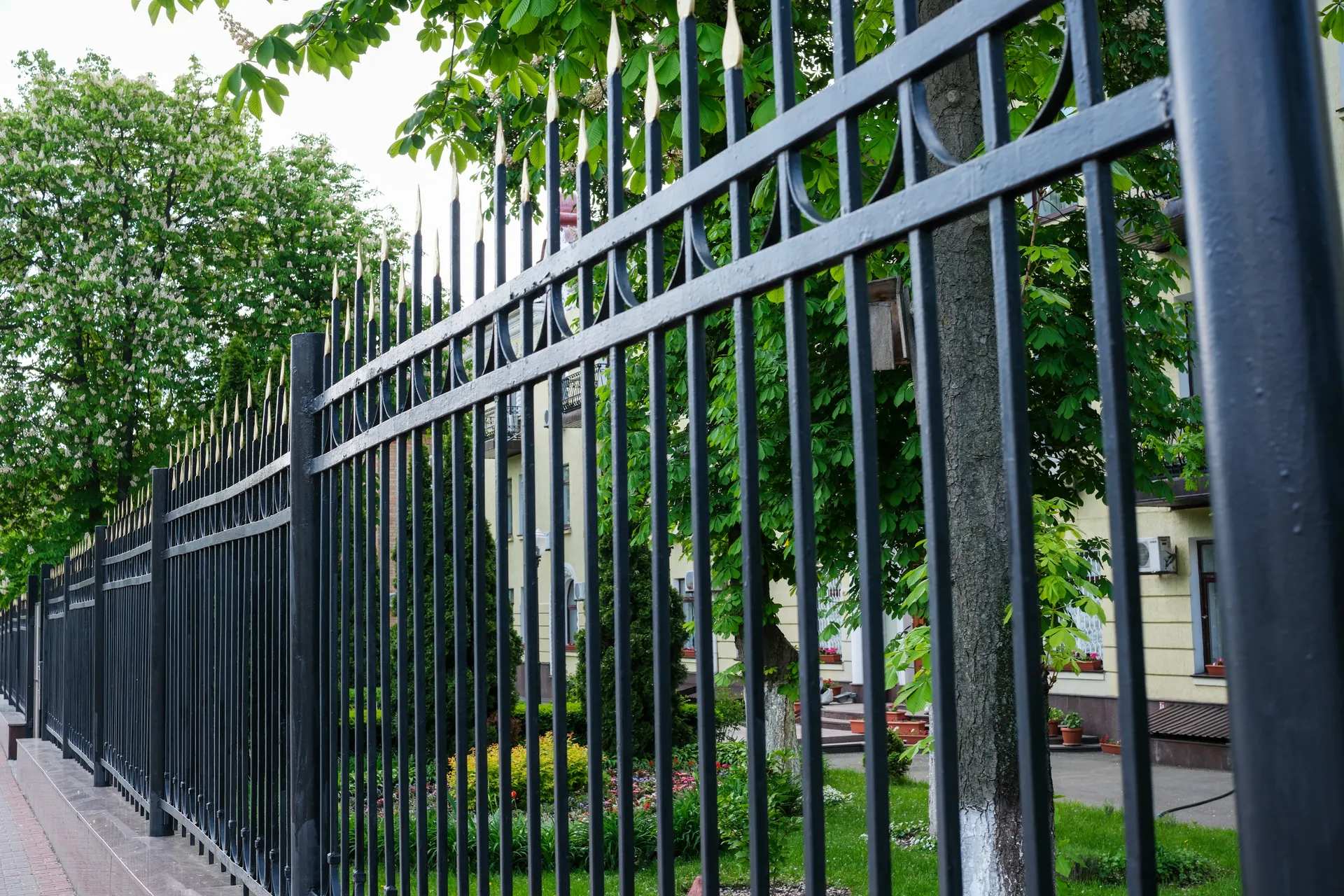
Ornamental aluminum and steel. For commercial properties where appearance matters -- office parks, retail centers, apartment communities, churches, schools -- ornamental metal fencing provides security without looking industrial. Commercial-grade aluminum uses thicker walls and stronger alloys than residential aluminum. Ornamental steel is even heavier duty but costs more and can rust if the finish is damaged.
You see ornamental aluminum and steel fencing throughout Charlotte's office parks in SouthPark, Ballantyne, and University Research Park, around apartment communities across the metro, and at churches and private schools. The typical height is 4-6 feet, and most include decorative spear-top or flat-top pickets.
Steel palisade and anti-climb fencing. For properties that need serious security -- data centers, utility substations, government facilities, high-value storage -- steel palisade fencing and anti-climb mesh panels provide maximum protection. These fences are designed to be extremely difficult to cut, climb, or breach. They are expensive ($40-$80+ per linear foot installed) but necessary for certain applications. Charlotte has a growing number of data centers and logistics facilities that use this type of fencing.
Temporary construction fencing. Charlotte's construction boom means temporary fencing is in constant demand. Chain link panels mounted on portable bases are the standard, typically 6 feet tall with a privacy screen attached. Construction fencing is rented rather than purchased, with monthly costs ranging from $3-$8 per linear foot depending on duration and quantity. Charlotte's building code requires construction sites to be fenced for safety and liability reasons.
Bollards and barriers. Not technically fencing, but bollards (short steel posts) are increasingly common around Charlotte commercial properties. They protect storefronts from vehicle impact, control traffic flow in parking lots, and provide perimeter security without blocking visibility. You see them in front of retail stores, banks, and restaurants throughout the Charlotte metro. Bollards range from $200-$1,000 each installed, depending on whether they are fixed, removable, or retractable.
Dumpster enclosures. Charlotte's commercial zoning ordinance requires dumpsters to be screened from public view in most commercial districts. A dumpster enclosure is typically a three-sided fence or wall with a gate, built from wood, vinyl, composite, or masonry to match the building's exterior. These run $2,000-$6,000 depending on size and material. Your property may already be required to have one -- check your conditional zoning or site plan.
Commercial Applications and What Works Best
Different commercial properties have different needs. Take a look at what works for the most common applications in the Charlotte market:
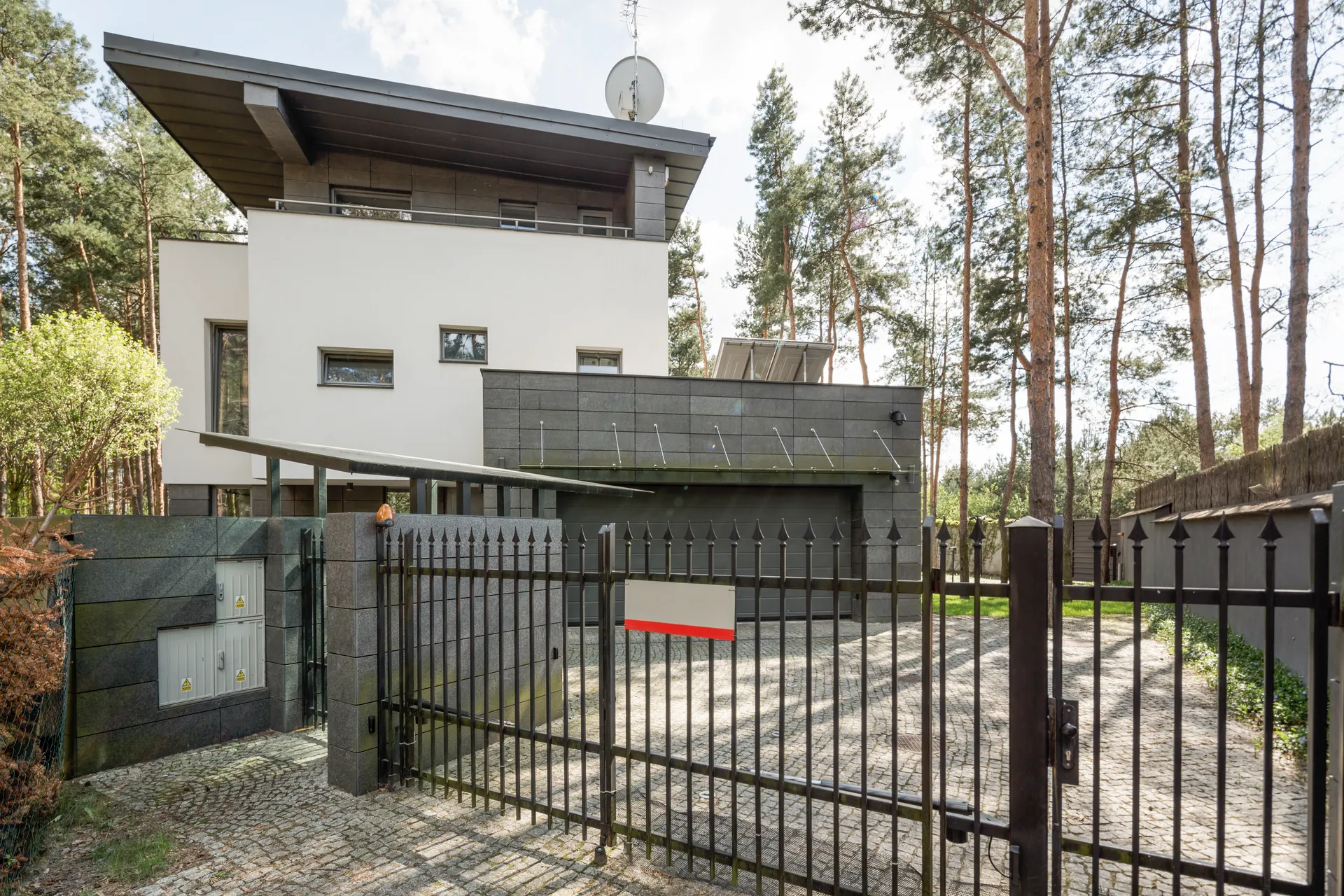
- Apartment complexes: Ornamental aluminum perimeter fencing (4-6 ft) with controlled access gates. Pool areas require code-compliant fencing with self-closing, self-latching gates. Dog parks within the community need 4-5 ft chain link or aluminum with double-gated entries.
- Office parks: Ornamental aluminum or steel fencing for aesthetics. Automated gate systems for parking access. Often combined with landscaping for a softer look.
- Retail centers: Perimeter fencing is less common, but dumpster enclosures, loading dock barriers, and patio enclosures for restaurants are standard needs.
- Construction sites: Temporary chain link panels (6 ft minimum, 8 ft preferred) with privacy screen. Lockable access gates for equipment and personnel.
- Schools and daycares: 6-foot chain link or ornamental fencing around playgrounds and perimeters. Security-oriented gate hardware that prevents unauthorized entry. Visibility through the fence is often required so staff can see who is approaching.
- Storage facilities: 8-foot chain link with barbed wire or razor coil. Heavy-duty automated slide gates for vehicle access. Individual unit enclosures inside the facility.
- Warehouses and distribution centers: 8-10 ft commercial chain link with barbed wire. Slide gates wide enough for semi trucks (24-30 ft opening). Impact-resistant bollards at gate posts and building corners.
- Parking structures: Cable railing, steel guardrails, or concrete barriers on upper levels. Decorative fencing or screening at ground level where the structure faces the street.
Commercial Gate and Access Control Options
Gates are often the most expensive single component of a commercial fence project, and for good reason -- they take the most abuse and handle the most critical function (controlling who gets in and out). Here are the main options for Charlotte commercial properties:
- Swing gates: Best for pedestrian access and low-traffic vehicle entrances. Require clearance space to open. Not ideal for high-traffic commercial entrances because they are slow.
- Slide gates: The standard for commercial vehicle access. They slide along the fence line on a track or cantilever system, requiring no swing clearance. Openings from 12-40+ feet are common. Motorized slide gates cost $3,000-$15,000 installed depending on size and operator quality.
- Barrier arm gates: Common in parking lots and garages. Fast operation, low cost ($2,000-$5,000), but they only control vehicles, not pedestrians.
- Access control systems: Keypads, card readers, telephone entry systems, and license plate recognition cameras can be integrated with any motorized gate. Expect to spend $1,500-$5,000 on access control hardware and installation, depending on the system complexity.
For a detailed look at gate options and pricing in Charlotte, see our gate installation page.
Charlotte Commercial Fence Permits and Zoning
Commercial fence permits in Charlotte are more involved than residential permits. The basics:
- Zoning compliance. Charlotte's Unified Development Ordinance (UDO) governs fence height, location, and material in commercial districts. Maximum fence height in most commercial zones is 8 feet, but fences in the front yard area (between the building and the street) are often limited to 4 feet or restricted to certain materials. Check your zoning district's specific requirements.
- Site plan compliance. If your property was developed under a conditional zoning plan or site plan, the approved plan may already specify fencing requirements. Deviating from the approved plan requires an amendment, which adds time and cost.
- Permits. Most commercial fences in Charlotte require a zoning permit. Fences over 7 feet may require a building permit as well. Automated gates with electrical components typically require an electrical permit. Your contractor should handle the permit applications, but verify this upfront.
- Barbed wire and razor wire. Charlotte restricts the use of barbed wire and razor wire. In most commercial zones, it is only permitted on fences that are at least 6 feet tall and only on the top portion of the fence. It is generally prohibited in commercial zones that are adjacent to residential properties. Check the specific rules for your location.
Properties in Fort Mill, Rock Hill, and other South Carolina municipalities have their own commercial fencing codes that differ from Charlotte's. Always verify requirements with the local planning department before starting a project.
ADA Compliance for Commercial Gates
If your commercial property is open to the public, your gates and fence access points must comply with the Americans with Disabilities Act. Key requirements include:
- Pedestrian gates must have at least 32 inches of clear opening width (36 inches is recommended).
- Gate hardware must be operable with one hand and without tight grasping, pinching, or twisting. Lever-style latches and push-button hardware comply; round knobs and complicated latches do not.
- The threshold at the gate opening must not exceed 1/2 inch in height.
- Self-closing gates must have an opening force of no more than 5 pounds.
- If the gate is the accessible route to the building, it must meet all accessible route requirements including slope, surface, and width standards.
ADA violations can result in complaints, lawsuits, and required retrofits. Get it right the first time by working with a commercial fence contractor who understands ADA requirements.
Cost Ranges for Commercial Fence Projects in Charlotte
Commercial fencing costs more per foot than residential fencing because of heavier materials, deeper footings, taller heights, and more complex installations. Typical ranges for the Charlotte market:
- Commercial chain link (6 ft, galvanized): $15-$30 per linear foot
- Commercial chain link (8 ft with barbed wire): $25-$45 per linear foot
- Vinyl-coated chain link (6-8 ft): $20-$40 per linear foot
- Ornamental aluminum (commercial grade, 4-6 ft): $35-$65 per linear foot
- Ornamental steel (4-6 ft): $40-$75 per linear foot
- Anti-climb / high-security panels: $40-$80+ per linear foot
- Dumpster enclosures: $2,000-$6,000 each
- Motorized slide gates (commercial): $5,000-$15,000 each
A typical commercial fencing project in Charlotte -- say, 500-1,000 linear feet of 8-foot chain link with two vehicle gates -- runs $20,000-$60,000 depending on specifications. Larger projects with high-security requirements can exceed $100,000.
Choosing a Commercial Fence Contractor
Not every fence company handles commercial work. Commercial projects require different equipment (larger augers, cranes for heavy gates, concrete trucks for mass footings), different insurance coverage, and experience with commercial permitting and code compliance. When evaluating contractors for a commercial project in Charlotte, look for:
- Commercial experience. Ask for references and photos from similar commercial projects they have completed in the Charlotte area. A company that mostly does residential backyards may not have the equipment or expertise for a 1,000-foot commercial perimeter.
- Proper insurance. Commercial fence contractors should carry general liability insurance of at least $1 million (many commercial property owners and general contractors require $2 million or more), plus workers' compensation insurance for their crew.
- Bonding. For larger commercial projects, the property owner or general contractor may require the fence contractor to be bonded. A surety bond guarantees that the work will be completed as specified in the contract. Ask the contractor about their bonding capacity.
- Permit handling. The contractor should handle all permit applications and inspections. They should know Charlotte's commercial zoning rules and be able to tell you exactly what permits are needed for your specific project and location.
- Timeline reliability. Commercial projects often have strict deadlines tied to building certificates of occupancy, tenant move-ins, or construction schedules. Ask the contractor about their current workload and whether they can commit to your timeline in writing.
For more details on commercial fencing services in Charlotte, visit our commercial fencing page or call us for a referral to experienced commercial fence contractors in the Charlotte area.