 Best Fencing Charlotte
Chain link and wood are the two most common fence types in the Charlotte area, and they sit at opposite ends of the spectrum in almost every way. Chain link is cheap, low-maintenance, and purely functional. Wood costs more, demands upkeep, but looks significantly better. Deciding between them comes down to what you value most -- and what your neighborhood and HOA will actually let you install.
Let's break down an honest comparison across every factor that matters.
Cost Comparison
This is usually the first question, so let's start here. In the Charlotte market, installed prices typically run:
- Chain link (4 ft residential): $12-$20 per linear foot
- Chain link (6 ft residential): $15-$25 per linear foot
- Wood privacy fence (6 ft, pressure-treated pine): $20-$30 per linear foot
- Wood privacy fence (6 ft, cedar): $25-$35 per linear foot
For a standard Charlotte backyard of 150-200 linear feet, that translates to roughly $1,800-$5,000 for chain link and $3,000-$7,000 for wood. The gap is significant -- chain link can cost 40-60% less than a wood privacy fence for the same property. For a full pricing breakdown across all materials, see our guide on how much a fence costs in Charlotte.
But upfront cost is only part of the picture. When you factor in maintenance costs over the life of the fence, the gap narrows.
Maintenance: Nearly Zero vs. Constant Attention
Chain link has a massive advantage on maintenance.
Chain link maintenance: Essentially nothing. A galvanized chain link fence sits there and does its job for decades without asking anything of you. No staining, no painting, no sealing, no board replacement. The only maintenance is occasional rust treatment if the galvanized coating gets damaged (which is rare) and tightening the tension bands every few years if the fabric starts to sag. Vinyl-coated chain link needs even less attention.
Wood fence maintenance: Wood fences in Charlotte need real, ongoing work to survive. The combination of heat, humidity, and 43+ inches of annual rainfall means untreated wood starts to gray, warp, and rot faster than in drier climates. This is the maintenance schedule you are signing up for with a wood fence:
- Staining or sealing every 2-3 years ($500-$1,500 per application for a typical backyard, or the cost of your own time and materials if you DIY it)
- Replacing individual warped, cracked, or rotting boards as they fail ($5-$15 per board plus labor)
- Checking and re-nailing loose boards after storms
- Clearing debris and vegetation from the fence line to prevent moisture buildup at the base
Over a 15-year period, maintenance on a wood fence in Charlotte can add $2,000-$5,000 to the total cost of ownership. Factor that in, and the lifetime cost difference between chain link and wood narrows considerably.
Durability and Lifespan
Chain link: 15-25+ years with virtually no maintenance. The galvanized steel mesh resists Charlotte's weather, does not rot, does not warp, and does not attract termites. The main failure point is the posts -- if they were set in concrete at the proper depth (30-36 inches for Charlotte's clay soil), they will last the full lifespan of the fence. Vinyl-coated chain link lasts even longer because the coating protects against the minor corrosion that galvanized-only fences can develop over decades.
Wood: 10-20 years depending heavily on the wood species and maintenance. Pressure-treated pine with regular staining lasts 12-15 years. Cedar with regular staining lasts 15-20 years. Without maintenance? Expect 7-10 years before significant rot and structural failure, especially in Charlotte's humid environment. The posts are always the first to go because they sit in ground contact where moisture is constant.
On pure durability, chain link wins. A chain link fence installed today will likely outlast a wood fence installed on the same day, with a fraction of the effort.
Appearance and Curb Appeal
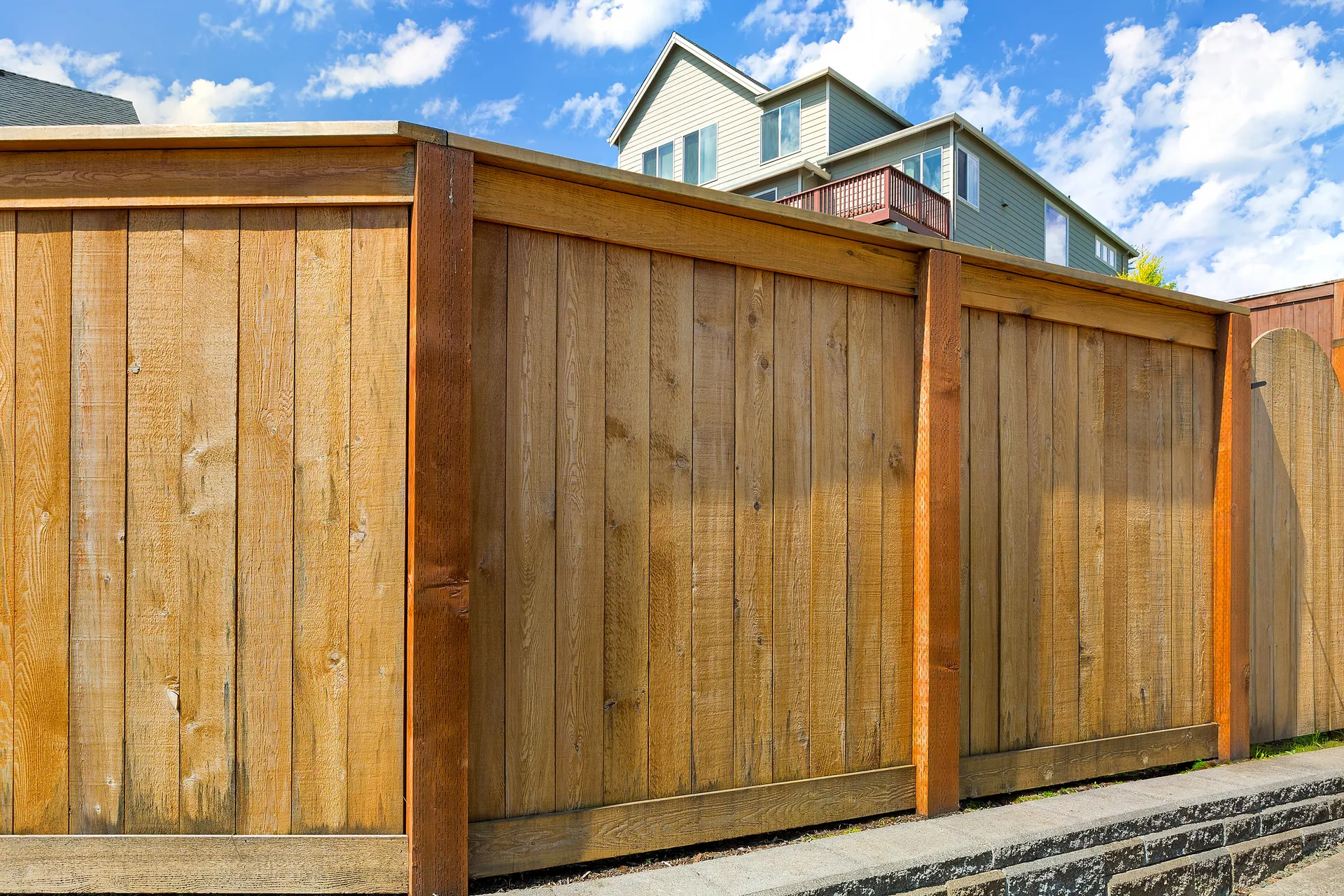
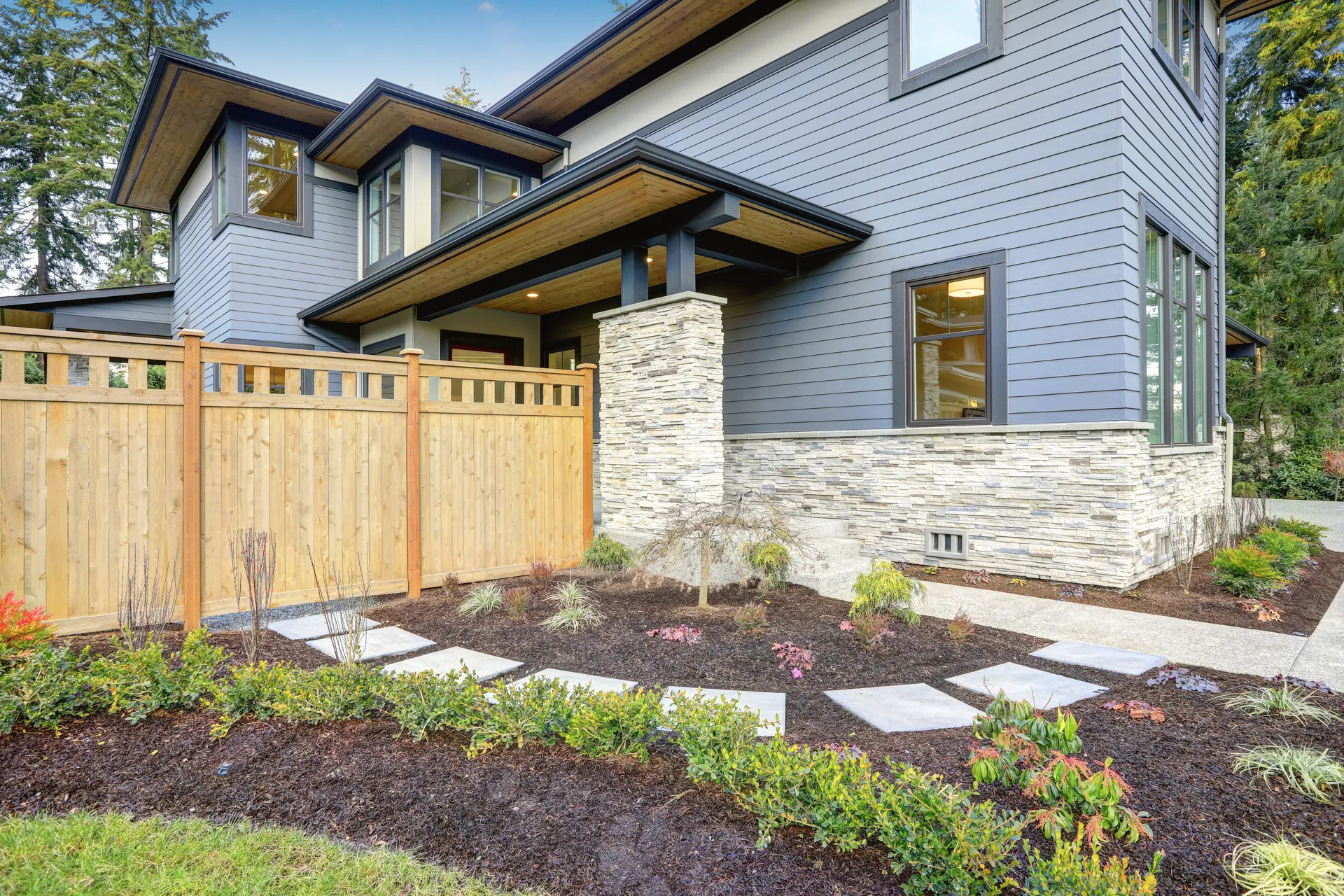
There is no debate here. Wood fencing looks better. A well-maintained cedar or stained pine privacy fence adds warmth, character, and visual appeal to a property. It blends with landscaping, complements the architecture of the home, and creates an inviting outdoor living space.
Chain link looks industrial. It does not matter how well it is installed -- a chain link fence says "functional boundary" rather than "intentional design choice." In front-facing applications, chain link can actually detract from your home's appearance and curb appeal.
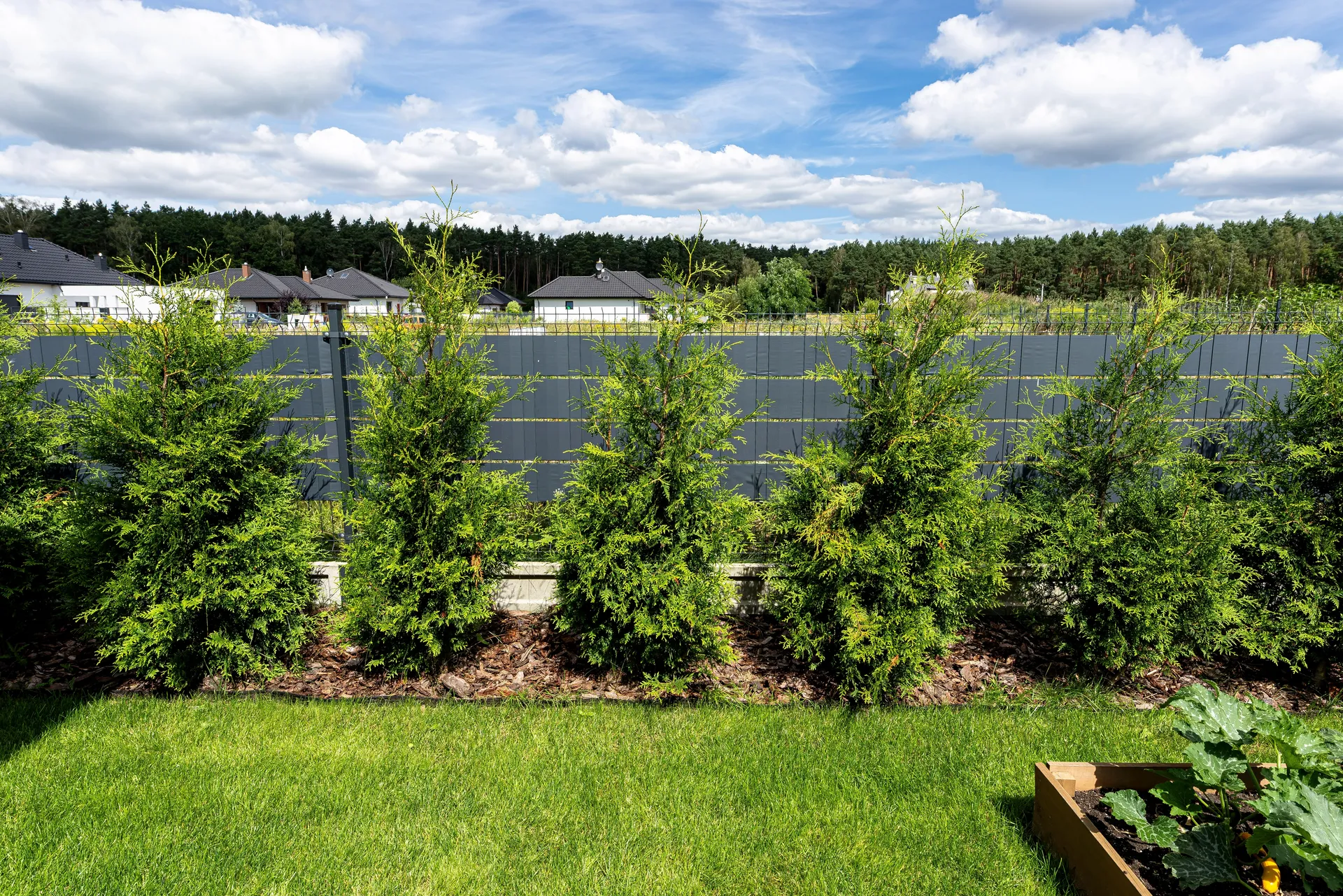
That said, vinyl-coated chain link in black or green looks noticeably better than standard galvanized silver. And chain link with privacy slats can approximate the look of a solid fence, though it still reads as chain link up close. For properties where appearance is secondary (backyards that are not visible from the street, side yards, dog runs), chain link's looks are perfectly acceptable.
Privacy
Wood wins this category completely. A 6-foot wood privacy fence blocks the view of your yard from neighbors and the street. Board-on-board construction (where alternating boards overlap on each side) eliminates even the small gaps between boards. If privacy is a priority -- and for most Charlotte homeowners it is -- wood is the natural choice.
Chain link provides zero privacy in its standard form. You can add privacy slats (vertical strips woven through the mesh) or a privacy screen (a woven fabric attached to the outside), but both are add-ons that increase cost and change the look. Slats add $3-$6 per linear foot and reduce airflow. Privacy screens cost $2-$4 per linear foot and need replacement every 3-5 years as the fabric degrades in UV exposure.
If you want both affordability and privacy, the math starts to close: chain link at $18/ft plus slats at $5/ft = $23/ft total, which is within range of a basic pressure-treated pine privacy fence at $22-$28/ft. At that point, the wood fence is the better choice because it looks better and provides true solid privacy.
Security
Both fence types provide basic security, but in different ways.
Chain link is harder to breach physically. Cutting through chain link requires wire cutters, and the mesh resists kicking and pushing. It also provides visibility -- you can see who is on the other side, which is an advantage for monitoring approaches to your property. This is why chain link is the standard for commercial security applications.
Wood privacy fences block visibility, which cuts both ways. An intruder cannot see into your yard to scope out your property, but you also cannot see them approaching. A tall wood fence can provide cover for someone trying to break in once they get over it. On the other hand, a 6-foot solid wood fence is harder to climb than a chain link fence (no footholds), and the solid barrier is a stronger psychological deterrent to casual trespassers.
For residential security in Charlotte, either type is adequate. Neither will stop a determined intruder, but both communicate "this is private property" and provide a physical barrier that deters opportunistic entry.
Pet Containment
For dog owners, chain link is often the better containment option despite its other drawbacks. It is harder for dogs to damage, provides no splinters, and the mesh prevents most escape attempts (though climbers can scale it). Adding a bottom tension wire prevents dogs from pushing under the fence.
Wood fences work well for dogs too, but they require more monitoring. Dogs can chew through wood boards, push loose boards aside, and squeeze through gaps that develop as boards warp over time. For a detailed comparison of fence types for specific dog behaviors, read our guide on the best fences for dogs in Charlotte.
Resale Value Impact
A wood privacy fence adds measurable value to a Charlotte home. Real estate agents consistently list a fenced backyard as a selling point, and buyers with kids or dogs will pay more for a home that already has a solid privacy fence. A well-maintained wood fence can add $2,000-$5,000 to a home's perceived value in the Charlotte market.
Chain link is neutral to slightly negative for resale value on residential properties. It does not hurt the home's value (a fenced yard is still better than an unfenced one), but it does not add the curb appeal boost that a wood or vinyl fence does. In higher-end Charlotte neighborhoods -- Ballantyne, Myers Park, Weddington, parts of Huntersville -- a chain link fence in a visible location can actually work against you with buyers who have certain expectations about property aesthetics.
HOA Restrictions
This is a critical factor in the Charlotte market, where a large percentage of homes are in HOA communities. Many Charlotte HOAs restrict or outright prohibit chain link fencing, at least in visible locations. Common HOA fence rules in the Charlotte area include:
- No chain link in front yards or side yards that face a street
- Chain link only in rear yards that are not visible from the street
- Chain link must be vinyl-coated (black or green) if allowed at all
- Height limits of 4 or 6 feet depending on the community
- Approved materials lists that specify wood, vinyl, or aluminum only
Before you decide on a material, check your HOA's architectural guidelines. In many Charlotte subdivisions in Weddington, Fort Mill, Huntersville, and south Charlotte, your choice may already be made for you.
When Chain Link Is the Smart Choice
Chain link makes the most financial sense in these situations:
- Backyard containment where privacy is not needed. If your backyard backs up to woods, an empty lot, or another property where you are not concerned about being seen, chain link does the containment job for less money.
- Dog runs and pet areas. A dedicated dog run area with chain link is the most durable and affordable option. Dogs cannot destroy it, and it lasts forever.
- Large properties on a budget. If you have 400+ linear feet to fence (common on larger lots in Mooresville, Fort Mill, and rural Mecklenburg County), chain link can save you thousands compared to wood. The cost difference at scale is substantial -- 500 feet of chain link might cost $8,000-$12,000 versus $12,000-$17,000 for wood.
- Temporary or secondary fencing. If you know you will replace the fence in a few years (maybe you are planning a major landscaping project or home addition), chain link is a sensible placeholder that does not waste money on a fence you are going to tear out.
- Commercial and utility purposes. For commercial properties, construction sites, equipment yards, and similar applications, chain link is the standard and the expectation. Nobody expects a warehouse to be surrounded by a cedar privacy fence.
When Wood Is Worth the Extra Cost
Wood is the better investment in these situations:
- Front-facing fence or visible from the street. Any fence that people can see from the street should look good. Wood fencing significantly outperforms chain link on curb appeal.
- Privacy is a priority. If you want to use your backyard without your neighbors watching, wood privacy fencing is the answer. No amount of chain link modification matches the privacy of a solid wood fence.
- Aesthetic preference. If the look of your outdoor space matters to you -- and for most Charlotte homeowners it does -- wood is worth the premium. A stained cedar fence with a well-maintained yard creates an outdoor room. A chain link fence creates a contained area.
- HOA requires it. If your HOA prohibits chain link, the decision is made. Wood is typically the most affordable HOA-compliant option, with vinyl and aluminum costing more.
- You are selling the home soon. A new wood privacy fence adds more resale value than a new chain link fence. If you are planning to list in the next few years, wood gives you a better return.
The Hybrid Approach
Something a lot of Charlotte homeowners do that makes a lot of sense: use wood fencing on the sides and front of the property where it is visible, and chain link in the back where it is not. This gives you curb appeal where it matters and saves money where it does not.
For example, a property with 50 feet of street-facing side yard and 150 feet of backyard fence line might spend $1,500-$1,750 on wood for the visible sections and $2,250-$3,750 on chain link for the back, for a total of $3,750-$5,500. Doing the entire property in wood would cost $5,000-$7,000. The hybrid approach saves $1,000-$2,000 while maintaining the home's appearance from the street.
Charlotte Neighborhood Norms
What your neighbors have matters more than you might think. Fence choice is partly a neighborhood norm, and going against it can look out of place. A quick look at what is common across different parts of the Charlotte metro:
- Older Charlotte neighborhoods (Plaza Midwood, NoDa, Dilworth, Elizabeth): Mix of wood privacy fences and ornamental fencing. Chain link exists on older properties but is being replaced with wood or vinyl as homes are renovated.
- Newer subdivisions (Indian Trail, Waxhaw, Harrisburg): Mostly wood and vinyl per HOA requirements. Chain link is uncommon and often restricted.
- Higher-end communities (Weddington, Ballantyne, Davidson): Wood, vinyl, and ornamental aluminum dominate. Chain link would be out of character.
- Rural and semi-rural areas (Mooresville, Fort Mill outskirts, Gastonia): Chain link is common and perfectly normal, especially for large lots and agricultural-adjacent properties.
- South Charlotte suburbs (Matthews, Mint Hill): Mix of both. Wood privacy fences are the default for visible areas, with chain link acceptable in backyards and side yards.
The best fence is the one that fits your budget, meets your needs, and works within your neighborhood's expectations. Chain link gives you the most fence for the least money. Wood gives you the most satisfaction for a higher price. Both are solid choices in the right context -- the key is being honest about which context is yours.