 Best Fencing Charlotte
Wood and vinyl are the two most popular privacy fence materials in the Charlotte area, and the decision between them comes down to a handful of factors: upfront budget, how much maintenance you want to do, how long you plan to stay in the house, and what look you prefer. Neither material is universally better -- each one has clear advantages depending on your situation.
This guide walks through the real differences between wood and vinyl fencing as they apply to Charlotte homeowners, with honest numbers on cost, maintenance, and lifespan.
Upfront Cost Comparison
Wood fencing costs less to install than vinyl in nearly every configuration. The numbers below reflect what Charlotte homeowners are paying in 2025 for a 6-foot privacy fence, fully installed:
- Pressure-treated pine: $20 - $28 per linear foot
- Cedar: $25 - $35 per linear foot
- Vinyl privacy fence: $25 - $45 per linear foot
For a typical Charlotte backyard of 150 linear feet, that works out to roughly $3,000 to $4,200 for pressure-treated pine, $3,750 to $5,250 for cedar, and $3,750 to $6,750 for vinyl. The difference between the cheapest wood option and mid-range vinyl is about $750 to $2,500 -- not as dramatic as some people assume, but still significant on a tight budget.
For a full breakdown of all material costs including aluminum and chain link, see our Charlotte fence cost guide.
Maintenance: The Real Cost Difference
And that's where the comparison gets interesting, because upfront cost only tells part of the story.
Wood fence maintenance in Charlotte is not optional -- it is essential. The combination of hot summers, 43 inches of annual rainfall, and humidity that regularly tops 80% creates perfect conditions for wood deterioration. Plan on the following:
- Staining or sealing every 2 to 3 years ($1.50 to $3 per linear foot if you hire it out, or $100 to $200 in materials if you do it yourself)
- Board replacement as individual pickets crack, warp, or rot ($5 to $15 per board including labor)
- Post repair or replacement if ground-contact rot develops ($150 to $300 per post)
- Pressure washing before each staining ($0.50 to $1 per linear foot if hired out)
Over 20 years, the total maintenance cost on a 150-foot wood fence can easily reach $3,000 to $5,000 -- sometimes more than the original installation cost. Many Charlotte homeowners start out with good intentions about annual maintenance, but life gets busy. A skipped staining season or two in Charlotte's climate can knock years off a wood fence's life.
Vinyl fence maintenance is minimal. The full list:
- Spray it down with a garden hose once or twice a year to remove dirt and mildew
- For stubborn mildew stains (common on the north-facing side in Charlotte's humidity), use a mild detergent or a pressure washer on a low setting
That is it. No staining, no sealing, no painting, no board replacement. Vinyl does not rot, does not attract termites, and does not absorb moisture. In a climate like Charlotte's, that translates to real time and money saved over the life of the fence.
Durability in Charlotte's Climate
Charlotte sits in USDA Hardiness Zone 7b/8a, with hot, humid summers and mild, wet winters. This climate is tough on outdoor wood. Constant moisture cycling -- wet from rain, dry from heat, wet again -- causes wood to expand and contract repeatedly, leading to cracks, warping, and premature aging.
Pressure-treated pine holds up reasonably well for 10 to 15 years with consistent maintenance. Skip the maintenance, and you will start seeing significant deterioration within 5 to 8 years. Posts set in the ground are the weak point -- ground-contact rot is the number one reason wood fences in Charlotte need major repair or replacement.
Cedar performs better because of its natural resistance to moisture and insects. A well-maintained cedar fence lasts 15 to 20 years in the Charlotte area. Cedar weathers to a silver-gray color if left unstained, which some homeowners prefer. Others stain it every few years to maintain the original warm tone. For a deeper dive into the differences between these two woods, check out our cedar vs. pressure-treated pine comparison.
Vinyl is essentially impervious to Charlotte's climate. It does not absorb water, so there is no expansion and contraction cycle. It will not rot, mildew does not penetrate the surface (it just sits on top and washes off), and termites have no interest in it. The main durability concern with vinyl is impact damage -- a heavy tree limb or a riding mower can crack a panel. But individual panels are replaceable without affecting the rest of the fence.
One climate factor worth noting: UV exposure. Charlotte gets significant sun, especially in south-facing yards. Lower-quality vinyl can yellow or become brittle after years of UV exposure. Higher-grade vinyl from brands like Bufftech, ActiveYards, and Barrette includes UV inhibitors that prevent this. Always ask your installer about UV protection -- it matters in North Carolina. Our guide to the best fence materials for NC's climate covers this in more detail.
Appearance and Style Options
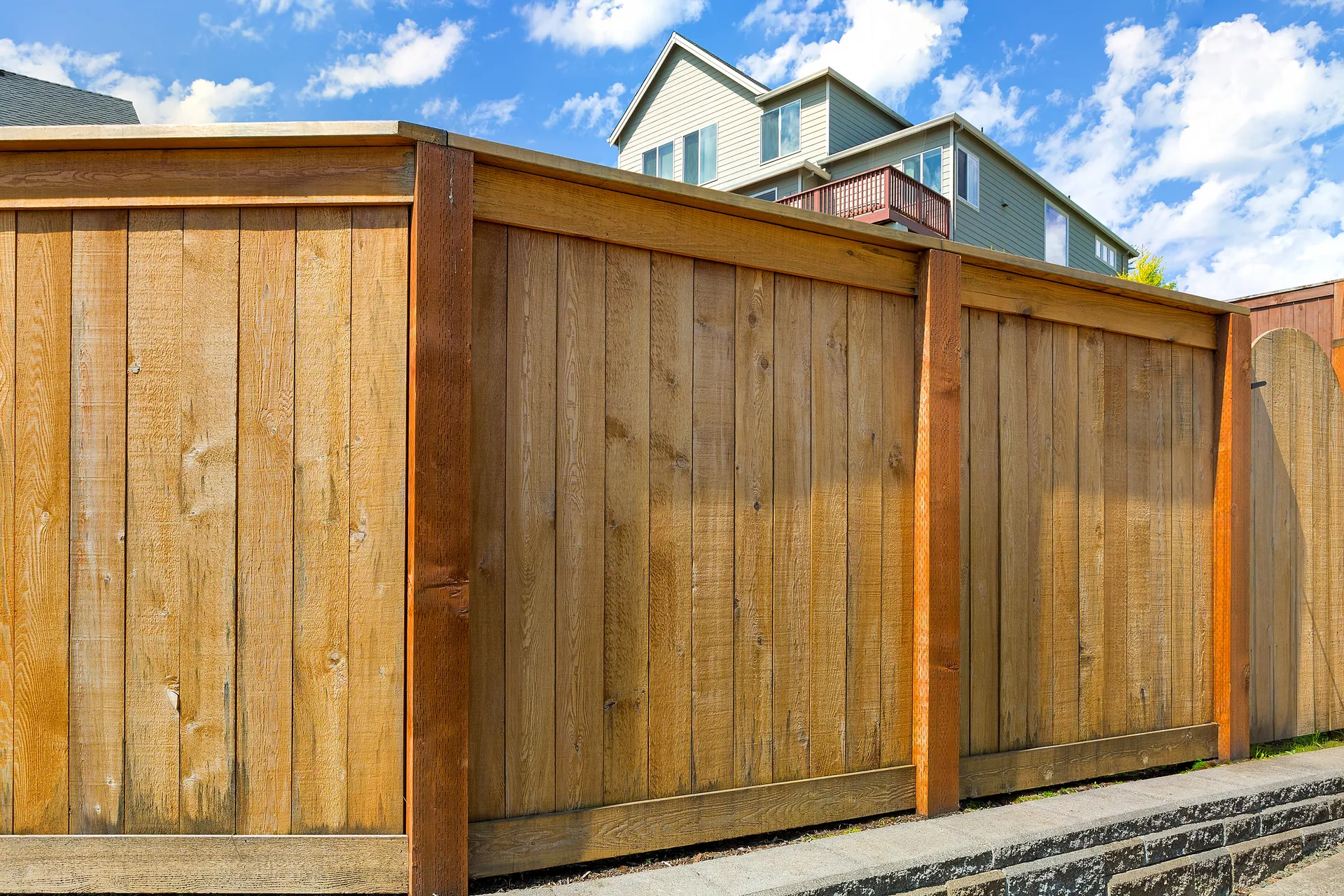
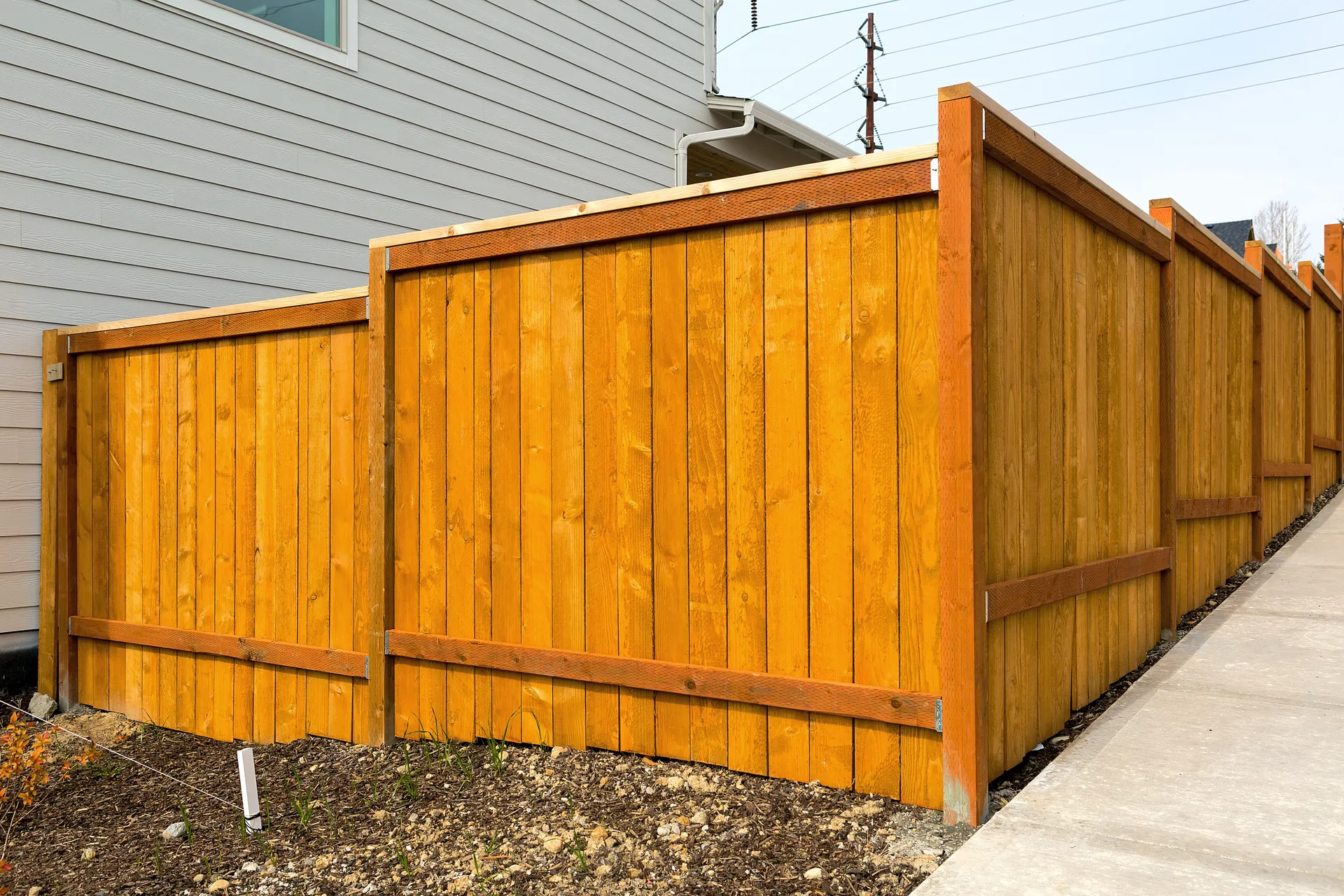
Wood has a genuine edge in this department. Nothing looks quite like a real wood fence. The grain, the texture, the warmth -- it is natural and it matches nearly every home style, from a Craftsman bungalow in Dilworth to a colonial in Matthews.
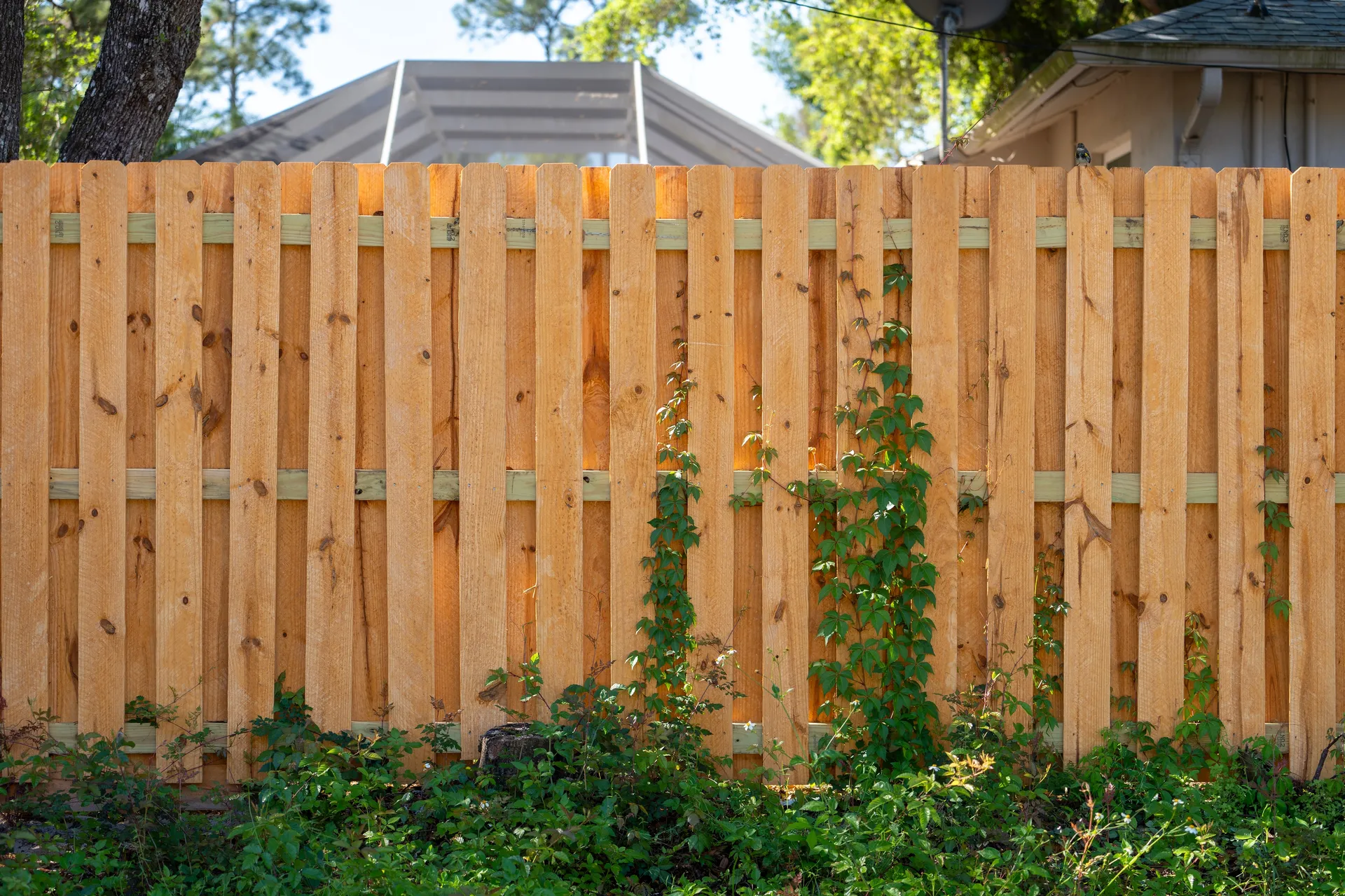
Wood can be built in almost any design: board-on-board, dog-ear, shadowbox, horizontal slat, lattice top, picket, split rail, and custom patterns. It can be stained in any color. It can be cut to follow unusual property lines or work around trees and landscaping. If you want a truly custom fence, wood gives you the most flexibility.
Vinyl has improved dramatically in the style department over the past decade. Modern vinyl fences are available in privacy, semi-privacy, picket, ranch rail, and shadowbox designs. Color options have expanded beyond basic white to include tan, gray, clay, and woodgrain textures. Some premium vinyl panels are textured to mimic real wood grain convincingly enough that you cannot tell the difference from 10 feet away.
That said, vinyl still has limits. You cannot stain it a custom color. You cannot easily modify panel widths or create non-standard designs. And while the woodgrain textures are good, they are not identical to real wood up close. In neighborhoods where architectural character matters -- places like Myers Park, Eastover, or the historic districts in Charlotte -- wood often fits the aesthetic better.
Lifespan Comparison
Typical lifespans for each material in the Charlotte area:
- Pressure-treated pine (maintained): 10 - 15 years
- Pressure-treated pine (neglected): 5 - 8 years
- Cedar (maintained): 15 - 20 years
- Cedar (neglected): 10 - 15 years
- Vinyl: 25 - 30+ years
Vinyl's lifespan advantage is significant. A vinyl fence installed today will likely still be standing and looking good when a wood fence installed on the same day has already been replaced once. Over 30 years, you would need to install a pressure-treated pine fence two or even three times to match the lifespan of a single vinyl fence.
Environmental Considerations
Wood fencing is a natural product, and sustainably sourced cedar or pine has a lower manufacturing carbon footprint than vinyl, which is made from PVC (polyvinyl chloride). If environmental impact is a priority for you, wood has the advantage at the manufacturing stage.
However, the maintenance equation shifts things. The stains, sealants, and chemical treatments used to preserve wood fences are not environmentally neutral. Pressure-treated wood contains chemical preservatives (most commonly alkaline copper quaternary, or ACQ) that can leach into soil over time. And a wood fence that lasts 12 years before heading to a landfill has a different environmental calculation than a vinyl fence that lasts 30 years.
Vinyl is recyclable in theory, though recycling infrastructure for PVC fencing is limited in the Charlotte area. Most vinyl fences that come down end up in landfills, where PVC does not biodegrade. Neither option is perfect from an environmental standpoint.
When to Choose Wood
Wood is the better choice if:
- Your budget is tight and you need to minimize upfront costs
- You want a natural look that ages gracefully with your home
- You need a custom design -- horizontal boards, unique heights, decorative tops
- You enjoy outdoor projects and do not mind spending a weekend staining every couple of years
- You live in a historic neighborhood where the HOA or local guidelines favor natural materials
- You are selling the house within 5 years and want maximum curb appeal at the lowest cost
If you go with wood, cedar is the better long-term choice for Charlotte's climate, even though it costs more upfront. The natural rot resistance saves you money and hassle down the road.
When to Choose Vinyl
Vinyl is the better choice if:
- You want a fence you can install and forget about for decades
- You are staying in the house long term and want the lowest total cost of ownership
- You are fencing a pool area (vinyl is ideal because it will not rot from constant splash exposure and meets pool code requirements)
- You live in a low-lying area prone to standing water, where wood rots faster
- You want white fencing that stays white without repainting (vinyl does not yellow the way painted wood does)
- You are tired of maintaining your current wood fence and want to upgrade to something permanent
Vinyl is especially popular in newer Charlotte subdivisions in Huntersville, Fort Mill, and Indian Trail, where many HOAs actually prefer or require vinyl because it stays uniform in appearance over time.
Charlotte-Specific Climate Factors
A few things about Charlotte's weather make this decision different from what you would read in a generic fencing guide:
Humidity. Charlotte's summer humidity averages 70% to 85%. This is harder on wood fencing than any other single factor. Wood absorbs moisture from the air even when it is not raining, which accelerates rot and mildew growth. Vinyl is unaffected.
Storms. Charlotte gets its share of severe thunderstorms, especially from May through September. High winds can damage both wood and vinyl fences, but the failure modes are different. Wood fences tend to lose individual boards and lean when posts rot at the base. Vinyl fences are more likely to crack or shatter a panel from impact. Both are repairable, but vinyl panel replacement is typically faster and cleaner than rebuilding a section of wood fence.
Red clay soil. Mecklenburg County's red clay soil retains moisture against fence posts for extended periods after rain. This accelerates ground-contact rot in wood posts. Setting wood posts in concrete helps, but it does not eliminate the problem entirely. Vinyl posts are immune to this issue.
Termites. The Charlotte area has active subterranean termite populations. Untreated wood is an invitation. Pressure-treated wood resists termites, but the treatment can lose effectiveness over time, especially where the wood has been cut or notched. Vinyl is not a food source for termites.
Making Your Decision
For many Charlotte homeowners, the decision comes down to this: do you want to pay less now and more over time, or pay more now and less over time? Wood wins on upfront cost and natural beauty. Vinyl wins on lifespan, durability, and total cost of ownership.
The best way to decide is to get quotes for both materials from two or three local fence companies. Ask them to price out the same fence line in both wood and vinyl so you can compare the numbers side by side. Most Charlotte fence companies are happy to do this because they install both materials regularly.
For tips on keeping your new fence in top shape regardless of material, check out our fence maintenance tips for Charlotte homeowners. And if you are ready to get quotes, call us at to connect with experienced local contractors who can walk your property and give you a straight answer on pricing.