 Best Fencing Charlotte
A fence is one of those things you forget about until something goes wrong. A board falls off, a post starts leaning, or you notice green mildew creeping across the bottom panels. By the time most Charlotte homeowners pay attention to their fence, the damage has been accumulating for years. The good news is that basic fence maintenance is not hard or expensive. A couple hours of attention once or twice a year can add 5 to 10 years to your fence's lifespan -- and in Charlotte's climate, that attention matters more than in most places.
Charlotte averages about 43 inches of rain annually, summer humidity regularly tops 80%, and UV exposure is intense from May through September. That combination is hard on every fence material. Below is how to maintain each type, along with a seasonal schedule that works for central North Carolina.
Annual Inspection Checklist
Regardless of your fence material, walk the entire fence line at least once a year and check for these issues:
- Leaning posts: Push against each post to check for wobble. Posts that move at the base are either rotting underground or the concrete footing has failed.
- Loose or missing fasteners: Screws back out over time, nails work loose, and brackets can corrode. Look for any hardware that has shifted or fallen off.
- Ground clearance: Check the gap between the bottom of the fence and the ground. If soil has eroded, you may have gaps that let pets escape. If soil has built up against wood panels, it accelerates rot.
- Gate function: Open and close every gate. Check hinges for sagging, latches for proper engagement, and the overall alignment of the gate within the frame.
- Vegetation: Trim back any trees, bushes, or vines growing against or through the fence. Vegetation holds moisture against the material and can push panels out of alignment.
- Damage from impact: Look for dents (aluminum), cracks (vinyl), broken boards (wood), or bent fabric (chain link) that may have occurred from storms, falling branches, or lawn equipment.
Do this inspection in early spring, ideally in March or April, after winter weather has done its worst but before the growing season buries problem areas in vegetation.
Wood Fence Maintenance
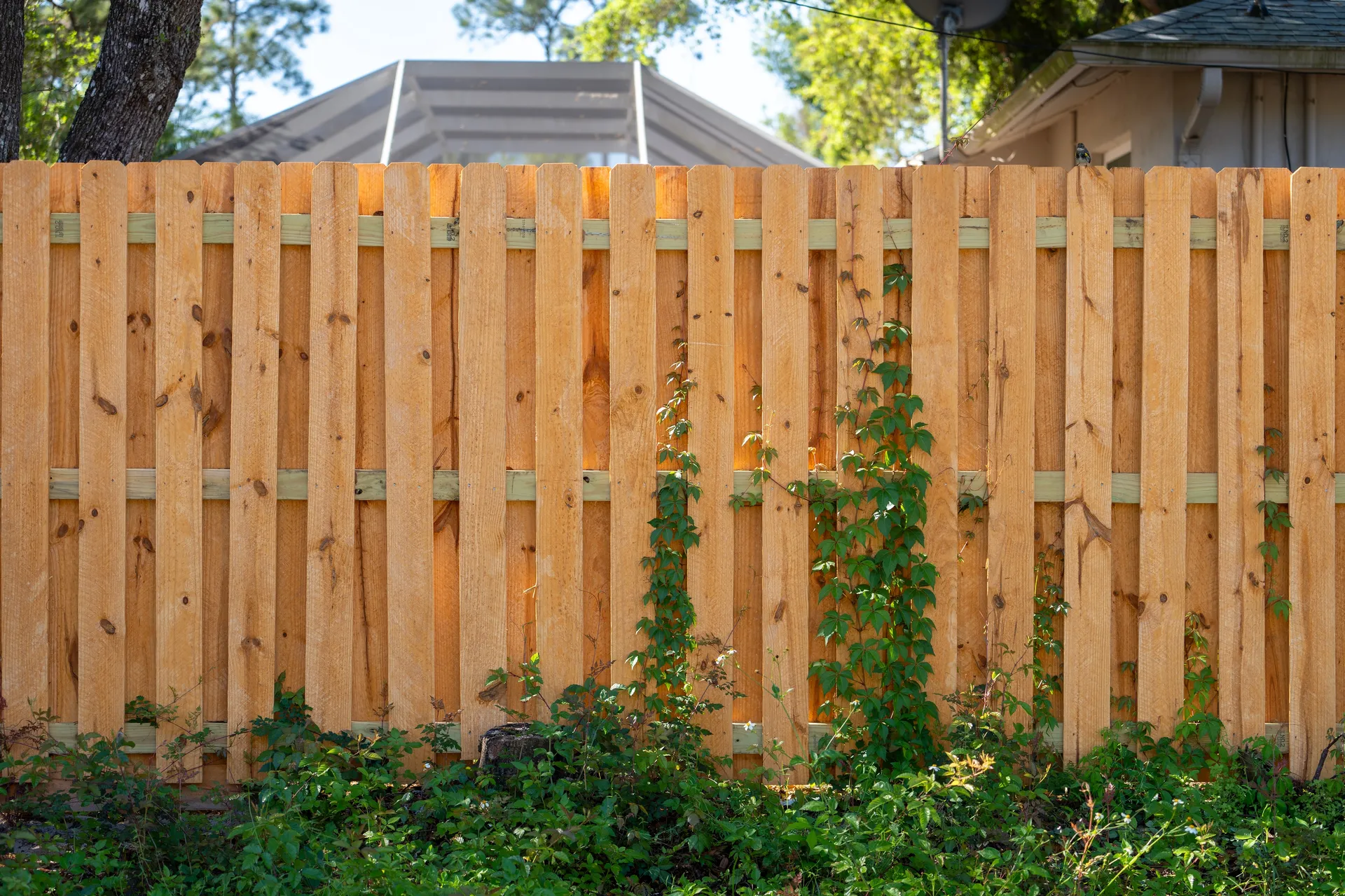
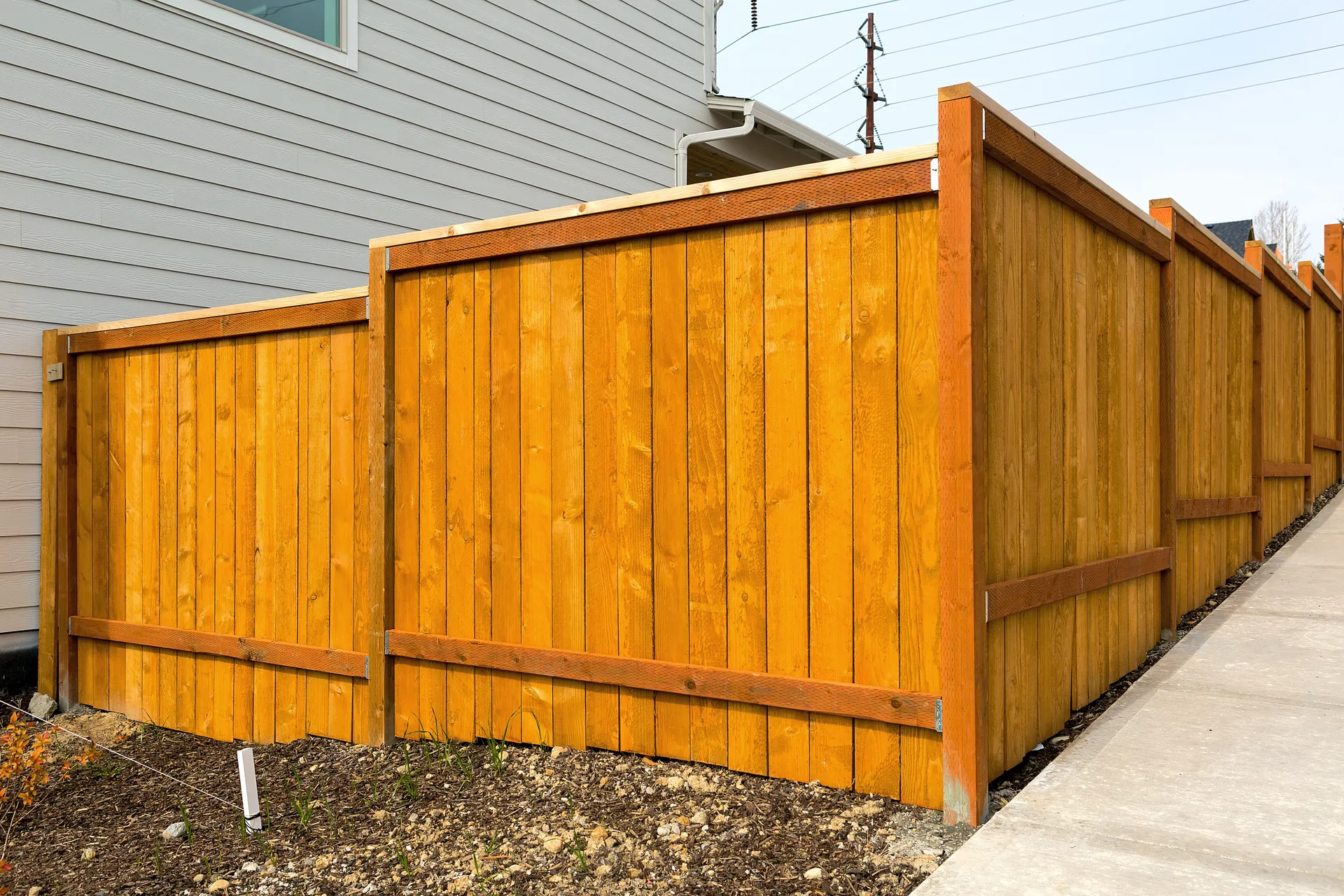
Wood fences need the most maintenance of any material, but they also reward that maintenance with years of extra life. Whether you have cedar or pressure-treated pine, the basics are the same. For a deeper dive into wood species differences, see our wood vs. vinyl fence comparison.
Staining and sealing schedule. This is the single most important thing you can do for a wood fence in Charlotte. Pressure-treated pine should be stained or sealed every 2 to 3 years. Cedar can go 3 to 4 years between applications if you are using a quality UV-protective stain, or it can be left natural if you prefer the weathered gray look.
The best time to stain a fence in Charlotte is mid-spring (April to May) or early fall (September to October). You need at least 2 days of dry weather with temperatures between 50 and 85 degrees. Charlotte's summer rainstorms are too unpredictable, and the intense heat can cause stain to dry too fast and not penetrate properly.
Replacing boards. Individual fence boards are inexpensive ($3 to $8 each at Charlotte-area lumberyards) and easy to swap out. Do not wait until a damaged board fails completely -- a cracked or warped board puts extra stress on adjacent boards and the rails they attach to. Keep a few spare boards in the garage so you can make quick replacements when you spot damage.
Checking posts. Fence posts are the structural foundation, and they are the first part to fail. In Charlotte's clay soil, posts can shift as the soil expands and contracts with moisture cycles. Check for wobble, and look for dark, soft wood at the base where the post meets the ground. If a post is rotting at ground level, it needs to be replaced or reinforced before the entire section collapses.
Preventing rot. Keep soil, mulch, and debris away from the base of wood fences. Build up at the bottom traps moisture and accelerates rot. Trim grass and weeds along the fence line regularly. If you use a sprinkler system, make sure the spray pattern is not hitting the fence directly -- repeated wetting without time to dry is one of the fastest ways to rot a wood fence in Charlotte's humidity.
Vinyl Fence Maintenance
Vinyl is marketed as maintenance-free, and compared to wood, it is. But it is not zero-maintenance, especially in Charlotte's climate. The combination of humidity, pollen, and red clay dust means vinyl fences get dirty, and the warm, moist conditions are ideal for mildew growth.
Pressure washing. The best way to clean a vinyl fence is with a pressure washer set to 1,500 to 2,000 PSI. Higher pressure can damage the vinyl surface. A fan-tip nozzle (25 or 40 degree) is safer than a pinpoint nozzle. Work from top to bottom, keeping the nozzle at least 12 inches from the surface. For most Charlotte homes, an annual pressure wash in spring keeps the fence looking new.
Mildew removal. If you see green or black spots, especially on the north-facing side or at the bottom of panels, that is mildew. A solution of 1 part white vinegar to 3 parts water works well for light mildew. For heavier growth, use a vinyl fence cleaner or a mix of 1/3 cup laundry detergent, 2/3 cup household cleaner (like TSP substitute), and a gallon of water. Apply with a soft brush, let it sit for 5 to 10 minutes, then rinse with the pressure washer.
Checking for damage. Vinyl does not rot, but it can crack in cold weather or from impact. Charlotte's occasional ice storms and fallen branches can crack panels. Check for cracks, chips, and loose panels after any significant storm. Vinyl panels are designed to slide out and be replaced individually, so repairs are usually straightforward.
Aluminum Fence Maintenance
Aluminum fencing is about as low-maintenance as it gets. It does not rust, does not need painting, and does not rot. But it is not invincible. For details on aluminum fence options, visit our aluminum fencing page.
Checking for damage. Aluminum pickets and rails can bend from impact -- falling tree limbs, kids roughhousing, or a lawn mower hitting a picket. Bent pickets are mostly a cosmetic issue, but a bent rail can compromise the structural integrity of a section. Walk the fence annually and note any pickets or rails that are bent, dented, or knocked loose from their brackets.
Lubricating hinges and latches. Gate hardware is the only part of an aluminum fence that needs regular attention. Apply a silicone-based lubricant to hinges and latches once a year. Do not use WD-40 -- it attracts dust and grime. Silicone spray stays clean and works better in Charlotte's hot summers when metal expands.
Cleaning. An annual rinse with a garden hose is usually enough. If pollen or grime has built up, wipe down with soapy water and a soft cloth. Charlotte's pollen season (March through May) can leave a thick yellow coating on everything, and aluminum fences are no exception.
Chain Link Fence Maintenance
Chain link is tough and durable, but it is not immune to Charlotte's weather. The main concerns are rust, sagging fabric, and vegetation growing through the mesh.
Tightening fabric. Over time, chain link mesh can sag and lose tension, especially along longer runs. A tension bar and come-along tool can retighten the fabric. If the mesh has stretched significantly, a fence company may need to rehang the fabric using the existing framework. Sagging chain link looks neglected and is less effective as a barrier.
Rust prevention. Galvanized chain link resists rust, but the coating wears down over time, especially at cut edges and where the mesh connects to posts. Check for rust spots annually. Small areas of rust can be treated with a wire brush and a coat of rust-inhibiting spray paint. Vinyl-coated chain link lasts longer without rusting, so if you are in a high-moisture area of Charlotte -- near a creek, in a low spot, or backed up to woods -- the coated option is worth the extra cost.
Vegetation control. Vines and weeds love to grow through chain link mesh. Once established, they are extremely hard to remove without damaging the fence. Pull new growth as soon as you see it. If you have a persistent vine problem, consider a pre-emergent herbicide along the fence line in early spring.
Seasonal Considerations for Charlotte
Charlotte's four distinct seasons each bring specific challenges for fences. Time your maintenance accordingly for the best results.
Spring (March - May): This is your primary maintenance window. Do your annual inspection in March. Address any winter damage -- leaning posts, loose boards, cracked vinyl panels. Pressure wash vinyl and aluminum fences before pollen season peaks. If your wood fence needs staining, late April or May is ideal once temperatures stabilize and spring rains become less frequent.
Summer (June - August): Trim vegetation regularly. Charlotte's growing season is aggressive, and vines, weeds, and tree branches can engulf a fence in a matter of weeks if left unchecked. Check sprinkler systems to make sure they are not spraying directly on wood fences. Watch for insect activity -- carpenter bees bore into wood fence posts and rails, and their holes allow moisture in.
Fall (September - November): This is a good time for staining if you missed the spring window. Clean up fallen leaves along the fence line -- wet leaves sitting against wood fence panels accelerate rot. Check gate hardware before winter. Apply lubricant to hinges and latches. If trees overhang the fence line, prune back branches that could break under ice or snow load.
Winter (December - February): Charlotte winters are mild but not damage-free. Ice storms are the biggest risk -- heavy ice accumulation can snap fence boards, bend aluminum pickets, and pull chain link fabric off its rails. After any ice event, inspect the fence once the ice melts. Do not try to remove ice from the fence manually, as this can cause more damage than the ice itself.
When to Call a Professional vs. DIY
Most routine fence maintenance is DIY-friendly. Replacing a board, tightening a screw, applying stain, or pressure washing do not require special skills or equipment. But some situations call for a professional fence repair company:
- Leaning or broken posts: Replacing a fence post involves digging out the old concrete footing (often 18 to 24 inches deep in Charlotte's clay), setting a new post, and pouring new concrete. It is heavy work and getting the alignment right matters.
- Multiple damaged sections: If a storm took out three or more panels, a fence company can repair the sections faster and ensure structural integrity across the repaired area.
- Gate realignment: A sagging gate that drags on the ground or does not latch properly often needs hinge replacement or post adjustment. A professional can diagnose whether the gate hardware is the issue or whether the posts have shifted.
- Whole-fence staining: If your fence is 150+ linear feet, hiring a crew to stain it saves you a full weekend of labor and typically costs $500 to $1,200 depending on the fence size and stain type.
Maintenance Costs by Material
Typical annual maintenance costs by material type for Charlotte homeowners. For broader cost information, check out our guide on the best fence materials for NC's climate.
- Wood (cedar): $50 to $200 per year (stain/sealer every 3-4 years, occasional board replacement)
- Wood (pressure-treated pine): $100 to $300 per year (stain/sealer every 2-3 years, more frequent board replacement)
- Vinyl: $0 to $50 per year (annual pressure wash, occasional panel replacement from damage)
- Aluminum: $0 to $25 per year (lubricant for gate hardware, occasional rinse)
- Chain link: $0 to $50 per year (rust treatment, vegetation control)
Extending Your Fence's Life in NC Humidity
Charlotte's humidity is the single biggest factor working against your fence's longevity. Here are a few strategies that apply across all materials:
- Ensure proper drainage. Water should not pool at the base of your fence. If you have low spots that collect water after rain, regrade the soil to direct water away from fence posts.
- Maintain airflow. Do not let vegetation grow tight against the fence. A few inches of clearance allows air circulation that helps the material dry out after rain.
- Address problems early. A small repair now prevents a major replacement later. A single loose board costs $10 to fix. Ignoring it until the entire panel fails costs $200 to $400.
- Use quality materials from the start. If you are installing a new fence, investing in better materials and proper post-setting techniques pays dividends for years. A post set in concrete below the frost line (about 18 inches in Charlotte) will last far longer than one driven into the clay.
A well-maintained fence is an asset. A neglected fence is an eyesore that eventually becomes an expensive replacement project. Spending a few hours a year on basic care keeps your fence looking good, functioning properly, and lasting as long as the material allows. If your fence is already showing signs of damage, do not wait for it to get worse. Contact a Charlotte fence repair professional to assess what needs to be done before the next season makes it worse.