 Best Fencing Charlotte
If you have a dog in Charlotte, you need a fence. That is not a suggestion -- it is a practical reality. Mecklenburg County has leash laws that require dogs to be confined to their owner's property or on a leash at all times. Charlotte's busy roads, the coyotes that have moved into suburban areas across the metro, and the sheer number of other dogs in every neighborhood make an unsecured yard a liability.
But not every fence works for every dog. A fence that keeps a calm Golden Retriever in the yard might be useless against a determined Husky that treats fences like puzzle toys. The key is picking the right fence based on what your dog actually does.
Best Fences by Dog Behavior
Forget breed lists for a moment. What matters more than breed is behavior. A dog's individual personality -- how it interacts with the fence -- should drive your material and design choices.
For Jumpers
If your dog can clear a 4-foot fence, a 6-foot fence is the minimum. Some athletic breeds (Belgian Malinois, Vizslas, some pit bull mixes) can clear 6 feet without much effort, so consider adding a 45-degree inward-angled extension at the top or going with an 8-foot fence if code and your HOA allow it.
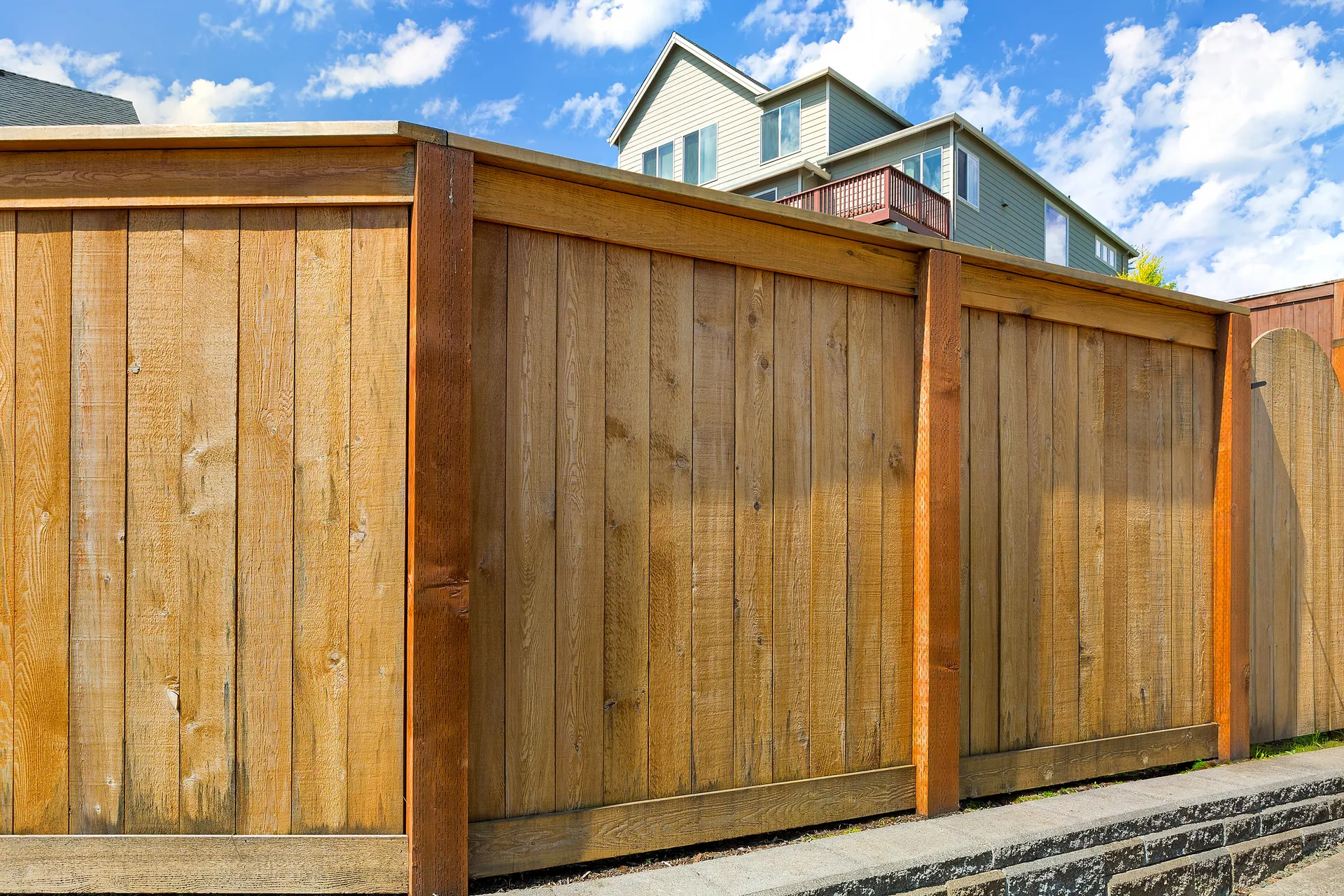
The fence style matters too. Avoid fences with horizontal rails on the dog-facing side -- they act as ladder rungs. A solid privacy fence is better for jumpers than a ranch-rail or split-rail fence because the dog cannot see what is on the other side, which reduces the motivation to jump in the first place.
Chain link is one of the worst choices for jumpers. Dogs can hook their paws into the mesh and climb it. If you already have chain link and your dog is a jumper, adding privacy slats can help by removing the visual trigger, but it does not solve the climbing problem.
For Diggers
Diggers are one of the most frustrating behaviors to fence against. A determined dog can dig under a fence in minutes, especially in Charlotte's softer clay soil after a rain.
The best solutions for diggers:
- Buried bottom rail or kickboard. A horizontal board at the bottom of the fence, set 2-4 inches into the ground, blocks most digging attempts. Many Charlotte fence companies offer this as an add-on to wood and vinyl privacy fences.
- Concrete footer. Pouring a narrow concrete strip along the base of the fence is the nuclear option, but it works. The dog hits concrete instead of dirt and gives up.
- L-footer. Attach wire mesh or hardware cloth to the bottom of the fence and bend it outward in an L-shape, burying it 6-12 inches underground and extending 12-18 inches outward. When the dog digs at the fence line, it hits the mesh and cannot get past it. This works well with chain link fences because the mesh can be attached directly to the bottom tension wire.
- Landscape rock. Placing large river rocks or decorative boulders along the fence line discourages digging and looks nice. This works well in combination with any fence material.
For Chewers
Some dogs, especially anxious dogs or bored puppies, will chew through fence materials. Wood is the worst choice for a chewer -- dogs can gnaw through a pressure-treated pine picket in a few sessions, and the chemicals in treated lumber are not safe for them to ingest.
For chewers, choose materials that cannot be chewed through:
- Vinyl fencing: Too smooth and hard for most dogs to get their teeth into. Thick-walled vinyl panels are practically chew-proof.
- Aluminum fencing: Metal is not chewable. The downside is that standard aluminum picket fences have gaps that do not provide containment for small dogs unless the picket spacing is tight enough.
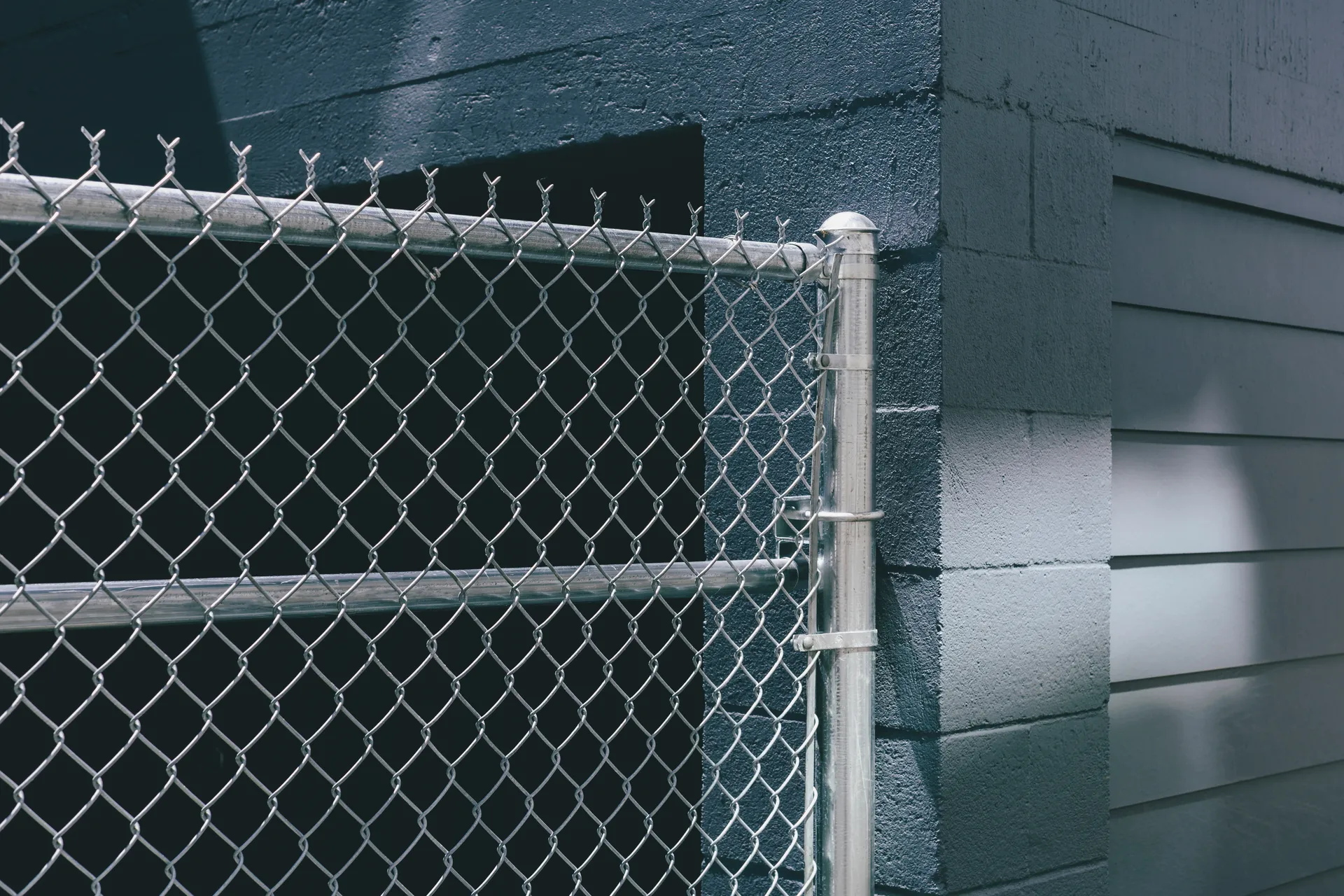
- Chain link: Dogs cannot chew through galvanized steel mesh. It is one of the most chew-resistant options available.
For Escape Artists
Some dogs combine jumping, digging, and pushing to find any weakness in the fence. For these dogs, you need a fence with no gaps, no footholds, and no weak points.
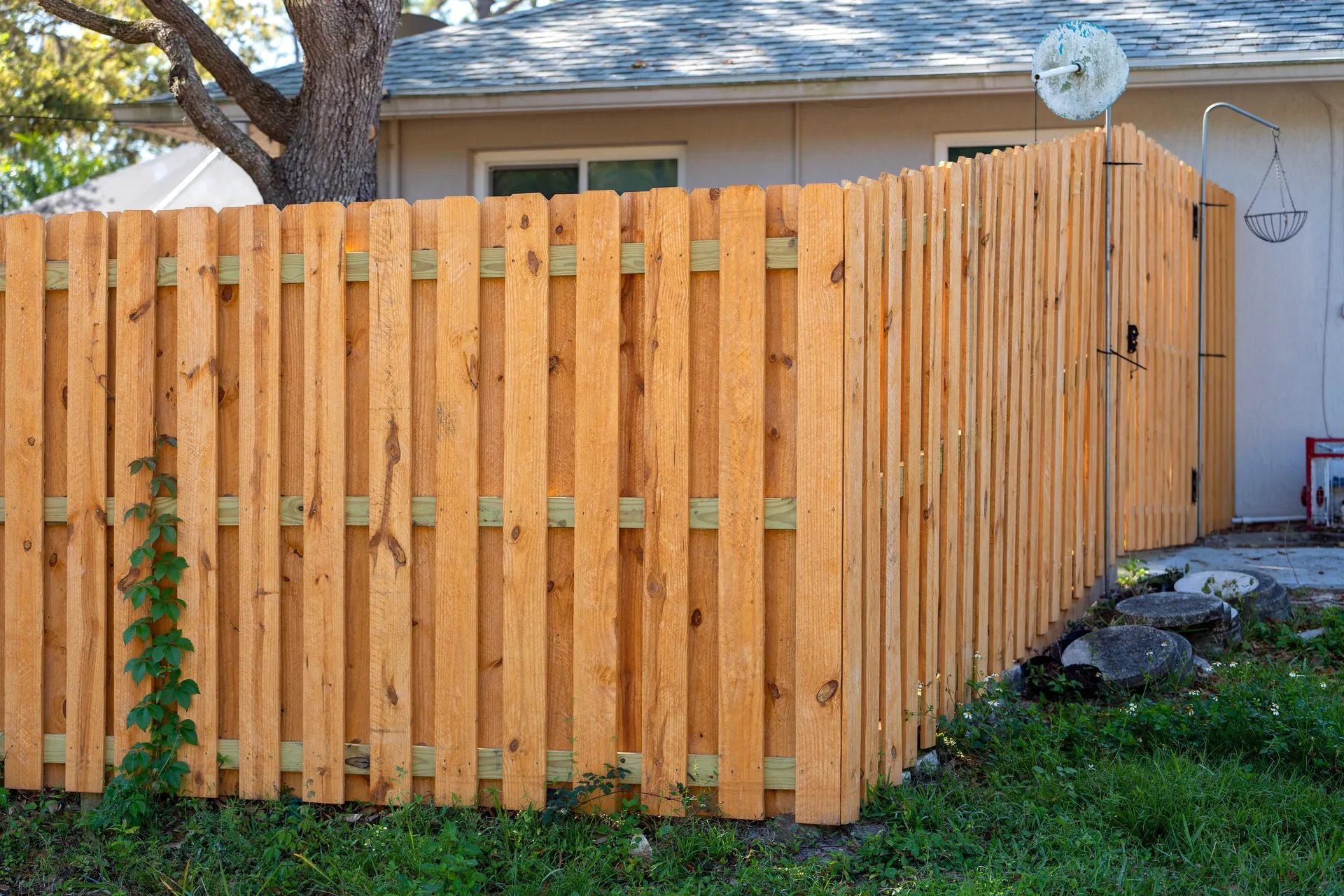
Board-on-board wood fencing (where alternating boards overlap on each side of the rail, creating a solid barrier with no gaps) is excellent because there are no spaces for the dog to see through or squeeze through. A 6-foot privacy fence in this style, with a buried kickboard at the bottom, stops most escape artists.
The gates are usually the weakest point. Escape-artist dogs figure out latches, push through poorly secured gates, and squeeze through gaps between gate and post. Make sure your gate hardware includes a self-closing hinge and a latch that the dog cannot lift with its nose. A padlock or carabiner on the latch adds another layer of security.
For Small Dogs
Small dogs do not need a tall fence, but they do need tight spacing. A 4-foot fence is usually sufficient for dogs under 25 pounds. The critical factor is the gap between pickets or at the bottom of the fence.
- Standard wood picket spacing is 2.5-3.5 inches. Dogs under 10 pounds can squeeze through 3-inch gaps. Request 2-inch spacing or go with a solid privacy fence.
- Aluminum fence picket spacing varies by manufacturer, but most ornamental styles have 3.5-4 inch gaps. Puppy-picket panels (with additional shorter pickets between the main ones) reduce the gap to about 1.75 inches and are available from most aluminum fence brands.
- Any fence should sit close to the ground -- no more than 2 inches of clearance at the bottom. Small dogs can army-crawl under surprisingly tight gaps.
For Large Breeds
Big dogs need sturdy fences. A 90-pound Labrador running full speed into a fence panel generates real force. Flimsy materials, weak posts, or shallow footings will not hold up.
- Posts should be 4x4 minimum (6x6 is better for large properties), set in concrete at least 30-36 inches deep.
- Heavy-gauge materials matter. If going with chain link, use 9-gauge wire instead of the standard 11.5-gauge. For aluminum, choose a commercial-grade rail thickness.
- Post spacing of 6 feet (rather than 8 feet) gives each panel more rigidity and resistance to impact.
- 6-foot height is the minimum for large athletic breeds. Labs, German Shepherds, and similar dogs can clear 4-foot fences without much effort.
Best Fence Materials for Dogs, Ranked
So how do the main fence materials stack up specifically for dog containment in the Charlotte area?
1. Vinyl privacy fence. This is the top choice for most dog owners. No splinters (safe for dogs that rub against the fence), no gaps in privacy-style panels, no chew risk, no maintenance, and no rot. Vinyl handles Charlotte's humidity without any of the decay issues that plague wood. The smooth surface gives dogs nothing to grip for climbing. The downside is cost -- vinyl fencing in Charlotte runs $25-$45 per linear foot installed.
2. Chain link fence. Affordable, durable, and nearly indestructible by dogs. Chain link runs $12-$25 per linear foot in Charlotte, making it the most budget-friendly option for large areas. Add a bottom wire or tension wire to prevent digging underneath. The downside: no privacy (though slats or privacy screens can be added), and climbers can scale it. For backyards and dog runs where privacy is not the priority, chain link is hard to beat on value.
3. Wood privacy fence. The classic choice. A 6-foot wood privacy fence provides full containment and looks great. Cedar resists rot better than pine in Charlotte's climate. The downsides for dog owners: wood can splinter (a concern for dogs that chew or rub against the fence), boards can warp and create gaps over time, and maintenance is required to keep it in good shape. Check the fence regularly for loose boards or developing gaps at the bottom.
4. Aluminum fence. Good for dogs that do not climb and are not small enough to fit through the pickets. Aluminum fencing is elegant, maintenance-free, and extremely durable. However, it provides no privacy and the picket gaps are not ideal for small dogs or escape artists. Best suited for well-behaved medium to large dogs where the fence is more about boundary definition than maximum containment.
Worst Fence Options for Dogs
- Split rail fence: Looks charming but contains nothing. Dogs walk right through the open rails.
- Short picket fence (under 4 feet): Decorative, not functional for containment. Most dogs over 30 pounds can jump a 3-foot picket fence.
- Invisible / electric fence: These are not physical barriers. A determined dog will run through the shock to chase a squirrel or another dog, and then will not come back through the boundary because it does not want to get shocked again. They also do nothing to keep other animals out of your yard. Most Charlotte veterinarians and trainers recommend physical fences over invisible ones.
- Wrought iron with wide spacing: Decorative iron fences often have 5-6 inch gaps between pickets. Fine for humans, useless for dogs under 40 pounds.
Gate Security Tips for Dog Owners
The gate is the most common escape route for dogs. A few ways to lock it down:
- Self-closing hinges. Spring-loaded hinges pull the gate closed automatically after every use. This eliminates the "I forgot to close the gate" problem, which is the number one reason dogs escape.
- Self-latching hardware. A gravity latch or magnetic latch that engages automatically when the gate swings shut means the gate is always latched, even if someone forgets.
- Double gate or airlock design. For high-escape-risk dogs, install two gates creating a small buffer zone. You open the first gate, step into the buffer, close it behind you, then open the second gate. It is the same principle as a dog park entrance.
- No gap at the bottom. Gates often have the largest ground clearance gap of any part of the fence. Make sure the gap is no more than 2 inches. For small dogs, add a threshold strip to close the gap completely.
- Lock the gate. If your dog can lift a standard latch (and many smart dogs can), add a carabiner, padlock, or child-proof lock to the latch. It adds two seconds to your day and eliminates a major escape vector.
Charlotte Dog Park Alternatives While Your Fence Is Being Installed
If you are between fences -- your old one came down and the new one is not up yet -- you need somewhere to let your dog run safely. Charlotte has several good off-leash dog parks:
- Barkingham Park in Reedy Creek Park -- separate areas for large and small dogs, fully fenced, water stations.
- Davie Dog Park at William R. Davie Park in the University area -- two-acre fenced area with agility equipment.
- Ray's Fetching Meadow at Frazier Park in South End -- smaller but conveniently located with double-gated entries.
- McAlpine Creek Dog Park off Monroe Road -- one of the larger dog parks in the Charlotte area with wooded trails.
- Shuffletown Dog Park off Beatties Ford Road -- popular with dog owners in the Huntersville and north Charlotte areas.
Use a long leash or tie-out in your yard as a temporary measure, but do not rely on it long-term. Dogs can tangle on tie-outs, and they do not provide real security the way a fence does.
The right fence for your dog depends on your dog's specific behavior, your budget, and your neighborhood's requirements. A 6-foot privacy fence in vinyl or wood is the safest bet for most Charlotte dog owners. If budget is tight, chain link with a bottom wire and a good gate latch will get the job done. Whatever you choose, invest in quality gate hardware -- because the fanciest fence in the world is useless if the gate does not stay closed.