 Best Fencing Charlotte
Privacy fences are the most requested fence type in the Charlotte area, and it is not hard to understand why. Charlotte's growth over the past decade has pushed homes closer together in many neighborhoods, and homeowners want a backyard where they can relax without feeling like they are on display. But "privacy fence" does not have to mean a plain, flat wall of wood. There are plenty of ways to get full privacy while adding style, character, and value to your property.
Below are 10 privacy fence ideas that work well in the Charlotte market, with costs, pros, cons, and the neighborhoods where each style fits best. For general privacy fencing options and pricing, start there.
1. Classic 6-Foot Cedar Board-on-Board
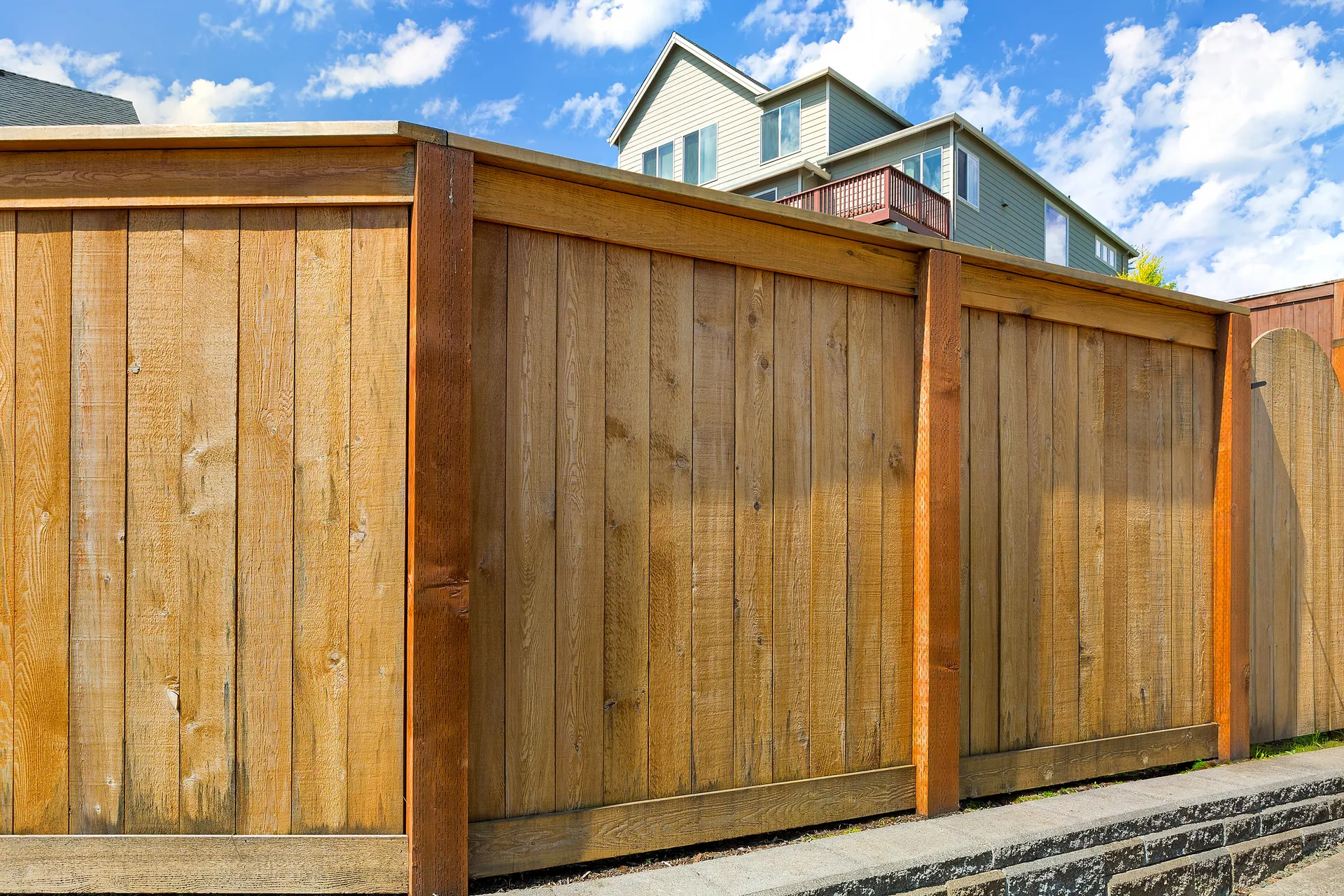
This is the gold standard of privacy fencing in Charlotte. Board-on-board construction uses overlapping pickets on alternating sides of the rail, eliminating any gaps and creating a fence that looks finished from both sides. At 6 feet tall, it provides complete visual privacy from neighbors and the street.
Approximate cost: $28 to $38 per linear foot installed.
Pros: Beautiful natural wood grain, no "bad side" facing the neighbor, excellent wind resistance because air can pass through the overlapping boards, and cedar naturally resists rot and insects in Charlotte's climate.
Cons: Higher cost than flat-panel fences, cedar requires staining every 3 to 4 years if you want to preserve the color, and material costs have climbed since 2022.
Best Charlotte neighborhoods: Myers Park, Dilworth, Weddington, Ballantyne, and SouthPark -- anywhere curb appeal is a priority and the fence will be visible from the street or a neighbor's property.
2. Horizontal Slat Modern Fence
Horizontal fences have exploded in popularity across Charlotte's newer construction, especially in urban infill neighborhoods. Instead of vertical pickets, the boards run horizontally between posts, creating a clean, contemporary look. Most use cedar or ipe wood with 1/4-inch to 1/2-inch gaps between the slats -- tight enough for visual privacy but with just enough spacing for a modern feel.
Approximate cost: $35 to $55 per linear foot installed (cedar); $60 to $90 per linear foot (ipe or hardwood).
Pros: Striking modern aesthetic, makes yards feel wider because the horizontal lines draw the eye outward, and it stands out from every other fence on the block.
Cons: More expensive than traditional vertical fencing, horizontal boards are more susceptible to warping because of how they are attached, and tight gaps can still allow partial views at certain angles. HOAs in traditional neighborhoods may not allow this style.
Best Charlotte neighborhoods: South End, NoDa, Plaza Midwood, Optimist Park, Wesley Heights, and any neighborhood with modern or mid-century homes. Also popular in new construction in Huntersville and Fort Mill.
3. White Vinyl Privacy Fence
The classic white vinyl privacy fence is everywhere in Charlotte's suburban neighborhoods, and for good reason. It provides full 6-foot privacy with zero maintenance beyond an occasional rinse. The tongue-and-groove panel design leaves no gaps at all. For a full material comparison, see our vinyl fence installation page.
Approximate cost: $28 to $45 per linear foot installed.
Pros: Zero staining or painting ever, does not rot or attract insects, consistent appearance for decades, and most Charlotte HOAs approve white vinyl without issue.
Cons: Can look generic or builder-grade in higher-end neighborhoods, white shows dirt and mildew (common in Charlotte's humidity), and vinyl can crack in extreme cold (rare but possible during Charlotte's occasional hard freezes).
Best Charlotte neighborhoods: Highland Creek, Ardrey Kell, Providence Plantation, Indian Trail, Matthews, and Mint Hill -- suburban neighborhoods where uniformity and low maintenance are valued.
4. Board-on-Board with Lattice Top
This takes the standard board-on-board fence and adds a 12-inch to 18-inch lattice topper section. The lattice lets light and air through while still providing significant privacy. It softens the look of a tall fence and prevents the "fortress" feel that a solid 6-foot wall can create on smaller lots.
Approximate cost: $30 to $42 per linear foot installed.
Pros: More elegant than a solid panel, the lattice provides a trellis for climbing plants like Carolina jessamine or clematis, and the added height (6.5 to 7 feet total) gives extra privacy without feeling oppressive.
Cons: The lattice section is the first thing to deteriorate and may need replacement before the rest of the fence, and some HOAs have height restrictions that limit total fence height to 6 feet.
Best Charlotte neighborhoods: Elizabeth, Eastover, Cotswold, Cornelius, and Davidson -- neighborhoods with established landscaping where the lattice adds to the garden feel.
5. Staggered Shadowbox Fence
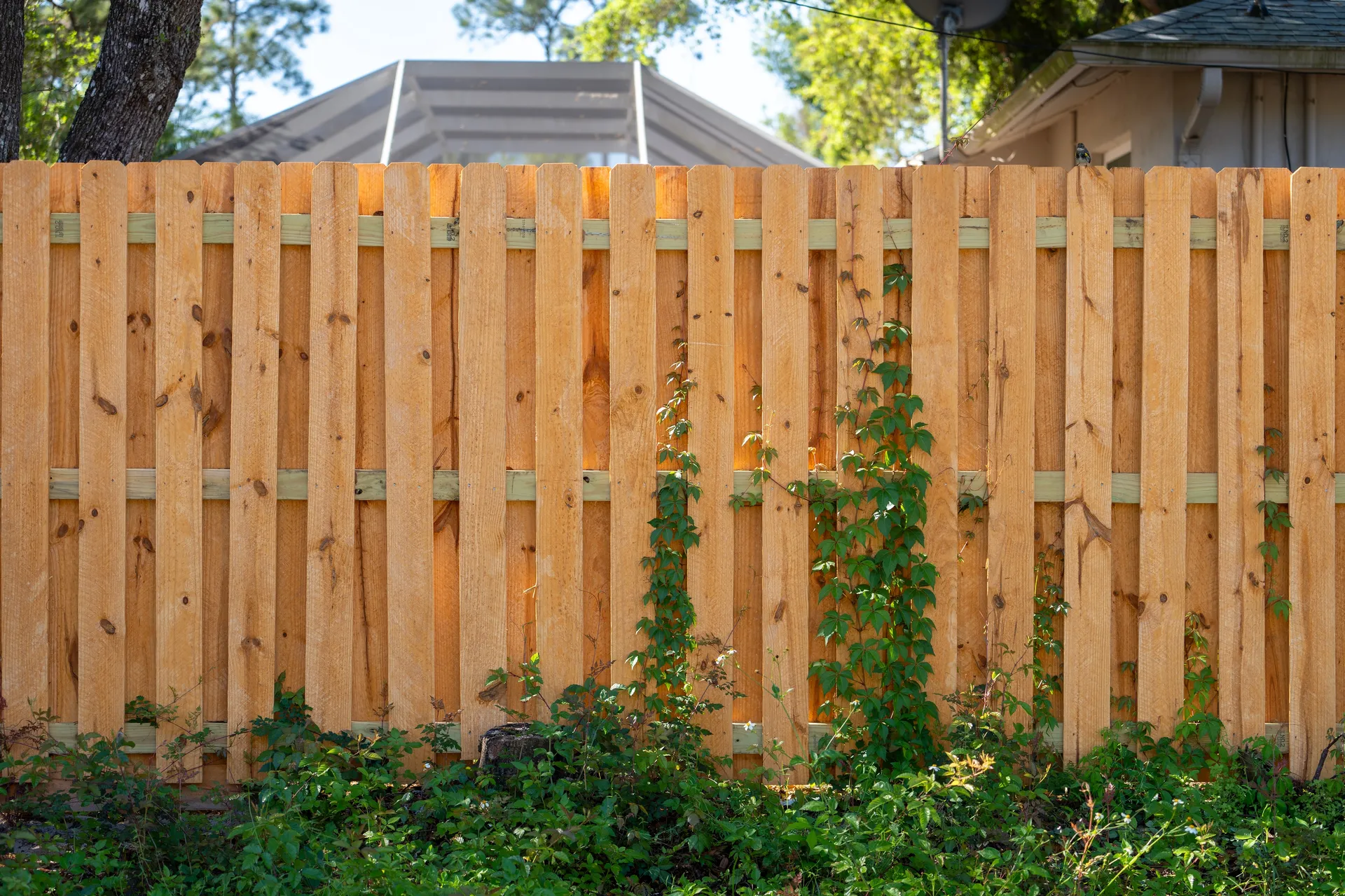
A shadowbox fence uses boards placed on alternating sides of the horizontal rail with gaps between them. From a direct angle, you can see through the fence. But from any side angle -- which is how neighbors actually see it -- the overlapping boards block the view. It delivers privacy in practice while maintaining an open, airy appearance.
Approximate cost: $22 to $32 per linear foot installed.
Pros: Looks good from both sides (no "bad side"), allows air circulation which reduces wind load, costs less than board-on-board because it uses less lumber per linear foot, and the pattern creates visual interest.
Cons: Not 100% private from a direct head-on angle, so it is not ideal for situations where the neighbor's window looks directly at your yard at close range.
Best Charlotte neighborhoods: This is a great all-around option that works in most Charlotte neighborhoods. Particularly popular in Mooresville, Concord, and Harrisburg where lots are bigger and head-on views are less common.
6. Composite Privacy Fence
Composite fencing uses a mix of wood fibers and recycled plastic to create boards that look like wood but behave like vinyl. Brands like Trex and Fiberon (both available through Charlotte fence companies) offer privacy fence panels in realistic wood-grain finishes that do not require staining, sealing, or painting.
Approximate cost: $40 to $65 per linear foot installed.
Pros: Realistic wood appearance without the maintenance, will not rot or warp in Charlotte's humidity, extremely long lifespan (25 to 30+ years), and eco-friendly if that matters to you.
Cons: The highest upfront cost of any privacy fence option, limited color choices compared to paint or stain, and the boards can feel different from real wood to the touch.
Best Charlotte neighborhoods: Ballantyne Country Club, Weddington, Myers Park, and Lake Norman waterfront properties -- homes where the budget allows a premium product and where the homeowner wants a "set it and forget it" fence.
7. Privacy Fence with Built-In Planter Boxes
This design integrates planter boxes into the fence structure at regular intervals, usually every 8 to 10 feet along the top or at the base. The planters can hold flowers, herbs, succulents, or trailing vines that soften the fence and turn it into a living feature of the backyard landscape.
Approximate cost: $35 to $50 per linear foot installed (includes planter boxes).
Pros: Transforms a utilitarian fence into a design element, adds greenery without taking up yard space, and the planters can be customized to match the season -- pansies in spring, herbs in summer, mums in fall.
Cons: The planters add weight, which means sturdier posts are needed. The planters themselves hold moisture against the wood, so they need to be lined with plastic or metal to prevent accelerated rot. More complex to build, which means higher labor costs.
Best Charlotte neighborhoods: Dilworth, Plaza Midwood, NoDa, and Elizabeth -- urban neighborhoods with smaller lots where the fence doubles as a garden feature.
8. Mixed Material: Stone Pillars with Wood Panels
This design uses stone or brick pillars at regular intervals (typically every 8 to 12 feet) with wood privacy panels between them. The stone adds a substantial, permanent look to the fence and ties it into stone elements that may exist on the house or in the landscaping.
Approximate cost: $55 to $100+ per linear foot installed (stone pillars are the expensive part).
Pros: The most upscale look you can get with a fence, stone pillars last a lifetime, the wood panels can be replaced without disturbing the pillars, and it adds serious curb appeal and property value.
Cons: By far the most expensive option on this list, stone pillar construction requires a mason in addition to a fence installer, and the project timeline is longer (2 to 4 weeks versus 2 to 3 days for a standard fence).
Best Charlotte neighborhoods: Myers Park, Eastover, Quail Hollow, Ballantyne Country Club, and custom-home neighborhoods in Waxhaw and Weddington. This is a high-end option for properties where the fence needs to match a premium home.
9. Tall Bamboo Screening
Bamboo screening uses rolled or panelized bamboo attached to a supporting framework (usually steel posts or an existing chain link fence). It provides a natural, tropical look that is different from anything else in the neighborhood. Real bamboo poles last 5 to 10 years; synthetic bamboo panels last longer.
Approximate cost: $15 to $30 per linear foot installed (over existing framework); $25 to $40 per linear foot with new posts and framework.
Pros: Unique aesthetic, affordable compared to other privacy options, easy to install over an existing chain link fence, and creates a resort-like atmosphere in the backyard.
Cons: Not as durable as wood or vinyl in Charlotte's climate -- real bamboo deteriorates in humidity and sun, the screening can loosen over time and sag, and HOAs in many Charlotte neighborhoods may not approve it.
Best Charlotte neighborhoods: Plaza Midwood, NoDa, and other eclectic neighborhoods without strict HOA covenants. Also works well as a temporary privacy solution for renters or homeowners who plan to replace the fence within a few years.
10. Privacy Fence with String Lights and Outdoor Living
This is not a specific fence type but a design approach. Take any solid privacy fence -- cedar board-on-board, vinyl, or composite -- and design it as the backdrop for an outdoor living space. Add post caps with hooks for string lights, mount planter shelves for herbs and flowers, install hooks for hanging baskets, and consider a built-in bench or bar shelf along one section.
Approximate cost: Base fence cost ($25 to $45 per linear foot) plus $500 to $2,000 for lighting, shelving, and accessories.
Pros: Turns the fence from a boundary into a feature, creates an outdoor room feel that extends the living space, and string lights over a patio with a nice fence backdrop is the most photographed backyard feature on social media for a reason.
Cons: Accessories add cost and maintenance. String lights need to be taken down or replaced periodically. Mounting hardware creates penetration points in the wood that can admit moisture if not sealed. Requires more planning upfront to get the layout right.
Best Charlotte neighborhoods: This works everywhere. It is particularly popular in South End, Dilworth, and Matthews where homeowners are investing in outdoor living spaces as an extension of the home.
Choosing the Right Privacy Fence for Your Property
The best privacy fence for your Charlotte backyard depends on three things: your budget, your HOA rules, and the look you are going for. Before you commit to a style, check your neighborhood covenants for height restrictions, material requirements, and color limitations. Many Charlotte HOAs have specific fence guidelines that narrow the options significantly.
Also consider the practical side. If you have dogs, make sure the fence goes all the way to the ground with no gaps. If you have a pool, the fence needs to meet North Carolina's barrier code requirements. If your lot has significant slopes, some styles (like vinyl panels) are harder to step down on a grade than others (like board-on-board wood).
The best next step is to get quotes from two or three Charlotte privacy fence installers. A good fence company will come out, walk the property line with you, discuss style options, and give you a written quote. Most offer free estimates, and seeing material samples in person makes a big difference compared to looking at photos online.