 Best Fencing Charlotte
If you are getting a wood fence installed in Charlotte, your contractor will ask you a question that might seem minor but actually affects the look, cost, and longevity of your fence: do you want dog ear pickets or flat top pickets?
Most homeowners have never thought about picket shape before getting a fence quote. But once you see the difference, you will have a preference. This guide breaks down exactly what each style is, how they compare on cost and durability, which one looks better in different fence designs, and what Charlotte HOAs typically require.
What Are Dog Ear Pickets?
Dog ear pickets have a 45-degree angle cut on each of the two top corners, creating a pointed shape at the top of the board that resembles a dog's ear. The name is descriptive -- look at the profile of a dog ear picket and you will see it immediately.
This is the most common picket style used on privacy fences across Charlotte and the rest of the Southeast. If you drive through any neighborhood in Ballantyne, Indian Trail, or Huntersville and look at the wood fences, the majority will have dog ear pickets. It is the default that most lumber yards stock in the highest quantities and that most fence contractors reach for unless the homeowner requests something different.
Dog ear pickets are available in both pressure-treated pine and cedar, in standard widths of 3.5 inches (nominal 1x4) and 5.5 inches (nominal 1x6), and in heights of 4, 6, and 8 feet. The 6-foot, 5.5-inch-wide dog ear picket is by far the most commonly used board for residential privacy fences in the Charlotte area.
What Are Flat Top Pickets?
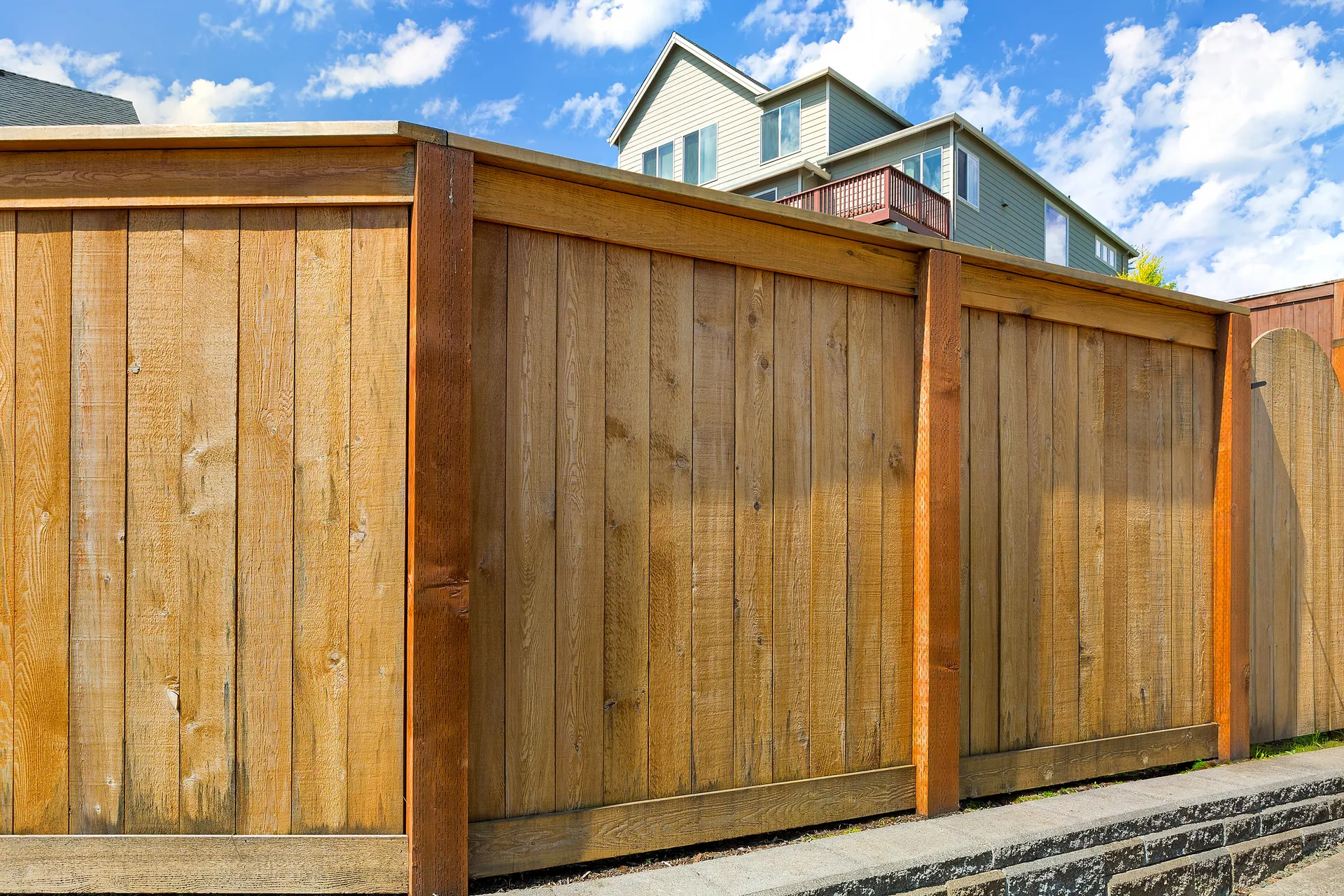
Flat top pickets are exactly what they sound like -- the top of the board is cut straight across with no angle or shape. It is a simple, clean, horizontal line across the top of each board.
Flat top pickets have become more popular in recent years, especially in newer Charlotte subdivisions and neighborhoods where homeowners are going for a more modern or contemporary look. They are also the standard choice for horizontal fence designs, where the boards run side to side instead of up and down.
Like dog ear pickets, flat top boards are available in pressure-treated pine and cedar, in the same standard widths and heights. Most lumber yards in the Charlotte area carry both styles, though dog ear pickets are usually available in larger quantities.
Visual Difference and Curb Appeal
The visual difference between dog ear and flat top pickets is noticeable from the street, and it affects the overall feel of your fence.
Dog ear pickets give a fence a traditional, slightly decorative appearance. The angled cuts add a subtle rhythm along the top of the fence line. When you look at a long run of dog ear privacy fence, the top edge has a gentle zigzag pattern created by the pointed tops of each picket. This style fits well with traditional home designs -- ranch homes, colonials, and craftsman-style houses that are common throughout Charlotte's established neighborhoods like Dilworth, Myers Park, and Cotswold.
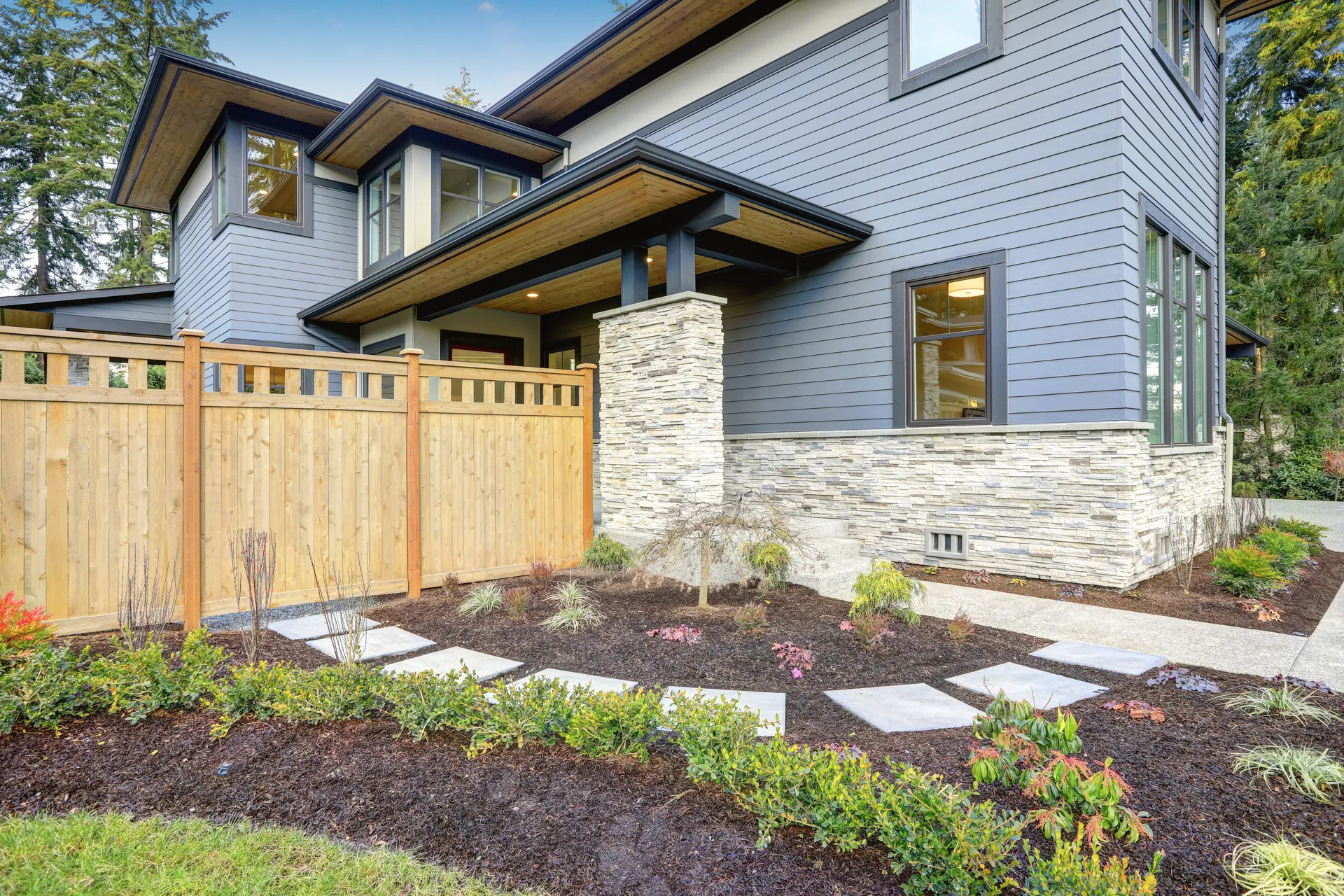
Flat top pickets create a clean, straight line along the top of the fence. The result looks more modern and intentional. There is no visual pattern -- just a smooth, uniform edge. This style works well with contemporary and transitional home designs, including many of the newer builds going up in South End, NoDa, and the newer sections of Waxhaw and Weddington. Flat top fences also pair well with horizontal metal post caps and clean landscaping for a polished, finished look. For more design inspiration, see our privacy fence ideas for Charlotte homes.
Neither style is objectively better-looking than the other. It comes down to the look you want and the style of your home. If your house is traditional, dog ear fits right in. If your house is modern or you are aiming for a more contemporary feel, flat top will match better.
Cost Difference
The cost difference between dog ear and flat top pickets is minimal. In fact, it is one of the smallest variables in the overall cost of a new fence.
At Charlotte-area lumber yards and home improvement stores, dog ear pickets tend to be about $0.10 to $0.20 cheaper per board than flat top pickets of the same wood species, width, and height. This is because dog ear is the more common cut and is produced in higher volume.
On a typical 150-linear-foot privacy fence using 6-foot pickets, you will need roughly 280 to 320 boards (depending on spacing and whether you are building a standard side-by-side fence or a board-on-board design). At $0.15 less per board, choosing dog ear over flat top saves you about $42 to $48 on the entire project. That is a rounding error on a fence that costs $3,000 to $6,000 total.
If a contractor quotes you a significant price difference between dog ear and flat top, ask why. There should not be a meaningful gap in labor or material cost for one style versus the other. The installation process is identical -- the boards are nailed or screwed to the same rails in the same way regardless of the top cut.
Durability Comparison
Here is where the difference actually matters, especially in Charlotte's wet climate.
Dog ear pickets shed water better. The 45-degree angle on each top corner means rain water runs off the top of the board quickly, rather than sitting on a flat surface. Water that pools on wood is what causes rot, and the faster water drains away, the longer the board lasts. This is a real advantage in Charlotte, where heavy afternoon thunderstorms are common from May through September and annual rainfall exceeds 43 inches.
Flat top pickets hold water on the top edge. That straight, horizontal cut creates a small flat surface where water can sit after every rain. Over time, this accelerates moisture absorption at the top of the board, which can lead to faster rotting, splitting, and decay at the top edge. You will often see flat top pickets on older fences that are rotting from the top down while the rest of the board is still in decent shape.
The durability difference is more pronounced with pressure-treated pine than with cedar. Cedar's natural oils resist moisture better, so the flat top disadvantage is less significant. If you choose flat top pickets in pressure-treated pine, keeping up with staining and sealing becomes more important to protect that top edge.
One way to offset the flat top water issue is to add a top rail cap or a 1x4 or 1x6 flat board running horizontally across the very top of the fence. This cap board takes the weather hit instead of the picket tops, and it is easier and cheaper to replace a single cap board every few years than to replace rotted pickets. Many Charlotte fence contractors recommend this upgrade for flat top designs.
What Charlotte HOAs Prefer
HOA requirements vary widely across the Charlotte metro area, and picket style is one of the things they sometimes specify.
In general, older HOAs in established subdivisions tend to require or prefer dog ear pickets because that has been the traditional standard for decades. Many of the HOAs in Ballantyne, Providence Plantation, and the Piper Glen area specify dog ear in their covenants.
Newer HOAs -- especially in developments built in the last five to ten years in areas like Waxhaw, Fort Mill, and the Lake Norman corridor -- are increasingly specifying flat top pickets, particularly for fences that are visible from the street. Some newer communities require flat top with a horizontal cap rail for a cleaner, more uniform look across the neighborhood.
Before you commit to a picket style, check your HOA's architectural guidelines or submit a fence request to your architectural review committee. Some HOAs do not specify picket style at all, while others are very particular. Getting this information upfront saves you from the headache and expense of being told to change your fence after it is already built.
How Each Style Looks with Different Fence Designs
Picket style interacts with fence design in ways that affect the final appearance. Here is how dog ear and flat top work with the most common fence styles in Charlotte.
Stockade fence (side-by-side pickets with no gaps). This is the most basic privacy fence design. Dog ear pickets are the traditional choice for stockade fences and create the classic look you see throughout Charlotte. Flat top pickets give a stockade fence a slightly more modern, cleaner appearance.
Board-on-board fence (overlapping pickets for full privacy from both sides). Both dog ear and flat top work well here. Board-on-board is already a step up in appearance from basic stockade, and the overlapping pattern creates visual interest regardless of picket shape. Many homeowners in nicer Charlotte neighborhoods choose flat top board-on-board for a high-end look.
Shadow box fence (alternating pickets on each side with gaps between them). Dog ear pickets are the more common choice for shadow box fences because the angled tops add visual texture to a design that already has a lot of depth and dimension. Flat top can look a bit too plain on a shadow box fence unless you add a top cap rail for definition.
Horizontal fence (boards running side to side). Flat top is the only real option here. Since the boards are oriented horizontally, dog ear cuts would look odd and would not serve any practical purpose. Horizontal fences with flat boards and clean metal or wood posts are popular in South End, Plaza Midwood, and other Charlotte neighborhoods with a lot of new construction and renovation.
Other Picket Styles to Consider
Dog ear and flat top are the two most common options, but they are not the only ones. If you want something a little different, ask your fence contractor about these alternatives:
Gothic or pointed pickets. These have a pointed peak at the top center, like a pencil tip. They are traditionally used on picket fences (the short, decorative kind) but can also be used on full-height privacy fences for a distinctive look. Gothic pickets are more common in front yards and are a popular choice in historic Charlotte neighborhoods.
French gothic pickets. Similar to gothic but with a more decorative, rounded point that has small curves on each side of the peak. This is a more ornamental look that works on front yard fences and garden borders. It is less common on full privacy fences but makes a statement when used that way.
Alternating height pickets. Some homeowners create visual interest by alternating between two different picket heights -- for example, every other board is 6 feet while the boards in between are 5 feet. This creates a scalloped or stepped pattern along the top of the fence and is purely an aesthetic choice.
Arched or scalloped top. Instead of cutting individual pickets to different shapes, some fence designs use panels where the pickets gradually change height to form an arch or scallop between each pair of posts. This is a popular option for front yard fences and side fences that are visible from the street. It adds a lot of curb appeal but costs more because each panel requires custom cutting.
Adding Post Caps and Trim for a Finished Look
Regardless of which picket style you choose, the finishing details make a big difference in how your fence looks overall.
Post caps go on top of each fence post and serve two purposes: they look good and they protect the end grain of the post from water. A bare post top absorbs water like a sponge, which causes the post to rot from the top down. Flat copper or metal post caps cost $5 to $15 each. Decorative wood or vinyl post caps run $3 to $10 each. On a fence with 15 to 20 posts, that is $60 to $300 for a detail that makes a noticeable difference in appearance and helps your posts last longer.
Top cap rails are horizontal boards that run along the very top of the fence, covering the tops of the pickets. They give the fence a finished frame and protect picket tops from water. A 1x6 top cap is the most common size. This detail is especially recommended for flat top pickets to help with the water drainage issue discussed earlier. Adding a top cap rail typically adds $2 to $4 per linear foot to the project cost.
Trim boards and kickboards along the bottom of the fence add a finished look and can help close the gap between the bottom of the pickets and the ground. A rot board or kickboard is a horizontal board that runs at ground level. It contacts the soil and moisture first, protecting the pickets above it. When it rots, you replace just the kickboard instead of the entire fence section.
Which One Should You Pick?
Here is a practical recommendation based on the most common situations Charlotte homeowners face.
Choose dog ear if: You want the traditional look, your HOA requires it, you are building with pressure-treated pine and want the best natural water drainage, or you simply do not have a strong preference and want the default that works well everywhere.
Choose flat top if: You prefer a modern or clean look, your home is contemporary in style, you are building a horizontal fence, your HOA requires it, or you plan to add a top cap rail (which largely eliminates the water drainage disadvantage).
If you cannot decide: Go look at fences in your neighborhood. Drive through streets near your house and pay attention to which style you notice and like. The fence you will be happiest with is the one that fits the look of your street and your home. Your fence contractor can also show you examples of both styles or take you to see recent projects in the Charlotte area so you can compare them in person.
The bottom line is that this decision is mainly about appearance. The cost difference is negligible, and the durability difference -- while real -- can be managed with proper staining and a top cap rail. Pick the style that looks right on your property and you will be happy with it for years. If you need help deciding, call to talk with a Charlotte fence contractor, or request a free quote online.