 Best Fencing Charlotte
Charlotte is not flat. Drive through any neighborhood south of Uptown and you will see rolling hills, sloped backyards, and lots that drop 5 or 10 feet from one side to the other. Around the Lake Norman area -- Huntersville, Mooresville, Cornelius -- the terrain gets even more dramatic. All of that terrain means one thing for fence installation: your project is going to be more complicated and more expensive than a fence on flat ground.
But a sloped yard does not mean you cannot have a good-looking, solid fence. Charlotte fence contractors deal with hilly properties every week. The key is understanding your two main options -- stepped and racked -- and knowing which materials work best for each approach.
Stepped Fencing: The Stair-Step Approach
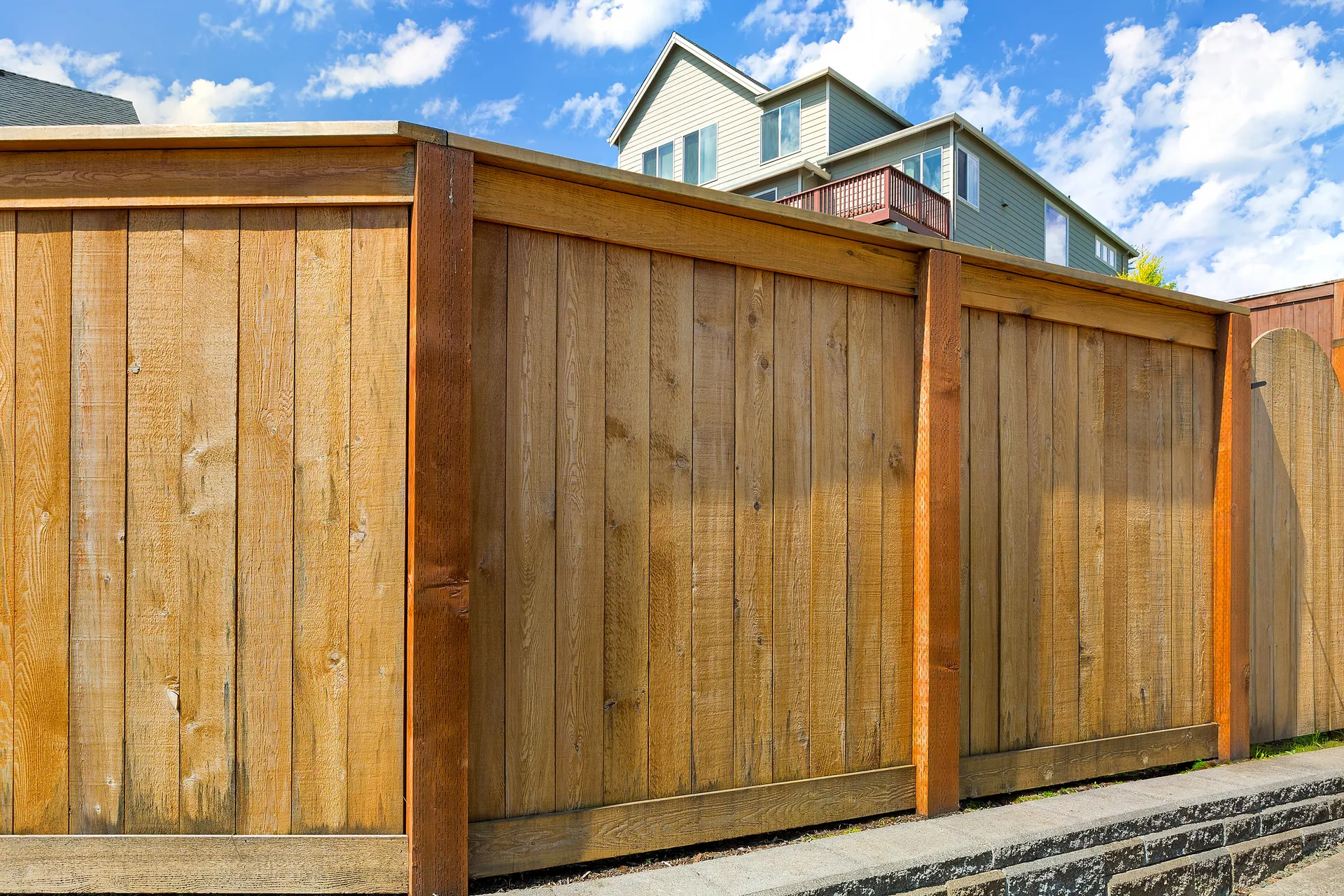
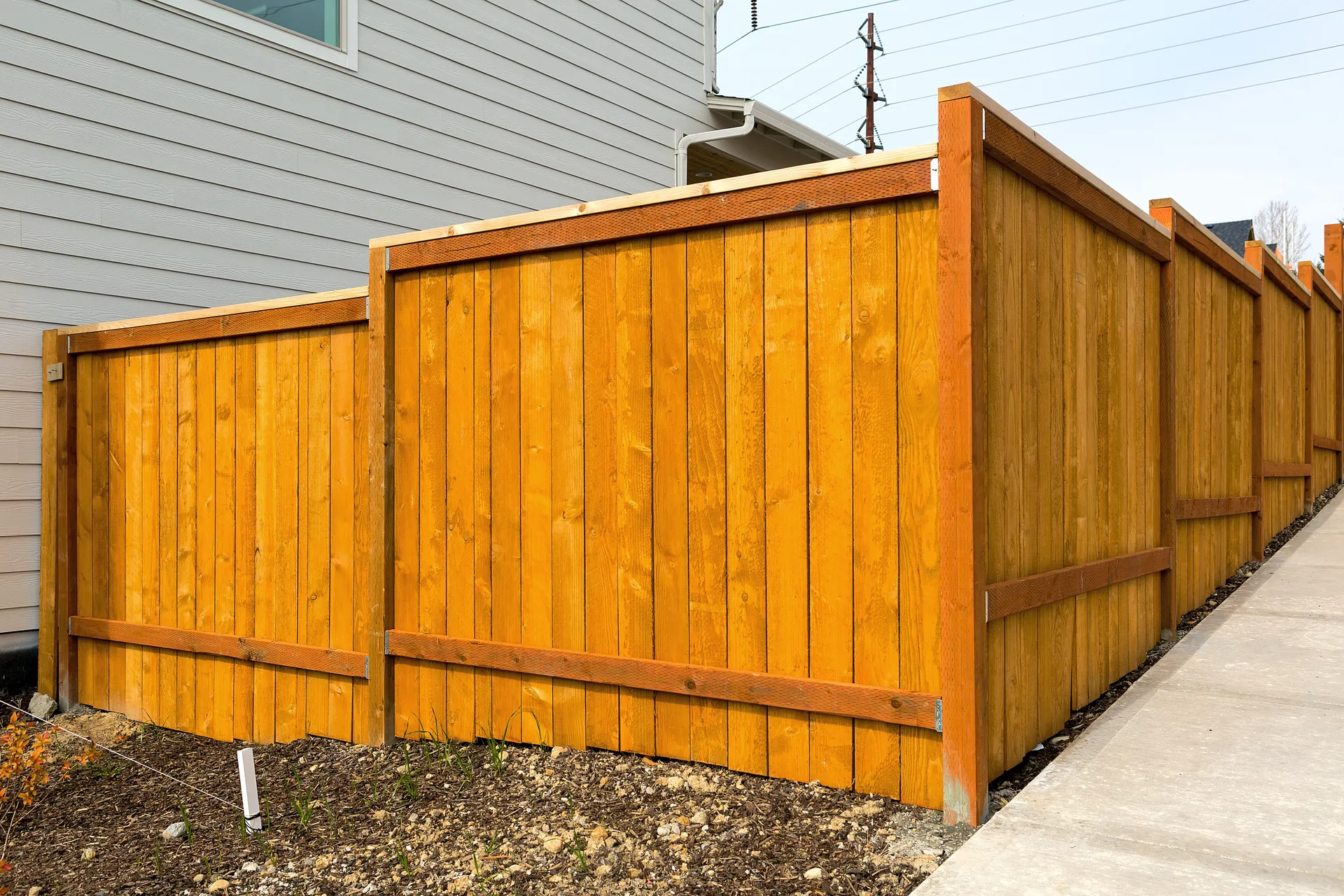
Stepped fencing is the more common method for handling slopes. Each fence panel is installed level (horizontal), but each successive panel down the slope is dropped by a set amount, creating a stair-step effect. Think of it like walking down a staircase -- each step is flat, but each one is lower than the one before it.
The result is a fence where the top follows a series of uniform steps down the hill. Each panel is perfectly level, and the posts at each step point are taller on the downhill side to accommodate the drop. Between panels, there is a triangular gap at the bottom on the downhill side where the ground drops away from the level panel.
How the gap is handled. That triangular gap at the bottom is the biggest visual and practical issue with stepped fencing. On a gentle slope, the gap might be just 3 to 4 inches -- barely noticeable and easy to fill with a short piece of fencing material, a kickboard, or landscaping. On a steep slope, the gap can be 12 inches or more at each step, which is large enough for a dog to escape through and obvious enough to bother some homeowners.
There are several ways to deal with the gap:
- Add a gravel board or kickboard. A pressure-treated 1x6 or 2x6 board is installed horizontally at the bottom of each panel, cut at an angle to follow the slope. This fills the gap and gives the fence a cleaner look.
- Use extra-long pickets. Instead of pre-built panels, the fence is built with individual pickets that extend down to the ground on the downhill side. This creates a panel where the top is level but the bottom follows the slope.
- Landscape the gaps. Some homeowners plant low shrubs or stack stone along the base of the fence to cover the gaps. This works well on gentle slopes and adds curb appeal.
Best materials for stepped fencing. Stepped installation works with just about every fence material. Wood fencing is the most flexible because individual boards can be trimmed to fit. Vinyl panels are manufactured in standard sizes that step well. Chain link steps easily with a tension bar adjustment at each post. Aluminum panels can be stepped, though racking (described below) is usually the better option for aluminum on slopes.
Racked Fencing: Following the Slope
Racked fencing -- also called raking -- takes a different approach. Instead of keeping each panel level and stepping them down, the entire panel is angled to follow the slope of the ground. The pickets remain vertical, but the top and bottom rails run parallel to the slope. The result is a fence where the top line smoothly follows the contour of the hill with no steps and no gaps at the bottom.
Racking looks more natural on most properties because the fence flows with the land instead of fighting against it. There are no stair-step jumps, no gaps at the base, and the overall appearance is smoother and more finished.
The catch: not all fence materials can be racked, and the ones that can have limits on how steep a slope they can follow.
Aluminum fences rack beautifully. This is one of the biggest advantages of aluminum fencing. Most aluminum fence panels are designed with pickets that slide through the top and bottom rails, allowing the rails to angle while the pickets stay vertical. Most manufacturers rate their panels for slopes up to about 36 inches of rise over an 8-foot panel span. For slopes steeper than that, you may need custom panels or a combination of racking and stepping. Aluminum is the go-to choice for sloped properties around the Lake Norman area and in South Charlotte neighborhoods with hilly terrain.
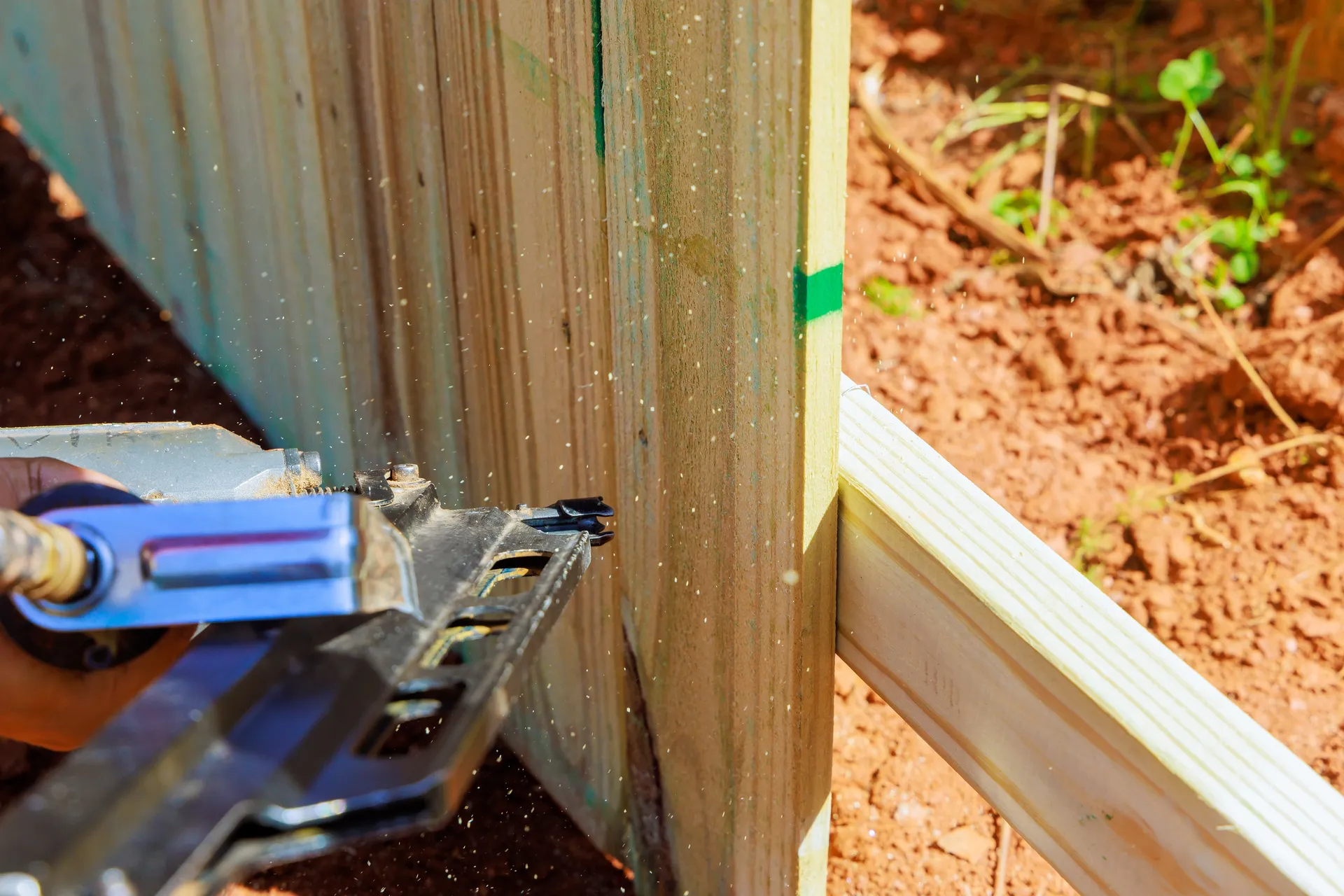
Wood fences can be racked, but it takes custom work. Standard pre-built wood fence panels are designed for flat ground and cannot be racked without modifications. To rack a wood fence on a slope, most Charlotte contractors build the fence on-site (called stick-built) rather than using pre-made panels. They set the posts, run the rails at the angle of the slope, and attach individual pickets vertically. This gives a clean racked appearance but takes more labor and costs more than installing pre-built panels.
Vinyl fences are difficult to rack. Most vinyl fence systems use interlocking panels that are designed to be level. Some manufacturers make rack-ready vinyl panels with adjustable rail connections, but the selection is limited and they cost more than standard panels. For most vinyl fence projects on a slope, stepping is the standard method.
Chain link can be racked to a degree. The flexible nature of chain link fabric allows it to follow moderate slopes naturally. On steeper grades, the fabric needs to be custom-cut at an angle at each post to follow the terrain. An experienced installer can make chain link follow almost any slope, which is one reason it remains popular for utilitarian fencing on difficult terrain.
Stepped vs. Racked: Which Looks Better?
This is partly a matter of personal preference, but there are some general guidelines:
Racked looks better on gradual, consistent slopes. If your yard drops smoothly from one end to the other at a steady grade, a racked fence follows that slope cleanly and looks intentional. The smooth line along the top is visually appealing and gives the fence a custom-built appearance.
Stepped looks better on uneven or steep terrain. If your yard has multiple grade changes -- a flat section, then a steep drop, then another flat area -- stepping handles the transitions more cleanly. Trying to rack a fence across dramatically changing grades creates awkward angles and uneven picket heights.
Stepped is more traditional. Most fences in Charlotte subdivisions are stepped because it is the standard installation method. If the other fences in your neighborhood are stepped, a racked fence may look out of place. If you are the first one on the street to fence a sloped yard, either method works.
How Slopes Affect Fence Cost
A sloped yard adds 10% to 20% to the total cost of a fence project compared to the same linear footage on flat ground. The cost increase comes from several factors:
More labor time. Setting posts on a slope requires more measuring, more leveling, and more adjustments than working on flat ground. Each post needs to be set at a different height, and the crew has to account for the grade at every connection point. A fence that would take a crew one day on flat ground might take a day and a half on a slope.
Taller posts on the downhill side. When you step a fence down a slope, the downhill post at each step is longer than it would be on flat ground. Instead of standard 8-foot posts, you might need 10-foot posts at certain locations. Longer posts cost more and require deeper holes. For a detailed look at pricing, see our guide on how much a new fence costs in Charlotte.
Custom cutting and fitting. Racked fences require on-site building, which means more labor. Stepped fences with kickboards or gap-filler boards need custom cutting at each step. Either way, more time is spent on the details.
Access challenges. Sloped yards are harder to work in. Equipment has to be hauled up or down hills. Post hole digging on a slope requires different footing and positioning. Material staging has to be carefully planned so lumber does not slide down the hill. All of this slows the crew down.
For a typical 150-foot wood privacy fence in Charlotte, you might pay $4,000 to $5,500 on flat ground and $4,500 to $6,500 on a moderate slope. Steep slopes with significant grade changes push costs higher. Always get an on-site quote -- no honest fence company can give you an accurate price for a sloped yard over the phone.
Charlotte Neighborhoods With Common Slope Issues
If you live in any of these areas, chances are good that your fence project will involve slope considerations:
South Charlotte (Ballantyne, Providence Plantation, Ardrey Kell area). This part of the city has rolling terrain throughout. Many lots in the newer subdivisions have gentle to moderate slopes from the front yard to the back. The good news is that most of these slopes are consistent grades that work well with either stepping or racking.
Lake Norman area (Huntersville, Mooresville, Cornelius, Davidson). The terrain around the lake is some of the hilliest in the Charlotte metro. Lakefront and lake-adjacent lots can drop 20 to 30 feet from the street to the waterline. Even lots farther from the lake tend to have significant elevation changes. Stepped fencing with substantial kickboards is common in these areas, and aluminum racked fencing is popular for properties where the fence line runs along a slope that faces the lake.
Steele Creek and the airport corridor. Parts of this area have steep, short slopes created by old grading work. These abrupt grade changes are harder to fence than long, gradual slopes and often require a combination of stepping and short retaining walls.
Matthews, Mint Hill, and Indian Trail. The terrain east of Charlotte is generally flatter, but many individual lots have slopes created by grading during subdivision development. Retention ponds and drainage easements create grade changes near lot boundaries where fences often run.
Retaining Walls and Fences
Many sloped properties in Charlotte have retaining walls -- either existing walls from the original construction or walls that need to be built as part of the fence project. How the fence interacts with a retaining wall matters for both appearance and structural integrity.
Fence on top of a retaining wall. This is the most common setup. The retaining wall handles the grade change, and the fence sits on the flat area at the top of the wall. The fence itself can be installed as if it were on flat ground, which simplifies the project. However, the post footings need to be set back from the edge of the retaining wall -- typically 6 to 12 inches -- so they do not weaken the wall structure. If the retaining wall is short (under 3 feet), the fence on top adds height that your HOA or local code might count toward the maximum fence height.
Fence at the base of a retaining wall. Less common, but sometimes necessary when the fence line runs along the bottom of a slope. Water runoff from the retaining wall is the main concern here -- the fence posts will be sitting in the drainage path, and moisture exposure can accelerate rot. Proper drainage behind and through the retaining wall is critical to protecting the fence posts.
Building a retaining wall as part of the fence project. On steep slopes where stepping would create unacceptably large gaps and racking is not practical, some Charlotte contractors recommend building a short retaining wall along the fence line to level the ground, then installing the fence on the leveled area. This adds significant cost -- small retaining walls run $20 to $40 per linear foot -- but the result is a cleaner installation on difficult terrain.
Erosion and Drainage on Sloped Fence Lines
Water flows downhill, and your fence line is going to be in its path. Charlotte gets about 43 inches of rain per year, and during heavy thunderstorms, runoff on sloped lots can be significant. If your fence runs across or along a slope, erosion is a real concern.
Runoff can wash away soil around posts. On the downhill side of a fence, water pools against the base of the fence and erodes the soil around the posts. Over time, this exposes the post footing and undermines the fence's stability. A gravel drainage strip along the base of the fence helps direct water away from the posts.
Solid fences act as dams on slopes. A privacy fence running perpendicular to a slope will catch and redirect rainwater. This can create pooling on the uphill side and erosion on the downhill side where the water eventually finds its way around or under the fence. Leaving a gap at the bottom of the fence (even just 2 to 3 inches) or installing drainage openings prevents this damming effect.
Check the grade after installation. Fence installation on slopes involves heavy equipment and foot traffic that can compact and displace soil. After the fence is up, walk the fence line and look for areas where the grade has been disturbed. Fill any low spots, re-grade areas where water might pool, and consider adding mulch or erosion control fabric along the base of the fence on steep sections.
Why Downhill Posts Need to Be Deeper
This is a detail that separates experienced Charlotte fence installers from inexperienced ones. On a slope, the downhill post at each section is more exposed above ground than the uphill post. If both posts are set to the same depth, the downhill post has less effective soil support because the ground falls away from it on one side.
The standard practice for sloped installations is to set downhill posts 4 to 6 inches deeper than you would on flat ground. For a 6-foot fence where you would normally bury the post 30 inches, downhill posts should go 34 to 36 inches deep. This extra depth provides the additional anchoring needed to compensate for the reduced soil contact on the downhill face of the post.
On steep slopes, some contractors also pour a larger concrete footing on downhill posts -- using 3 bags of concrete instead of the standard 2 bags per post. The extra concrete creates a wider base that resists the lateral forces generated by gravity pulling the fence downhill over time.
Getting Quotes for a Sloped Fence
If your property has slopes, the quoting process is more important than usual. Here is what to expect and what to ask:
- Require an on-site visit. No contractor can accurately quote a fence on a slope without seeing the property. Photos do not convey grade changes well. If a company gives you a price over the phone for a sloped yard, that price is a guess.
- Ask about stepped vs. racked. Find out which method the contractor recommends and why. Ask to see photos of similar projects they have done on slopes in the Charlotte area.
- Ask how they handle the gaps. If the fence will be stepped, get specific about how the triangular gaps at the base will be addressed. Kickboards? Extra-long pickets? Left open?
- Get the slope surcharge in writing. The quote should clearly state any additional cost for slope work as a line item, not buried in the overall number.
- Ask about post depth on the downhill side. This tells you whether the contractor understands the structural demands of slope installation.
A sloped yard makes your fence project more complex, but it does not have to be a headache. Charlotte contractors handle these installations regularly, and the results can look just as good as a fence on flat ground -- sometimes better, because a fence that follows the terrain of a beautiful hilly lot adds character that a flat fence never could. If you need a gate on a sloped fence line, discuss the placement with your contractor early, because gates need a level opening even when the surrounding fence follows a grade.