 Best Fencing Charlotte
If you are installing a swimming pool in Charlotte or anywhere in Mecklenburg County, you are required by law to have a fence around it. This is not optional, not a suggestion, and not something that can wait until next summer. The barrier must be in place before the pool is filled with water, and it must meet specific building code requirements down to the inch.
Pool fencing rules exist for one reason: to prevent children from accessing the water unsupervised. Drowning is the leading cause of accidental death for children ages 1 to 4, and a code-compliant fence is the single most effective preventive measure. Mecklenburg County takes this seriously. Inspectors check every detail, and pools that fail inspection cannot be used until the fence is corrected.
Here is exactly what the code requires, what inspectors look for, and how to make sure your pool fence passes on the first inspection.
The 48-Inch Minimum Height Rule
Every pool barrier in Mecklenburg County must be at least 48 inches tall, measured from the finished grade on the outside of the fence (the side away from the pool). This is a hard minimum -- there is no exception for small pools, shallow pools, or pools with covers.
The 48-inch measurement applies at every point along the fence. If the ground slopes away from the pool, the fence must maintain that 48-inch clearance at the lowest point. A fence that is 48 inches tall at the high side of a slope but only 42 inches at the low side will fail inspection.
Most homeowners install 54-inch or 60-inch aluminum pool fences to give themselves a comfortable margin above the minimum. This is smart -- it accounts for minor settling, slight grade changes, and the difference between "close enough" and "passing inspection."
The 4-Inch Picket Spacing Rule
The gaps between vertical pickets, balusters, or any openings in the fence cannot exceed 4 inches. The idea behind this is that a small child should not be able to squeeze through any gap in the barrier.
This rule applies everywhere on the fence -- between pickets, between the bottom rail and the ground, between decorative elements, and at the ends of fence sections where they meet posts. If there is a gap wider than 4 inches anywhere on the barrier, it fails.
For most aluminum pool fences, the standard residential picket spacing is 3.5 to 3.75 inches, which falls within code. But check your specific panels before installation. Some decorative aluminum fence styles have wider spacing that works for property boundaries but does not meet pool code.
The gap between the bottom of the fence and the ground also cannot exceed 4 inches. On uneven ground, this can be a challenge. The fence either needs to follow the grade closely or you need to fill gaps with additional material. Inspectors will measure at the widest point under the fence, so one dip in the terrain that creates a 5-inch gap can cause a failure.
Gate Requirements: Self-Closing and Self-Latching
Gates in a pool fence have the strictest requirements of any component, because a gate that is accidentally left open defeats the entire purpose of the barrier.
Self-closing: Every gate in a pool fence must close and latch on its own from any open position. This means the hinges must include a spring mechanism or hydraulic closer that pulls the gate shut automatically. A gate that swings freely and stays wherever you leave it will not pass.
Self-latching: The gate must have a latch that engages automatically when the gate closes. You should not have to manually flip a latch for the gate to secure. The self-latching mechanism must work reliably every time the gate swings shut.
Latch height: If the gate opens outward (away from the pool), the latch release mechanism must be at least 54 inches above the ground, measured from the outside of the gate. This puts the latch out of reach of small children. If the gate opens inward (toward the pool), the latch can be at any height but must be located on the pool side of the gate, at least 3 inches below the top of the gate, with no opening larger than 4 inches within 18 inches of the latch that would allow a child to reach through and release it.
Gates must open outward: Pool gates are required to open away from the pool area, not into it. This is both a safety feature and a practical one -- it prevents someone from pushing the gate open from outside and walking straight to the water.
The No-Climbable-Features Rule
The fence cannot have any horizontal rails, decorative elements, or other features on the outside (the side away from the pool) that could serve as footholds or handholds for climbing. Specifically, there can be no climbable features between 4 inches and 45 inches above grade on the exterior of the fence.
This is where some fence styles run into trouble. A standard wooden privacy fence with horizontal rails on the outside is not pool-code compliant because those rails create a ladder effect. If you want a wood fence around your pool, the rails must face inward (toward the pool), or you need a flat-board design with no horizontal members on the exterior side.
Chain link fencing with openings larger than 1.75 inches is also considered climbable and does not meet pool code unless the openings are small enough to prevent toe-holds. Standard residential chain link with 2-inch diamond mesh does not pass. Vinyl-coated chain link with smaller mesh may work, but aluminum or mesh pool fencing is a far more common and reliable choice.
Which Materials Pass Pool Code?
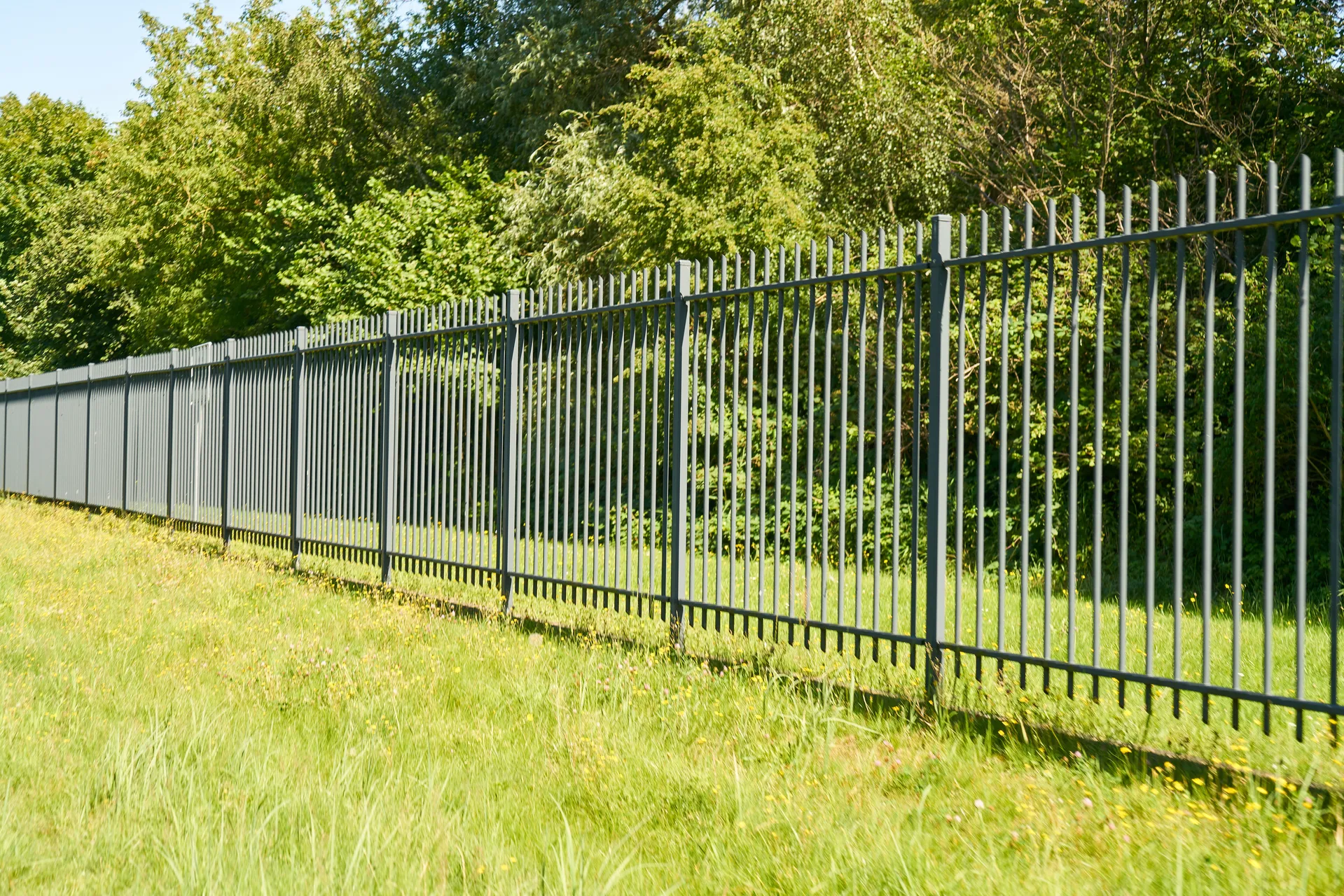
Aluminum fencing is the most popular choice for pool barriers in Charlotte. Standard pool-grade aluminum panels are designed specifically to meet code: vertical pickets with no climbable horizontal rails on the exterior, proper spacing, and compatible self-closing gate hardware. Most aluminum fence manufacturers offer a "pool code" panel that is specifically designed to pass inspection. This is different from their standard residential panel, so make sure your contractor orders the right one.
Mesh pool fencing is a removable barrier system that meets code in Mecklenburg County when properly installed. The mesh panels are stretched between posts set in the deck or ground, creating a see-through barrier. These are popular for families who want to remove the fence when kids are older or when the pool is being supervised. The mesh must be taut enough that a child cannot push through it, and the posts must be stable and at the correct height.
Vinyl fencing can work for pool barriers if the panel design meets the spacing and climbability requirements. A solid vinyl privacy fence panel technically works because there are no gaps and no climbable features on the outside. However, vinyl privacy fence is not the most common pool barrier because it blocks the view of the pool, which is a safety concern in itself -- you want to be able to see if someone has entered the pool area.
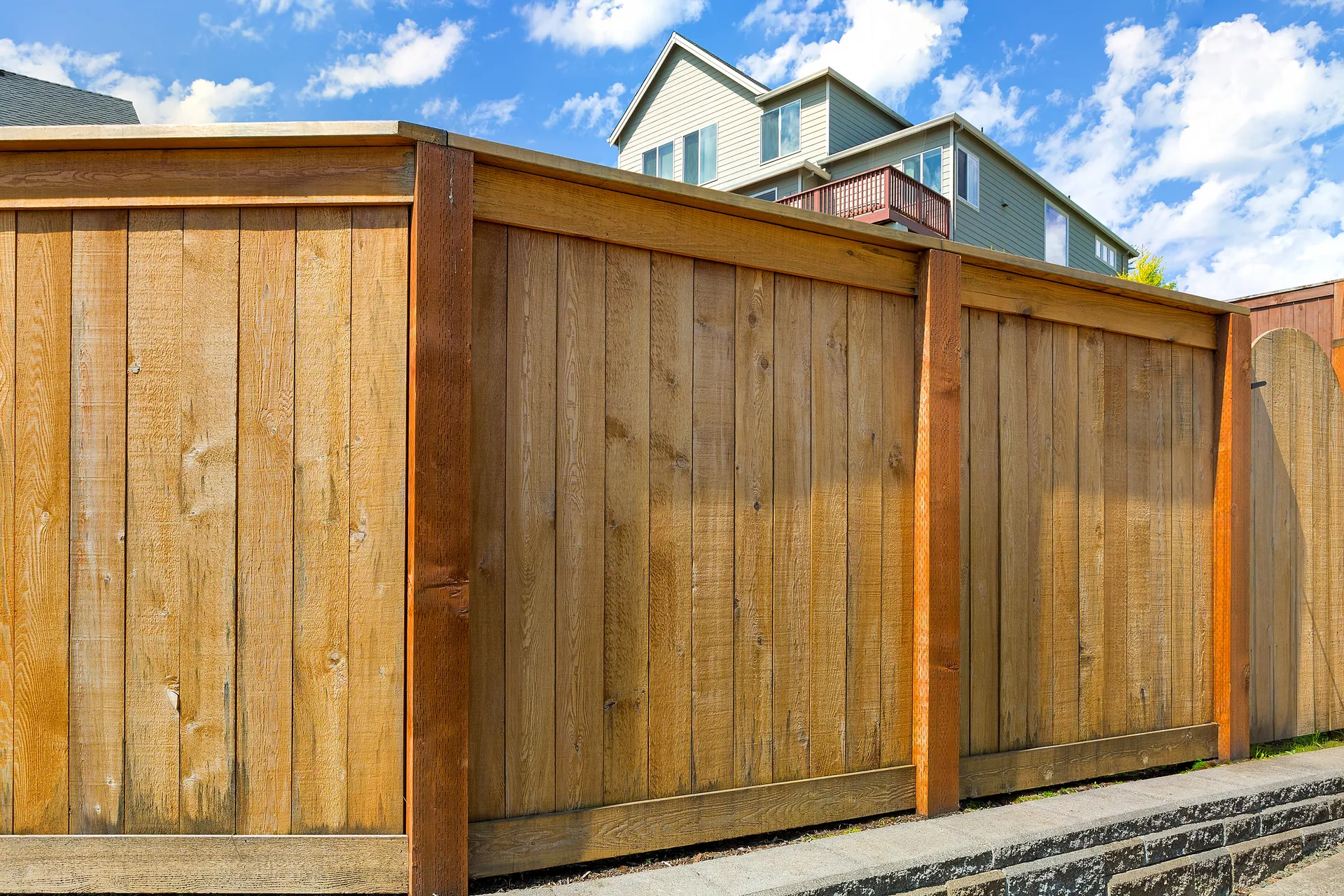
Wood fencing requires modifications to meet pool code. The horizontal rails must face inward, the picket spacing must be 4 inches or less, and the bottom clearance must be under 4 inches at every point. Board-on-board and stockade-style wood fences can work, but they must be installed with the flat side facing outward. Many Charlotte homeowners use a combination -- aluminum pool-code fencing on the pool side and wood privacy fencing on the property boundary where the pool fence overlaps.
Above-Ground Pool Rules
Above-ground pools are not exempt from barrier requirements. If the pool walls are at least 48 inches above grade at every point, the pool wall itself can serve as part of the barrier -- but only if access to the pool (the ladder, steps, or deck) is gated or removable.
In practice, this means the ladder or steps must either be removable and stored away when the pool is not in use, or they must be enclosed by a fence or gate that meets the same self-closing, self-latching, and height requirements as an in-ground pool barrier.
If the above-ground pool wall is less than 48 inches at any point, you need a full fence around the pool that meets all the standard code requirements.
Hot Tub and Spa Enclosure Rules
Hot tubs and spas with a safety cover that meets ASTM standards can be exempt from the barrier requirement. The cover must be lockable, strong enough to support weight without collapsing, and compliant with ASTM F1346. If your hot tub does not have a compliant cover, it needs the same barrier as a swimming pool -- 48-inch fence, self-closing gate, the full set of requirements.
Many Charlotte homeowners with both a pool and a hot tub run the pool fence around the entire area, which simplifies the installation and the inspection.
The Inspection Process
Mecklenburg County requires a barrier inspection before a new pool can be used. Here is what to expect.
When to schedule: The fence must be installed and the gate hardware must be in place before you call for the barrier inspection. Do not fill the pool before the fence passes. Some inspectors will not approve a pool that is already full because it creates an active hazard during the correction period if the fence fails.
What inspectors check: They measure the fence height at multiple points. They measure picket spacing with a 4-inch sphere (if the sphere fits through, it fails). They test every gate to make sure it self-closes and self-latches from multiple positions. They check the latch height. They look for climbable features on the outside of the fence. They measure the gap under the fence. They check that gates open outward.
Common failure points: The most frequent reasons for failing a pool fence inspection in Charlotte are:
- Gate does not self-close reliably (hinge spring is too weak or gate is rubbing on the ground)
- Gap under the fence exceeds 4 inches at one or more points
- Gate latch is too low on the exterior side
- Non-pool-code aluminum panels were installed (standard residential panels with wider spacing)
- Horizontal rails or climbable features on the exterior of the fence
- Fence height falls below 48 inches at a low point in the grade
If your fence fails, the inspector will tell you what needs to be corrected. You fix the issues and call for a re-inspection. There is no limit on re-inspections, but each one costs time and may involve additional fees.
Fines and Legal Consequences
Operating a pool without a code-compliant barrier is a code violation in Mecklenburg County. Fines vary, but the bigger concern is liability. If a child gains access to your pool through an area that does not have a proper barrier and is injured or drowns, you face significant legal exposure regardless of whether the child was invited onto your property.
Homeowner's insurance policies typically require pool owners to have a code-compliant fence. If your pool does not have one and an incident occurs, your insurance company may deny the claim. Some insurers will cancel your policy outright if they learn you have a pool without a proper barrier.
Insurance Implications
Beyond liability, having a pool affects your homeowner's insurance premium. Most insurers in North Carolina add $50 to $200 per year to your premium when you add a pool. Having a code-compliant fence can help keep that increase on the lower end. Some carriers specifically require proof of a barrier before they will extend coverage to the pool.
If you are buying a home in Charlotte with an existing pool, check the fence before closing. If the barrier is not up to code -- outdated hardware, a gate that does not self-close, gaps under the fence -- factor the cost of bringing it into compliance into your negotiations. A pool fence replacement for a typical Charlotte backyard pool runs $2,500 to $5,000 for aluminum, depending on the perimeter. For a full breakdown of fence costs, see our Charlotte fence pricing guide.
Hiring a Contractor Who Guarantees Code Compliance
Not every fence contractor in Charlotte regularly installs pool fencing. The code requirements are specific enough that you want someone who has done this before and knows what inspectors look for.
When getting quotes for a pool fence, ask these questions:
- Do you install pool-code-compliant panels, and which brand do you use?
- Will you guarantee the fence passes the Mecklenburg County barrier inspection?
- Do you supply and install the self-closing hinges and self-latching hardware, or do I need to source those separately?
- How do you handle grade changes to keep the bottom gap under 4 inches?
- Will you be on-site or available for the inspection in case the inspector has questions?
A contractor who answers these questions confidently and includes the gate hardware in the quote is likely someone who has installed pool fences before. A contractor who seems unsure about the code specifics is a risk -- you do not want to pay for a fence that fails inspection and needs rework.
Pool fencing is one area where getting it right the first time matters more than saving a few hundred dollars on the quote. The cost of a re-inspection, rework, and the delay in using your pool adds up fast. Choose a contractor who knows Mecklenburg County code and stands behind their work. For help finding a qualified installer, read our guide on how to choose a fence contractor in Charlotte.